
Anticipatory Cultural Sociology: Creation, Projection, and Agency (Possible Book, 2026)
The Landscape of Anticipatory Cultural Sociology (ACS) v2.0
by Oliver Ding
March 30, 2026
On December 31, 2025, I released a possible book, Meta-frameworks: Creative Heuristics for Individual and Social Development (book, v1.0, 2025), to close a several-year journey of knowledge engagement. A major by-product of the project is the History{Life[Self(Body)]} Framework (v3.0), which understands the social world as a nested AAS (Anticipatory Activity System). The book proposes that,
Cultural development, in this view, is a continuous, dynamic anticipatory activity of creating and curating concept systems and transforming them into thematic enterprises by weaving active agency and evolving structure within the social world.
This statement goes beyond the book, but covers a series of book drafts I wrote and curated in the past year.
On January 4, 2026, I revisited an early note I wrote in April 2023. At that time, I read Ping-keung Lui's book Gaze, Actions, and the Social World (2007) and wrote 15 reading notes.
Chapter 8 of The Gaze is titled “The Conditionality of Social Structures: The Next Theoretical Task.” Its main content concerns the empirical reality and autonomy of social structures. Professor Lü argues that a “social structure” cannot possess empirical reality and autonomy unconditionally, but that it can, under certain conditions, temporarily possess—or nearly possess—them. This idea is referred to as the conditionality of social structures.
One of my notes reviewed Professor Lü’s discussion of empirical reality and autonomy, applying it to the Knowledge Engagement project and the Creative Life Theory project. In addition, starting from the theme of the next theoretical task, I also explored the potential of anticipatory sociology.
Now, that note appears as an early anticipation of my creative journey over the past nine months. Interestingly, I framed the journey as the "closing" of my several-year journey on Knowledge Engagement, and the result as Creative Life Theory v3.1. If we detach the HLS framework from the Meta-frameworks project, it can be used as a large map of the social world, further curating my other frameworks together.
On January 5, 2026, I created a new diagram to curate the HLS Framework (v3.0) and other related frameworks, forming a new landscape of a thematic enterprise: Anticipatory Cultural Sociology (ACS).
The ACS v1.0 was a curation of meta-frameworks — a landscape that brought together six major frameworks under a shared ontological foundation. What it established was breadth and coherence at the meta level. What it did not yet provide were more operationally specific knowledge frameworks at finer levels of abstraction, nor a coordination mechanism that could articulate how the different parts of the landscape relate and work together.
The development from v1.0 to v2.0 has been driven by precisely these two needs: building out the operational layer and establishing the coordination structure that holds it together.
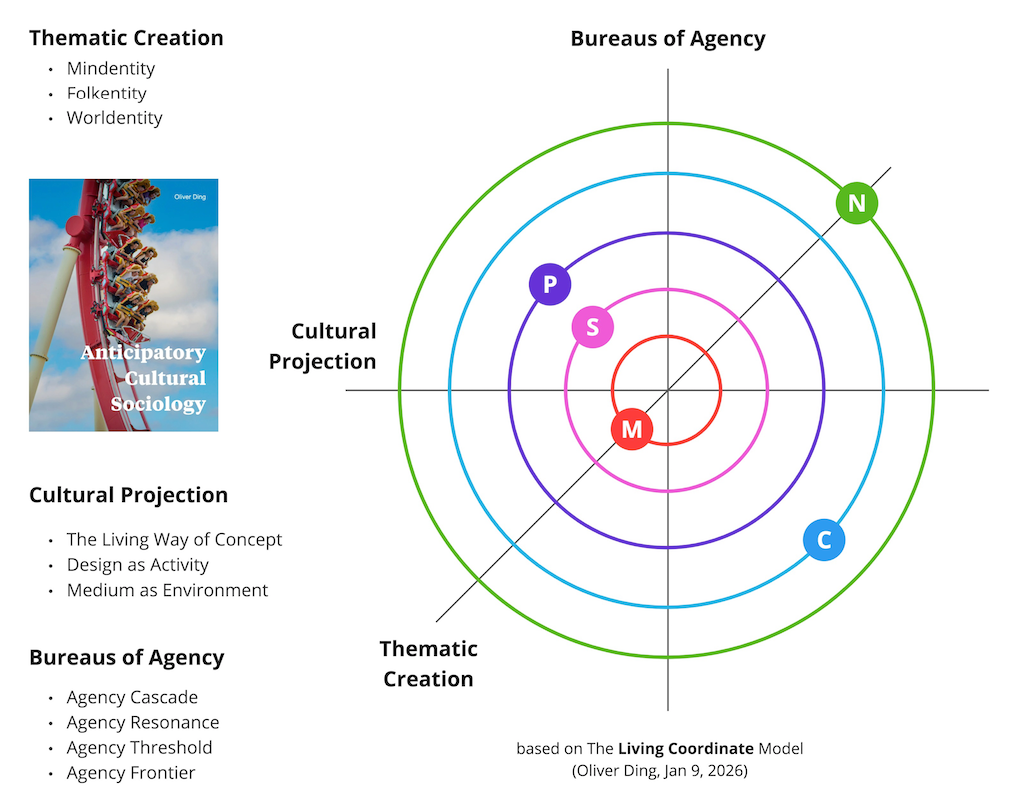
ACS v1.1 began taking shape on January 5th, when v1.0 was anchored as a creative center. What followed — through February — was Scaling the Focus: three lines of development advancing simultaneously, independently, and entangled, expanding the center across the dimensions of Thematic Creation, Cultural Projection, and Bureaus of Agency.
Between late February and March 13, 2026, three series of articles were completed simultaneously — one for each axis of the coordinate. All of them were published on the Activity Analysis Center website. The three axes were not advancing at the same pace or through the same mechanism — each had its own internal logic of development. The method-orientations expanded from three (Discover, Design, Deliver) to five, with the addition of Learn and Weave.
By March 13, 2026, ACS v1.2 was complete. The landscape had reached a new level of articulation: three dimensions, five method-orientations, the full structure of Cultural Projection, the full ontology of Thematic Creation, the four Bureaus of Agency, and the Dramatic Life Pattern. The diagram — three-dimensional coordinate, five concentric rings, individual at center, world at periphery — was drawn.
On March 18, 2026, reflecting on the relationship between the LARGE Method and the ACS v1.2 Actor Model, it became clear that the Self–Other dimension was absent from the three-dimensional structure. The question was how to respond. The decision was to maintain the simplicity and integrity of ACS's three-dimensional model rather than expand it to four dimensions. The Self–Other dimension would continue to develop — but within Strategic Developmental Psychology (SDP), where it more naturally belongs, under the axis of Supportive Life Discovery.
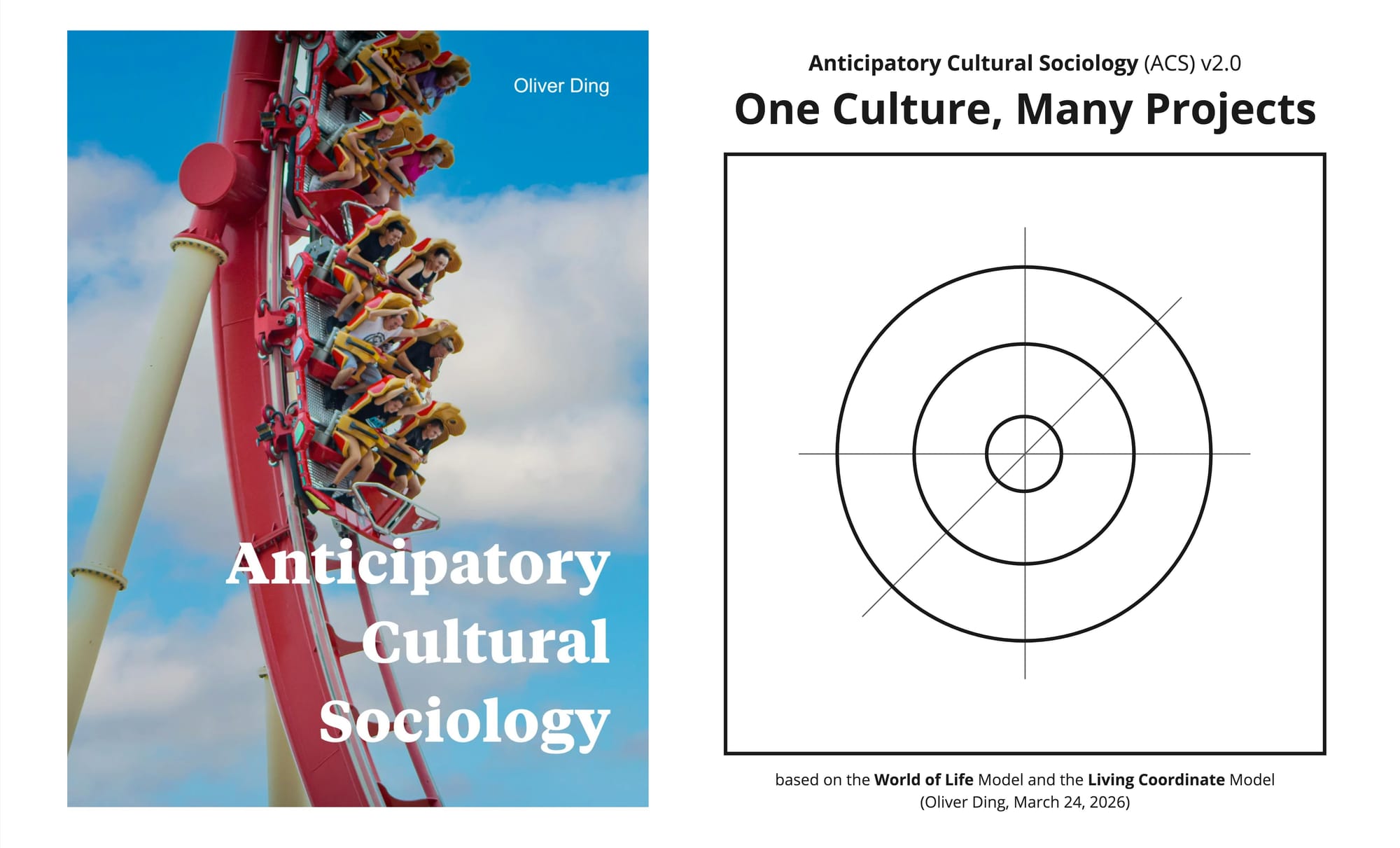
The relationship between ACS and SDP has been a structural background condition since both enterprises were named in December 2025. In v2.0, this relationship becomes an explicit theoretical element. ACS and SDP are symmetric enterprises, anchored in the same spatial foundation — the World of Life — but oriented toward different dimensions of the same social reality. ACS attends to cultural development at the collective scale; SDP attends to individual life development at the personal scale. The four boundaries of the World of Life define both: each enterprise inhabits the same structural terrain, and approaches it from a different direction.
The shift from ACS to SDP marks a sign. After a three-month creative sprint, it is time to edit a book to collect articles that build the ACS (v2.0).
The new book was titled Anticipatory Cultural Sociology: Creation, Projection, and Agency. It was organized around the "Flow - Focus - Center - Circle" schema, the primary model of the World of Activity Toolkit (v1, 2025).
A Note on Editorial Strategy
This collection is, in one sense, its own subject matter. ACS is a theory of how concept systems are created, developed, and transformed into thematic enterprises through anticipatory activity. The four months documented here — from December 2025 to March 2026 — are a real-time record of exactly that process: a concept system coming into existence, finding its ontological foundation, expanding across three dimensions, and reaching a new level of articulation at v2.0. The collection does not only present ACS. It is a case study of ACS in action.
All articles collected here were published on the Activity Analysis Center website. Many of them appeared first as part of the Activity Analysis Network (AAN), a biweekly newsletter organized around the Flow–Focus–Center–Circle schema. Each issue gathered new articles under a single thematic focus, providing a real-time record of the theoretical work as it unfolded. Alongside the AAN, the Appropriating Activity Theory (AAT) column documented the historical roots of the frameworks being developed.
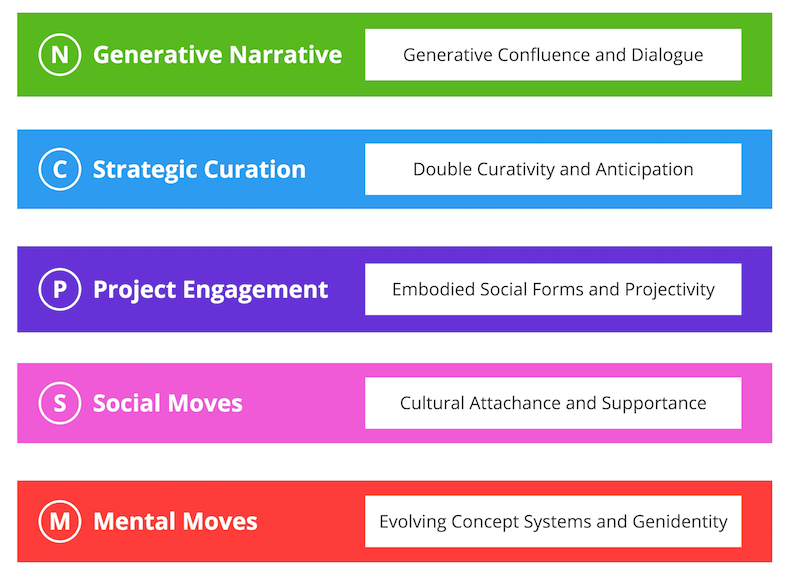
During the period covered by Part 3, the AAT column was deliberately coordinated with the AAN themes to advance the Four Bureaus of Agency — each newsletter issue introducing one Bureau, each AAT installment providing a matching story and case study from the author's own creative history. This editorial coordination was not merely organizational. It was itself an enactment of Strategic Curation — and, more specifically, an instance of the Four Bureaus of Agency in practice: each issue occupying a different structural position, each advancing the theoretical enterprise from within a distinct configuration of agency.
Readers who engage with these articles in their original form will find something that a retrospective synthesis cannot fully replicate: the texture of a concept system being built in real time, with all the revisiting, rebuilding, and unexpected resonances that entails. In these pages, the author of ACS is also practicing it — navigating themes, projecting into cultural circulation, exercising agency at the frontier of an emerging theoretical enterprise. The five principles of ACS are not only described here. They are demonstrated.
Full Possible Book
Some numbers about v1.0 of the full possible book:
- 4 parts
- 14 chapters
- 47 articles
- 845 minutes of reading time
- 223,812 words (about 448 single-spaced pages)
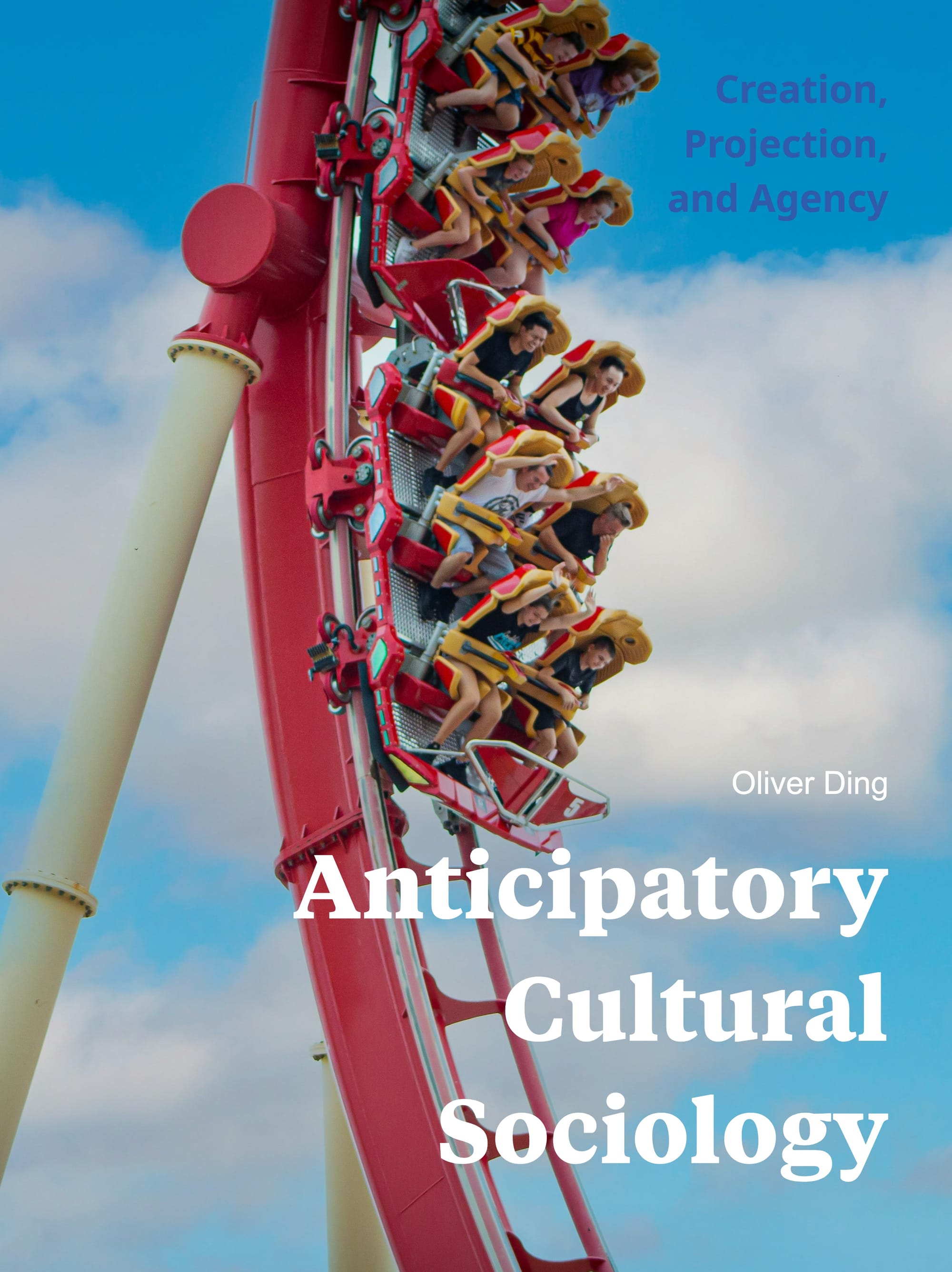
Table of Contents
Introduction
- The Landscape of Anticipatory Cultural Sociology (v2.0) (3/24/2026 - 6,065 words)
Part 1: Flow
The historical development of the ACS and basic concepts
ACS did not begin on January 5, 2026. The conceptual materials that made it possible had been accumulating for years — through the World of Activity approach, the HLS Framework, and the gradual expansion of the theoretical horizon from individual life development toward cultural life development. The naming of ACS was a crystallization, not a creation from nothing. This section documents that flow: the historical trajectory leading to ACS v1.0, and the basic concepts that constitute its ontological foundation.
Chapter 1: History
- The Landscape of Anticipatory Cultural Sociology (1/5/2026 - 4,433 words)
- The World of Activity (v1.0, 2022) Framework: Theoretical Foundation and Generative Confluence (2/13/2026 - 4,242 words)
- Activity Analysis Network #8: Re-engagement and Co-becoming(1/15/2026 - 1,977 words)
- Activity Analysis Network #9: Anticipation, Culture, and Education (1/30/2026 - 2,246 words)
Chapter 2: Basic Concepts
- The Concept of World of Activity (9/14/2025 - 3,980 words)
- The Concept of World of Life (2/12/2026 - 2,270 words)
- The Weave the Culture Framework (12/30/2025 - 11,660 words)
Part 2: Focus
The Thematic Foci of the ACS across January to March 2026
With the ontological foundation in place, the work of ACS from January to March 2026 was expansion — filling in the theoretical landscape across three simultaneous lines of development. Thematic Creation built the ontology of what gets created. Cultural Projection developed the operational structure of how actors engage with the world. Supportive Life Discovery opened the relational dimension of how discovery happens in the presence of others.
These three chapters represent the thematic foci of ACS during its most intensive period of development. They are not sequential — they advanced in parallel, each with its own internal logic, each resonating with the others.
Chapter 3: Thematic Creation
- Culture as Anticipatory Activity (2/21/2026 - 3,219 words)
- Mindentity: The Ontology of Thematic Creation (1/26/2026 - 2,873 words)
- Worldentity: The Cultural Givenness of Thematic Creation (2/13/2026 - 3,370 words)
- Folkentity: The Object of Cultural Projection (2/21/2026 - 3,039 words)
Chapter 4: Cultural Projection
- Design-oriented Project Engagement (2/24/2026 - 6,135 words)
- Personal Orientation of Cultural Projection (2/25/2026 - 7,317 words)
- Cognitive Container of Cultural Projection (2/26/2026 - 7,911 words)
- GO with AI, Re-education Tax, and Anticipatory Medium (2/27/2026 - 6,479 words)
Chapter 5: Supportive Life Discovery
- The L3D Model (v1.0, 2026): A Knowledge Framework for Supportive Life Discovery - (3/3/2026 - 4,396 words)
- Learning Landscape: Revisiting from the World of Life Perspective - (3/4/2026 - 4,784 words)
- The Significant Themes Framework (2026) - (3/5/2026 - 1,614 words)
- Cognitive Hydrology Pedagogy (v1.0) - (3/2/2026 - 7,950 words)
Part 3: Center
The Core of ACS: weaving active agency and evolving structure
The center of ACS is the agency — the question of how cultural actors act, and within what structural configurations. This section presents two developments that together constitute the core of ACS v2.0: the Actor Model, which emerged unexpectedly when the three-dimensional structure was complete, and the Four Bureaus of Agency, which map the structural patterns through which agency operates differently depending on position.
The Actor Model and the Bureaus of Agency are not separate contributions. They are two faces of the same theoretical core: one describes who the actor is, the other describes where the actor stands.
Chapter 6: A New Model of the Actor
- The Landscape of Anticipatory Cultural Sociology (ACS) v1.1 (3/1/2026 - 1,060 words)
- The Landscape of ACS 1.2 and a New Model of the Actor (3/14/2026 - 3,242 words)
Chapter 7: Revisiting Self and Others
- Revisiting, Rebuilding, Re-engaging with Past Selves - (3/19/2026 - 3,776 words)
- Engaging with Others for Developing Anticipated Identity - (3/26/2026 - 12,843 words)
- Supportive Self-Actualization as Anticipatory Activity - (3/29/2026 - 12,554 words)
- Appropriating Activity Theory #14: Self, Other, and Embodied Social Forms (2017, 2021, 2025) - (3/31/2026 - 3,805 words)
Chapter 8: Agency Cascade
- Education as Anticipatory Activity (1/14/2026 - 6,410 words)
- Culture as Anticipatory Activity (2/21/2026 - 3,219 words)
- Activity Analysis Network #10: Re-visiting, Re-building, and Agency Cascade (1/30/2026 - 1,846 words)
- Agency Cascade and the Transformation of Self (3/19/2026 - 11,018 words)
Chapter 9: Agency Threshold
- Appropriating Activity Theory #11: When Two Students Aren't Enough (2023) - (2/15/2026 - 4,661 words)
- Activity Analysis Network #11: Boundary, Givenness, and Agency Threshold - (2/15/2026 - 2,243 words)
- Agency Threshold: A GAP Project and a Generative Confluence Journey (1/22/2026 - 6,637 words)
Chapter 10: Agency Resonance
- Appropriating Activity Theory #12: Agency Resonance Behind the Project Network (2022) - (2/28/2026 - 2,030 words)
- Activity Analysis Network #12: Design, Medium, and Agency Resonance - (2/15/2026 - 1,914 words)
Chapter 11: Agency Frontier
- Four Negative Frontiers of Knowledge Engagement - (3/7/2026 - 2,604 words)
- Four Positive Frontiers of Project Engagement - (3/12/2026 - 3,526 words)
- Activity Analysis Network #13: Learn, Weave, and Agency Frontier - (3/15/2026 - 2,654 words)
- Appropriating Activity Theory #13: Agency Frontier Behind the Hierarchy of Human Activity (2020) - (3/14/2026 - 4,247 words)
Part 4: Circle
The Context of the ACS and its by-products
No theoretical enterprise develops in isolation. This section gathers the by-products, companion developments, and methodological reflections that emerged alongside ACS — not as peripheral material, but as the wider ecosystem within which ACS is situated.
The LARGE Method provided the meta-methodological coordination structure. Cognitive Hydrology offered a pedagogical and metaphorical framework for understanding how ideas flow. Spatial Heuristics documented the creative methods through which ACS itself was built. Together they form the circle — the broader context that surrounds, supports, and gives ACS its fuller meaning.
Chapter 12: The LARGE Method
- The Living Coordinate Model (1/21/2026 - 3,121 words)
- Appropriating Activity Theory #10: The LARGE Method (2018 - 2026) - (1/29/2026 - 4,404 words)
- Revisiting and Rebuilding: The LARGE Method (2018-2026) - (1/30/2026 - 8,909 words)
Chapter 13: Cognitive Hydrology
- The "Cognitive Hydrology" Trilogy - (2/22/2026 - 2,855 words)
- Thematic Development Study -(2/19/2026 - 4,130 words)
Chapter 14: Spatial Heuristics
- Spatial Heuristics: Developing a Pedagogy for Cognitive Hydrology - (3/7/2026 - 7,816 words)
- Spatial Heuristics: From the Margins to the Center - (3/11/2026 - 6,322 words)
Epilogue
- From GO Theory to ACS — and Beyond - (March 30, 2026 - 1006 words)
v1.0 - March 30, 2026 - 2,404 words
v1.1 - April 1, 2026 - adding Appropriating Activity Theory #14 to Chapter 7