
The "Cognitive Hydrology" Trilogy
The Art of Knowledge Engagement and Beyond
by Oliver Ding
February 22, 2026
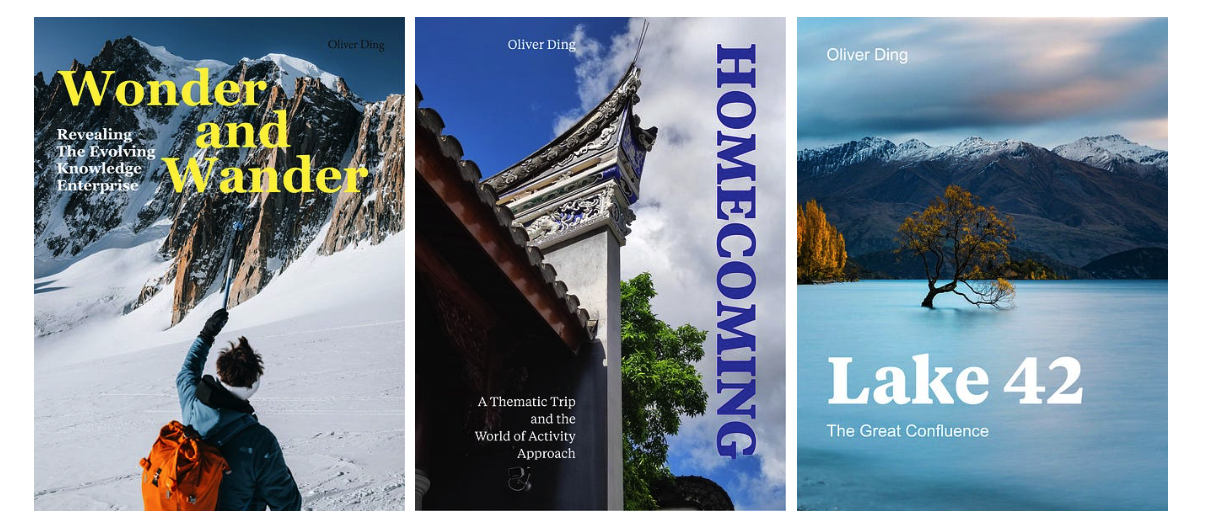
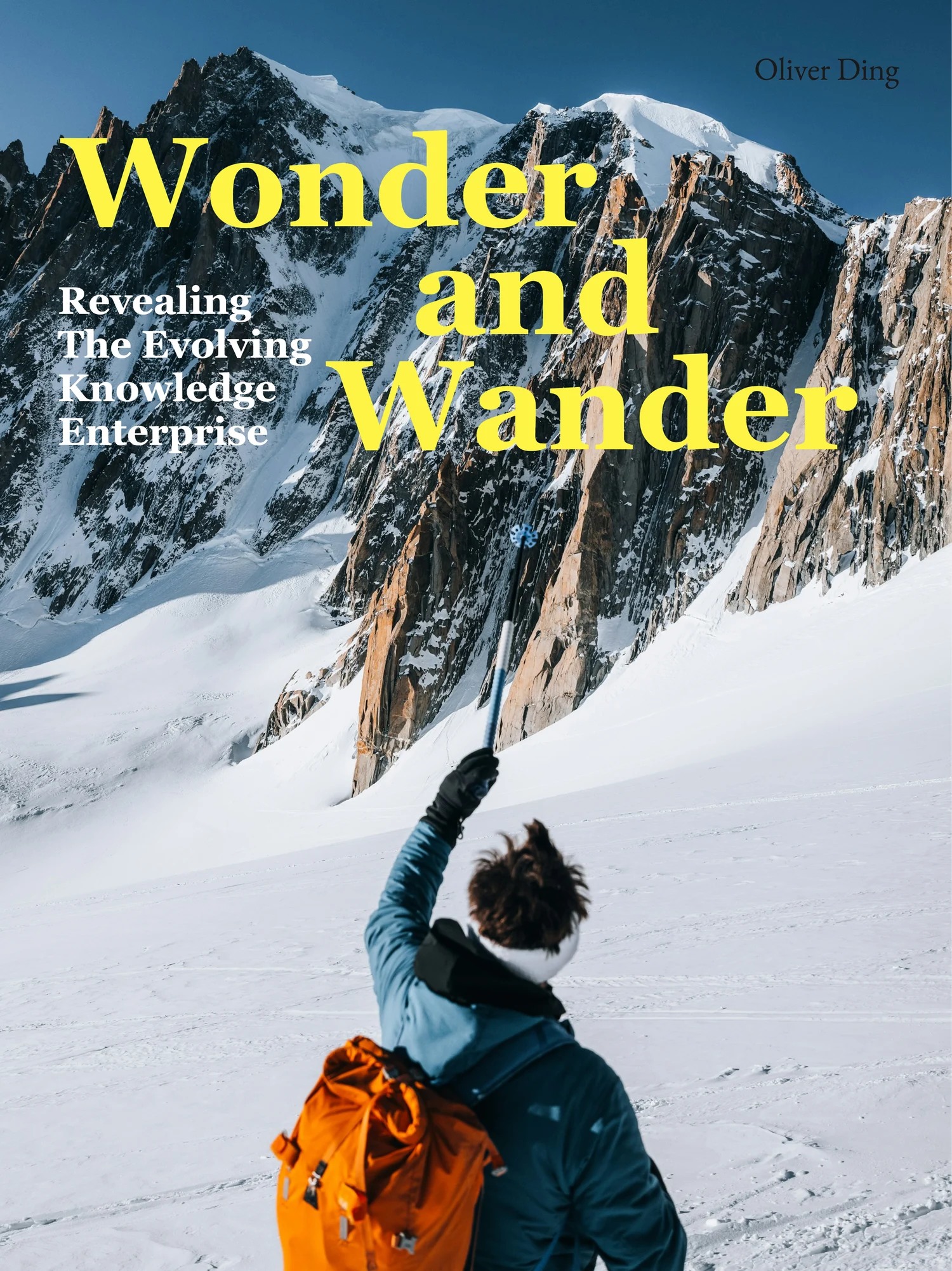
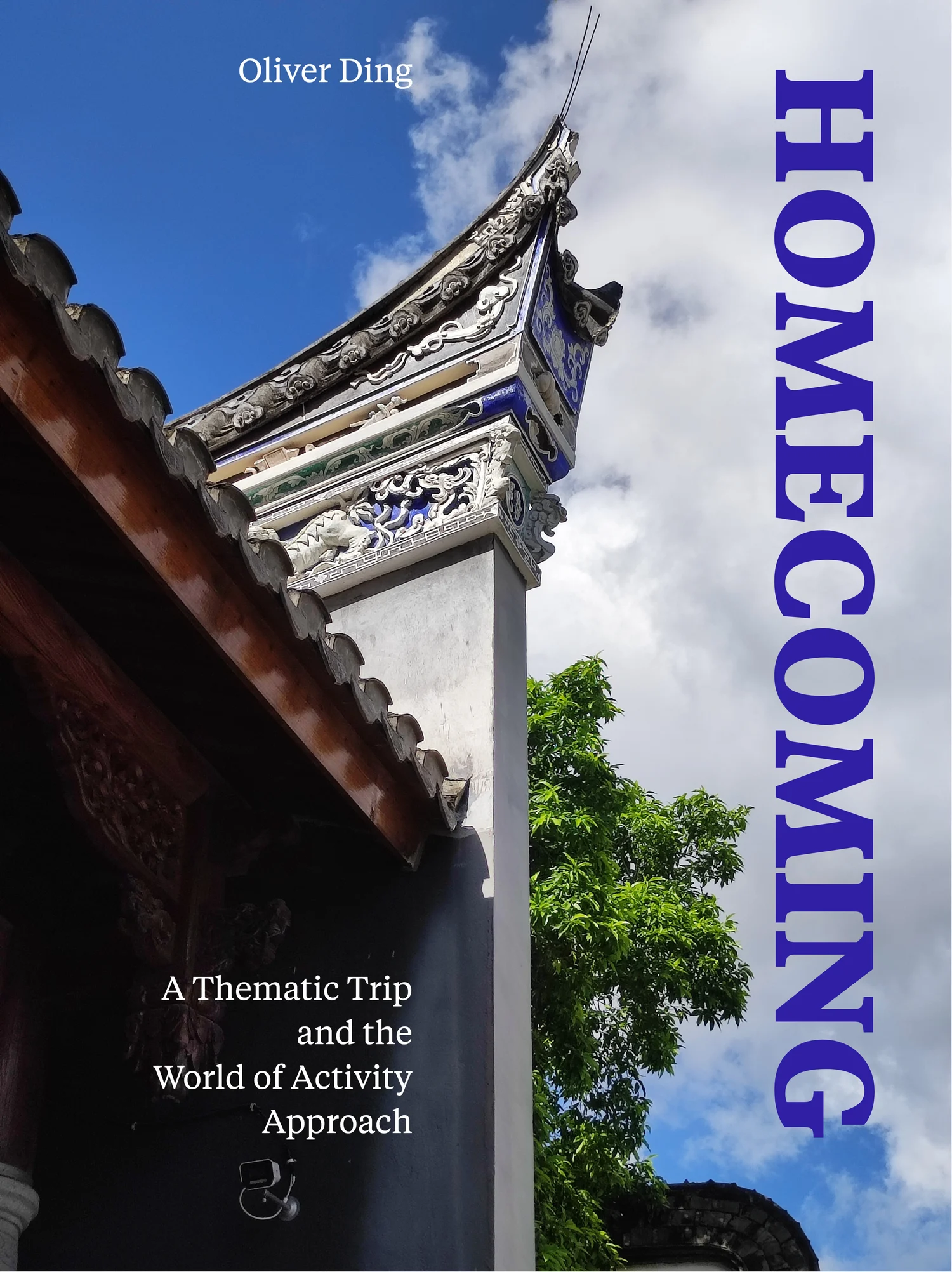
A few days ago, I shared the manuscript of Lake 42: The Great Confluence with several friends. Lake 42 is the third book in a trilogy — the other two being Wonder and Wander: Revealing the Evolving Knowledge Enterprise and Homecoming: A Thematic Trip and the World of Activity Approach. Their responses brought some unexpected moments of reflection.
One friend in particular raised several deep epistemological questions after reading it. His angle made me realize that the three manuscripts, taken together, present a picture more complete than I had consciously recognized.
This feels like the right moment to step back and offer an overview of the trilogy as a whole.
How the Trilogy Came to Be
These three manuscripts were not planned as a trilogy. They grew organically out of the flow of a creative journey.
Looking back, they form a unified application of the Creative Life Curation method across three distinct time scales:
- Homecoming: A Thematic Trip and the World of Activity Approach (September 2025) — spanning my life from childhood to midlife (1974–2014)
- Wonder and Wander: Revealing the Evolving Knowledge Enterprise (June 2025) — focusing on my knowledge creation journey (2019–2025)
- Lake 42: The Great Confluence (February 2026) — documenting six months of high-density theoretical confluence (June–December 2025)
Three time scales: decades, years, months. Three narrative rhythms: biographical, knowledge journey, creative confluence. And yet running through all three is the same current.
Over the past few days, while reflecting on this trilogy, I found myself searching for a name that could hold all three books together. The answer, I realized, had been there all along — in the Epilogue of Lake 42 itself, which I titled "Cognitive Hydrology."
Let's call them the "Cognitive Hydrology" trilogy.
The name carries a specific logic. Lake 42 introduces Generative Confluence — the pattern by which distinct theoretical streams converge to produce something genuinely new, documented across six months of creative work. Looking back further, Lake 42 also reveals Fractal Confluence — the same generative pattern operating at a larger scale across the years 2019 to 2025, the very period that Wonder and Wander had documented. And Homecoming connects back further still, to the embodied experience of growing up within the Min River watershed in Fujian, where water itself, long before any theory, was already teaching the same lesson.
Generative Confluence, Fractal Confluence, Cognitive Hydrology: three concepts, three time scales, three books. Each layer contains and extends the one before it. Together, they form a complete arc — from a six-month creative journey, to a six-year knowledge enterprise, to a lifetime of learning from water.
Cognitive Hydrology is the name that holds all three.
Cognitive Hydrology: A Unifying Metaphor
Hydrology studies the movement of water across the earth — precipitation, percolation, convergence, and flow.
Cognitive Hydrology borrows this framework to study how ideas move through a person's creative life: how inspiration descends, how it percolates into daily practice, how it flows between themes, and how it gathers, at certain moments, into a lake.
The metaphor is not decorative. It carries structural content.
In nature, when two rivers meet, the confluence is absorptive and one-directional — one stream loses its independent identity. But in knowledge development, confluence can be generative: multiple theoretical streams meet not to merge into one, but to jointly produce a new knowledge system. At the same time, each retains its own developmental trajectory. This is the core pattern documented in Lake 42 — Generative Confluence.
Cognitive Hydrology describes precisely this logic of knowledge movement: not accumulation, but flow; not management, but engagement.
Book One: Wonder and Wander — The Methodological Root
Wonder and Wander is the earliest completed part of the trilogy and its methodological foundation.
From March to June 2025, I took my own creative journey from 2019 to 2025 as the object of study, designing eight thematic case studies, each with defined temporal boundaries, a primary theme, and original data. This design reflects a methodological commitment I have held for years: treating one's own lived experience as primary research data, extracting creative themes from that experience, and developing those themes into knowledge concepts and theoretical frameworks.
The project had a defined goal — to reveal the Evolving Knowledge Enterprise model. But as the case studies unfolded, a series of by-products emerged. They did not belong to the original plan, yet each pointed toward something deeper.
On May 31, 2025, during an ordinary run, a single insight suddenly connected all the scattered dots. Two days later, when I used the Self-Life-Mind schema to organize these insights, a pattern I had never consciously noticed came into focus: Generative Confluence. For years, I had been exploring the connections between theory and practice, maintaining careful boundaries between the three theoretical traditions I relied on most deeply. But when I drew a diagram of a three-dimensional coordinate with three overlapping circles, something shifted: many of the innovative concepts I had generated over the years detached from the frameworks set by their original theoretical traditions and converged toward a new center. A new theoretical enterprise had begun.
Wonder and Wander is thus a book about how knowledge generates itself within a person's life course. It asks: in a creative journey, how do ideas flow, accumulate, and transform? What deep structure underlies what appears, on the surface, to be dispersed exploration?
One detail continues to surprise me in retrospect. When I selected cover images for a series of possible books, I had unknowingly formed a complete expedition narrative — campsite departure, mountain streams, snowfield trekking, summit arrival. Each choice was made in the moment, for its own reasons. The pattern only became visible when I looked back. This is the value of Creative Life Curation: returning repeatedly to one's life course, discovering patterns that were never consciously noticed, distilling them into present knowledge, and putting that knowledge in the service of future anticipation and action.
Book Two: Homecoming — The Practical Bridge
Homecoming is a book about return — and about validation.
From late June to July 2025, I traveled back to Fuzhou, the city where I had lived for nearly twenty years before moving to the United States. I carried with me the World of Activity toolkit, freshly developed, and brought it into real life for testing: revisiting familiar places, reuniting with old friends, and checking whether a theoretical framework could hold its own in the emotional complexity of coming home.
Most theoretical frameworks are built in studies and validated in controlled research settings. This journey offered something unexpected: an unplanned opportunity to bring theory into the living field, letting it prove itself in real disorder, emotion, and contingency.
A core discovery of the journey was that World of Activity transformed from a concept into a Life Coordinate — no longer merely a set of diagrams, but a tool capable of providing orientation within an actual life. This transformation was not achieved through academic research, but through the lived experience of homecoming.
Something else happened during the Fuzhou trip that has stayed with me. A friend from Beijing came to visit, and together we went to the former residence of Yan Fu. He told me that when he was localizing Wikipedia into Chinese years ago, the very first article he wrote was "Yan Fu" — because the theme of East-West dialogue had moved him. He said that the dialogue begun a century ago is far from finished. Our generation, he said, is its new protagonist.
This conversation became a quiet but persistent theme running through Homecoming and through the trilogy as a whole: not choosing between East and West, but sustaining a generative tension between two traditions. For years, I had built my theoretical frameworks primarily from Western resources. This homecoming journey was the turning point at which I began to take Eastern philosophical resources seriously as genuine structural material.
Homecoming is therefore a book about how theory is tested and transformed by lived experience.
Book Three: Lake 42 — The Theoretical Crown
Lake 42 documents the six months from June to December 2025.
This is the shortest and most concentrated period in the trilogy. During these six months, three theoretical streams that had developed independently over many years — the Ecological Practice Approach, the Project Engagement Approach, and the earlier Creative Life Theory — converged at a specific moment in June 2025, producing genuine emergence: not the sum of the parts, but the birth of a new knowledge center, Creative Life Theory v3.0. Although this new creative center continues under the name of Creative Life Theory, its actual content has already diverged significantly from the earlier version.
What is equally significant is that the three streams did not disappear after convergence. They continued developing along their own trajectories: Ecological Practice evolved from v4.0 to v4.1, Project Engagement developed new frameworks, and the philosophical thinking of the earlier Creative Life Theory continued its own development. Their simultaneous development alongside the new creative center brought further synergistic effects — each stream enriching the others. This is what distinguishes Generative Confluence from ordinary geographic confluence — not absorptive integration, but generative co-becoming.
This is what Generative Confluence means as a core pattern: water gathers into a lake, but the lake is more than just collected water. It has its own ecology, its own depth, its own directions of outflow.
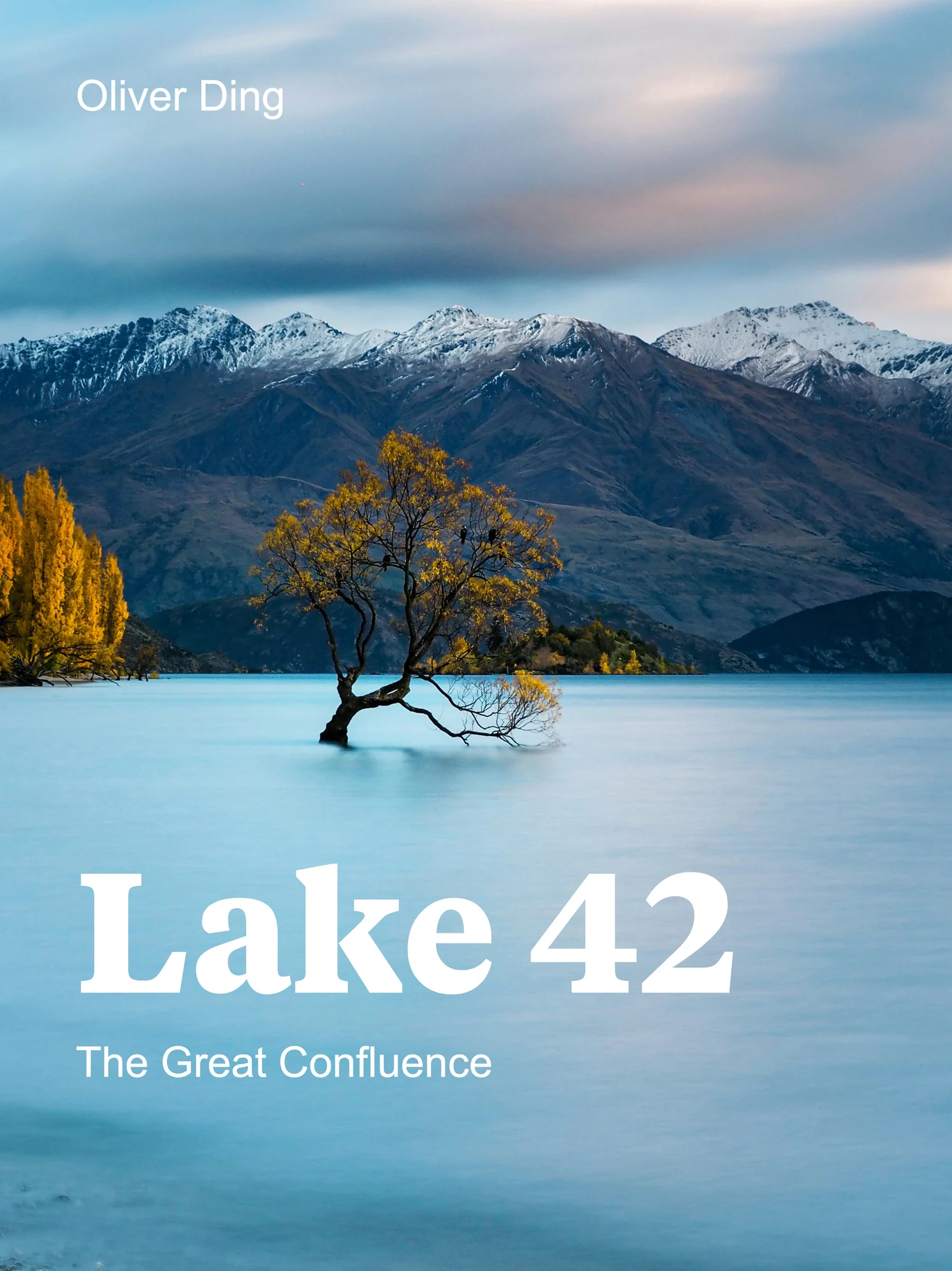
Lake 42 is also the most reflexive book in the trilogy. It does not only document a knowledge journey — it simultaneously theorizes the act of documentation itself: Creative Life Curation as methodology, Cognitive Hydrology as a metaphor system, the Living Coordinate as an integrative framework. All of these were further developed and refined in the course of writing.
The Larger Picture
Looking back, these three manuscripts answer the same fundamental question from three different levels:
How does a person enter into a genuine relationship with knowledge?
Methodologically, this question is related to a more specific research question:
How do ideas develop over long time scales in a person's creative life?
This question matters because mainstream research largely ignores it. Cognitive psychology studies thinking in laboratory settings for minutes or hours. The History of Concepts (Begriffsgeschichte) traces concepts across cultures and centuries. But between these scales — the months, years, and decades across which an individual's creative thought actually develops — there exists a gap.
This gap is where my work lives.
Back in 2016, I first encountered Howard Ernest Gruber's work on the psychological study of creativity. Since then, he has been my role model in my intellectual journey. His role as a historical-cognitive psychologist inspired me to launch the Slow Cognition project in January 2022, which explores the long-term cognitive development processes of professionals. Later, the project led to what I now call Creative Life Theory.
While working on developing theoretical frameworks of Creative Life, I also developed a series of research methods to study creative life. The primary method, the Creative Life Curation method, has led to a series of projects.
This trilogy applies the Creative Life Curation method to study my own creative life at three distinct time scales:
Homecoming offers the practical answer: through bringing theory into the living field, testing it against emotion, memory, encounter, and cultural tension — allowing it to move from concept to orienting tool.
Wonder and Wander offers the methodological answer: through systematic self-study, through treating one's own experience as primary data, discovering the patterns by which knowledge generates itself from within a person's life course.
Lake 42 offers the theoretical answer: through documenting and theorizing the generative confluence of multiple knowledge streams, presenting a new picture of knowledge development — not accumulation but convergence; not management but engagement.
Thematic Development Study
The trilogy also produced a concrete methodological outcome worth naming directly.
Since 2022, I have applied the Creative Life Curation method across many projects. Through sustained practice, a pattern emerged: I found myself consistently beginning case analyses by reviewing how a particular theme had developed over time — tracing its evolution across a series of projects, examining how it changed, deepened, and crystallized.
I now name this operation Thematic Development Study — the systematic investigation of how a theme develops across time. This represents a specific application of Howard E. Gruber's historical-cognitive method to the study of personal themes rather than historical figures. Where Gruber traced how Darwin's ideas evolved across decades, Thematic Development Study turns the same longitudinal attention toward one's own thematic development across months and years.
Thematic Development Study has a unique double identity. As a supporting operation, it can serve a larger creative project — when developing a new framework, a thematic development study of related past themes informs the design. As a project itself, it can become the primary subject of investigation. Lake 42 is the clearest example: the entire book is fundamentally a thematic development study of "Generative Confluence," documenting how this particular theme developed over six months.
The trilogy as a whole demonstrates Creative Life Curation operating at three time scales:
Homecoming applies thematic development study to childhood and midlife — showing how early themes shaped later theoretical work across four decades.
Wonder and Wander documents a six-year journey of sustained creative practice — organizing dozens of projects into eight creative journeys, each led by a key theme.
Lake 42 focuses on six months of intensive development — showing how generative confluence operates in compressed time.
Together, they form an archive of the Creative Life Curation method, showing what it looks like to systematically study one's own thematic development across radically different temporal scales.
Why "Beyond"
The subtitle of this trilogy is The Art of Knowledge Engagement and Beyond.
"Knowledge Engagement" is an epistemological position I chose many years ago. It is a natural extension of the theoretical ideas and methodology of the Project Engagement Approach. Its difference from "Knowledge Management" is not merely terminological: Management presupposes an external agent handling an object; Engagement presupposes the occurrence of a relationship — a mutual pull and transformation between two subjects.
This choice determined the direction of all my subsequent work. But in late 2024 and early 2025, I came to recognize that Knowledge Engagement itself needed to be exceeded. Not negated — extended. Extending "knowledge X" into "creative X," shifting attention from personal knowledge construction toward the broader landscape of cultural development. From Knowledge Engagement to Cultural Development, from Individual Life Development to Cultural Life Development: this transition is explicitly documented in Lake 42. The new horizon is framed by a symmetrical pair of theoretical enterprises — Anticipatory Cultural Sociology and Strategic Developmental Psychology — opening a new journey. This forms the first meaning of "Beyond."
Engaging with Creative Flow
But there is a more fundamental "Beyond" — one that points toward the source of everything.
Whether we speak of Knowledge Engagement or Cultural Development, the raw material of both comes from the same place: the cognitive flood that reaches us moment by moment, day by day, through lived experience. Perception, confusion, resonance, surprise, memory, and conversation — these constitute a person's actual cognitive reality. They flow without interruption. Most of them dissipate without a trace.
Cognitive Hydrology asks this question precisely — and answers it through six operations of Slow Cognition:
- Thematic Exploration (Source-seeking): tracing ideas back to their origins, following the stream upward toward its source.
- Embodied Experience (Immersion): you cannot understand water by reading about it. You must wade in.
- Thematic Conversation (Confluence-creating): when streams meet, they interact, create turbulence, and generate new currents.
- Conceptual Thinking (Clarification): when water settles in a lake, sediment falls away, and clarity emerges.
- Strategic Curation (Flow-guiding): water flows naturally, but intelligent intervention — canals, reservoirs — can guide flows productively.
- Continuous Objectification (Mapping): hydrologists create maps not to freeze rivers but to make patterns visible and shareable.
These six operations, working together across long time scales, are how the cognitive flood becomes a creative flow.
In the age of AI, this question takes on new urgency. As the external storage and retrieval of knowledge is taken over at scale by machines, the distinctly human work becomes: how to transform the cognitive flood into a creative flow. Not managing knowledge, but letting lived experience find direction. Not accumulating information, but discovering patterns within the flow.
This trilogy is, taken together, one kind of answer to that question. Through Creative Life Curation, through thematic exploration, through consciously engaging with one's own cognitive flood, a person can transform the ordinary experience of daily life into sustained creative development.
This is the complete movement of water: rain falling from the sky, percolating into soil, gathering into streams, flowing through valleys, expanding across watersheds, finding its place in something larger.
Years ago, as a student in Fuzhou, I was moved by the words of Lin Zexu and adopted them as my personal motto: "Sea embraces all rivers. Greatness comes from openness."
The writing of this trilogy has expanded that motto into a more complete whole:
Natural Mother as Teacher. East and West as Resources. Sea embraces all rivers. Greatness comes from openness.
v1.0 - February 22, 2026 - 2,855 words