
Closure and Unfolding: Part 1 - A Dramatic Life Pattern
The story of how the theme of this book was born
by Oliver Ding
August 14, 2026
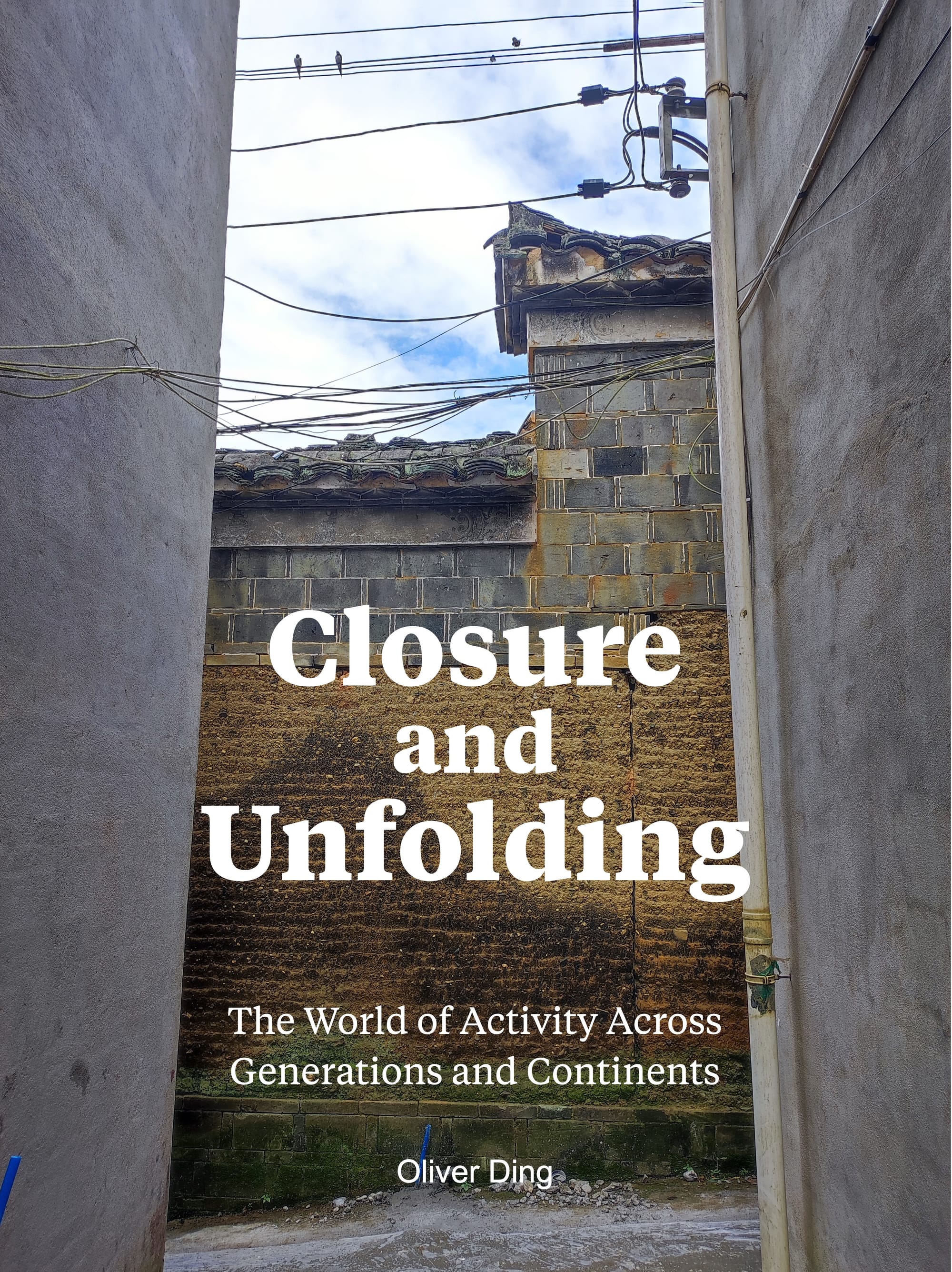
In July 2026, I traveled to China to visit family. I returned to my hometown, Jianyang, and went to Kaoting Academy to pay my respects to Zhu Xi. After coming back to Houston, I developed the theme of Closure and Unfolding from this trip and began planning a new possible book. This is the first section of that book, A Dramatic Life Pattern, which tells the story of how the theme of this book was born.
以下是修改后的Part 1引言简介:
Part 1: Closure and Unfolding
This part tells the story of how the theme of this book was born—and how it connected two journeys across two years.
In 2025, I traveled to China and returned to Fuzhou, where I had lived for nearly twenty years. That journey became a testing ground for the World of Activity approach. Using the Flow-Focus-Center-Circle schema, I analyzed my 2015 autobiography and my present experiences—and discovered seven distinct forms of the World of Activity, spanning from childhood to midlife. The dual-center pattern, which had appeared across different stages of my life, was recognized and named. Along the way, concepts like thematic trip, thematic object, and thematic event began to take shape, pointing toward a new direction: tiny culture. That direction would grow into a broader exploration of cultural development.
That year, I was also closing a long chapter of knowledge engagement and opening a new one in cultural development. I identified "closing and unfolding" as a dramatic life pattern of the World of Activity.
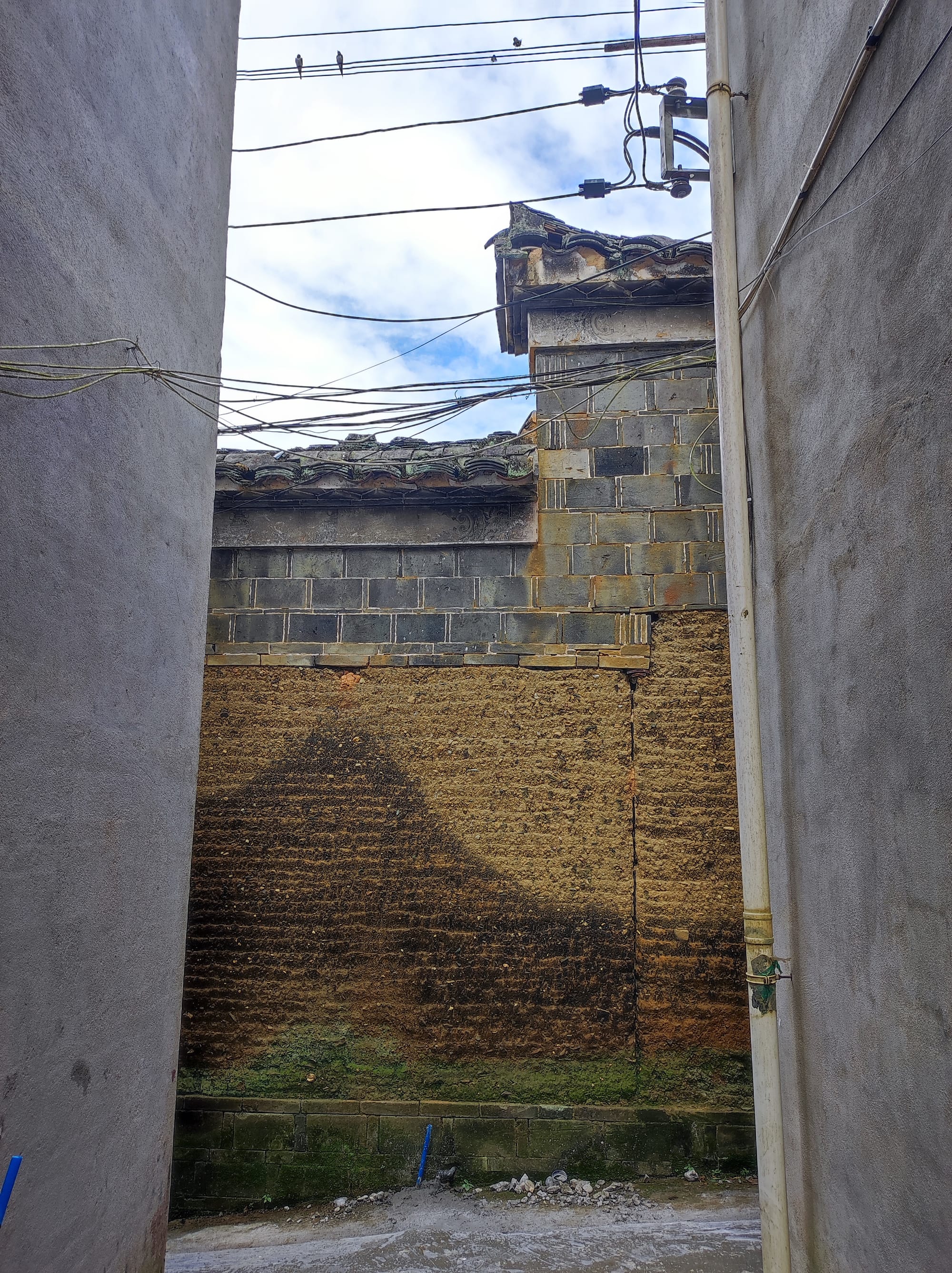
In 2026, during another family trip back to Jianyang, I took a photograph. An old earth wall between two new cement walls. I stood there and felt something: two curtains framing a stage. The word came: "Closure." Later, the other half arrived: "Unfolding."
That photo became the seed of this book. It also helped me see that the pattern I had experienced in 2025—closing one direction and opening another—was not just my own story. It ran through the family gathering I had just witnessed, through the stories of my cousins and their children, through the old house in Pengdun, through the lives of people who crossed oceans to build new worlds.
And the journey itself, in 2026, was not just about visiting family. It was also the moment when my theoretical work moved from theory to practice—when a friend flew from Hangzhou to Fuzhou to sit with me and discuss how the World of Activity approach could be used for real-world intervention.
The connection between the 2025 creative journey and the 2026 thematic trip pushed me to develop the "Closure and Unfolding" theme further. What began as a travel experience has now grown into a new possible book—the sequel to Homecoming.
In the process of writing this book, I have come to see that this pattern and theme has appeared throughout my life and career—2025 and 2026 are only the most recent examples of a recurring rhythm.
Chapter 1.1: Following a Theme
How a single photograph—cement walls on both sides, an earth wall in between—gave birth to the theme of "Closure and Unfolding." A case study of Slow Cognition in action, from embodied experience to thematic conversation to conceptual thinking to strategic curation to continuous objectification.
Chapter 1.2: Knowledge, then Culture
Over the past few years, I have worked on connecting Theory with Practice, especially the knowledge engagement journey, developing a series of knowledge frameworks, models, diagrams, and methods for understanding knowledge creators’ creative lives and adult development.
During the 2024 Christmas holiday, I had a reflective conversation with a mentor, revisiting my work on HELLO THEORY, GO Theory, and the Strategic Life Narrative project. Through this reflection, I realized my newest focus had shifted toward Cultural Life Development, marking a detachment from Individual Life Development. This strategic move was encapsulated in the theme of “Cultural Grounding/Cultural Growing.”
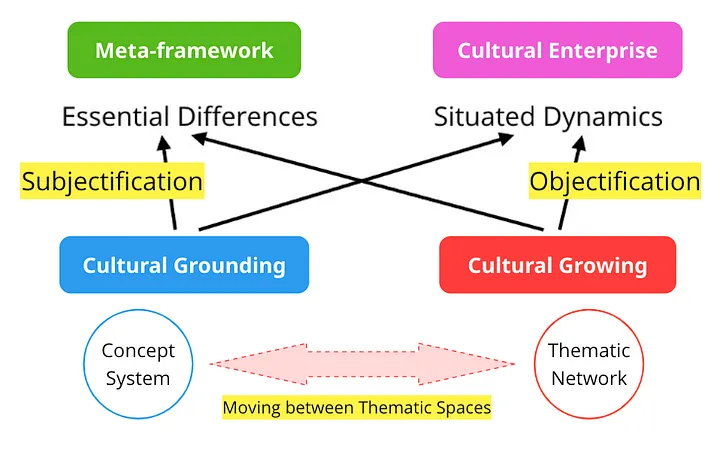
In 2025, while I worked on closing my multi-year journey of Knowledge Engagement and Individual Life Development — culminating in Creative Life Theory v3.1 — I simultaneously unfolded a new journey of Cultural Development.
In December 2025, the birth of the World of Life (World of Activity) approach marks a nexus-point where the act of Closing a rich history meets the act of Unfolding a new future.
Later in early 2026, the "Closing while Unfolding" pattern was marked as a member of the Dramatic Life Pattern series.
Chapter 1.3: Shift from Theory to Practice
In the 19th issue of the Activity Analysis Center newsletter (June 15, 2026), I mentioned a significant shift: from theoretical development to practical analysis.
The Activity Analysis Center hosts two major theoretical enterprises:
- The Life-as-Activity Approach (including the Project Engagement Approach)
- The World of Activity Approach, now operating within a nested structure: World of Life (World of Activity).
The release of three recent possible books — Weave the Life, Weave the Theory, and Appropriating Activity Theory — marked a milestone of my journey of engaging with Activity Theory.
Since the Life-as-Activity Approach has reached v4.0, the future of the Activity Analysis Center will no longer focus on theoretical development, but more on testing the theoretical approach, empirical research, and intervention. The new direction has been named Activity Analysis & Intervention (AAI) in 2023.
The 2026 trip to China was more than a family visit. It was the moment when theoretical work met practical application. A friend flew from Hangzhou to Fuzhou to sit with me and discuss how the World of Activity approach and the AAI method could be used for analysis and intervention.
The journey marked the turning point of Activity Analysis Center.
v1.0 - August 14, 2026 - 1,005 words