
Spatial Heuristics: A Thematic Trip and a Possible Book
A case study of the Spatial Heuristics series
by Oliver Ding
April 5, 2026
The Spatial Heuristics series anticipates a new book manuscript. Like the Generative Confluence of Lake 42, this manuscript will itself be a confluence — of three distinct streams that have been developing in parallel:
- The first stream is the theme-concept-framework lineage: the long arc of work connecting Themes of Practice, Thematic Space Theory, and the development of knowledge frameworks as creative tools.
- The second stream is Creative Diagramming: the sustained inquiry into how diagrams function not just as representations of thought but as generative spaces for it.
- The third stream is Cognitive Hydrology: the emerging theoretical enterprise that provides the pedagogical and metaphorical context for understanding how ideas flow, converge, and circulate through a creative life.
Spatial Heuristics sits at the intersection of all three. The case studies in this series are the first attempts to map that intersection — to understand, through concrete instances, what it means to let a spatial container anticipate its contents.
In this case study, I focus on the development of a creative theme called "Closure and Unfolding" – a pattern captured in 2025 and recently developed into a plan for possible book.
A Thematic Trip
In the past three weeks, I was traveling in China, visiting family.
Last year, that same trip led to a kindle book: Homecoming: A Thematic Trip and the World of Activity Approach. This year's journey turned out to be unexpectedly interesting—it echoed last year's theme in a way I hadn't anticipated, and it gave birth to a sequel. But this wasn't planned.
I traveled back with my children—from the U.S. to Fuzhou, then to Jianyang, and finally to Pengdun, a small village about 12 km from Jianyang where I grew up.
The day before returning to Pengdun, I gathered with my cousins (表哥 and 表妹们)—a big family reunion. They all left Pengdun years ago and settled in Jianyang, which is almost a miniature of China's urbanization over the past few decades. As we talked, I heard about their children: some working in Fuzhou, some in Japan, and one who was just selected for a Model UN program and will be heading to Vienna later this year.
I sat there listening, and a pattern began to emerge: from Pengdun to Jianyang, from Jianyang to Fuzhou, from Fuzhou to Japan and Vienna. This wasn't just one person's unfolding—it was an entire family's.
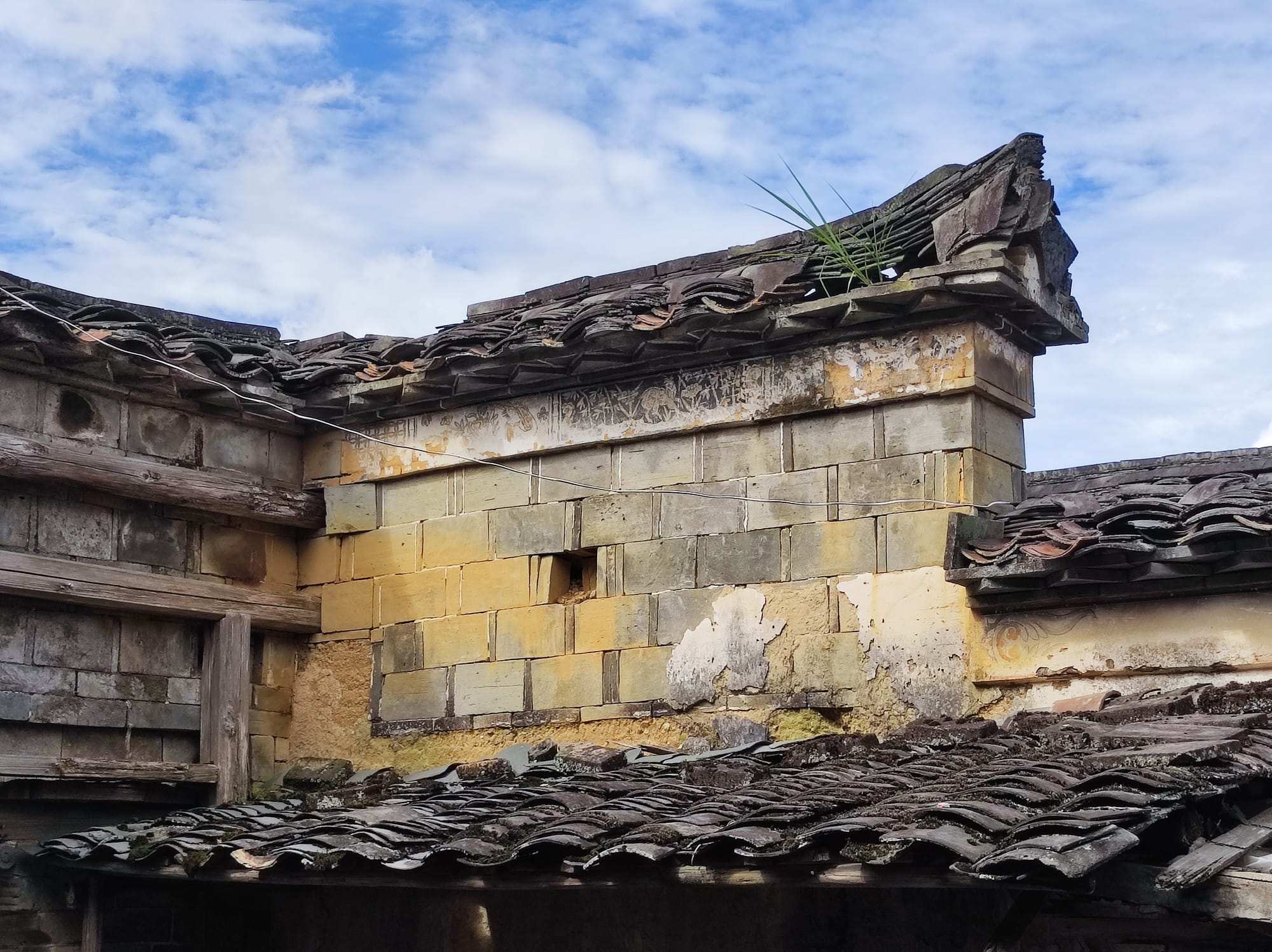
The next day, I visited my aunt and uncle, who still live in the old ancestral house—a Ming-Qing dynasty building now marked as a "historic architecture."
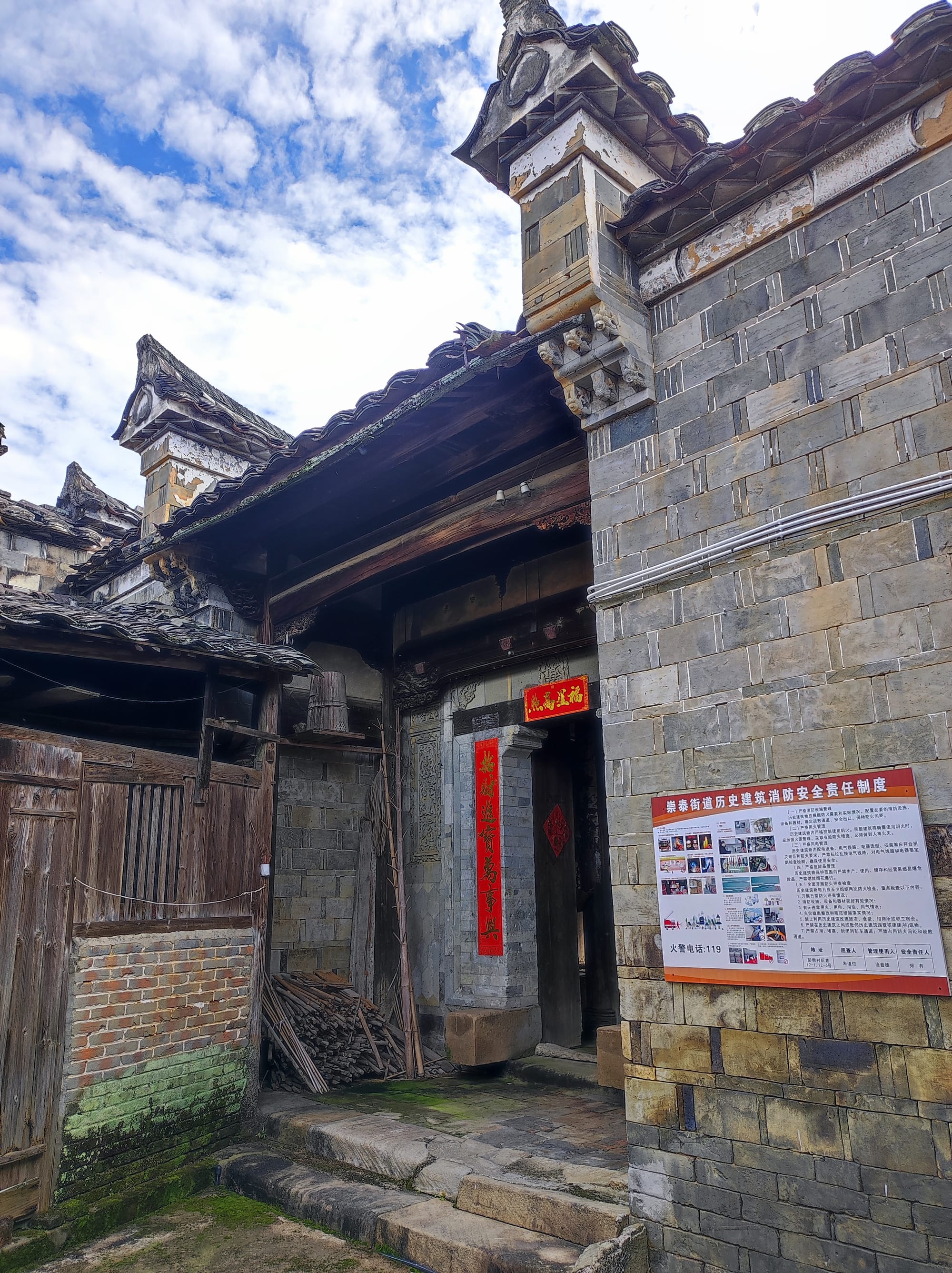
When I was a child, I lived on the periphery of this same house. Back then, I could walk from my home to my aunt's without stepping into the rain, passing through two other families' sections. Now, the whole house stands nearly empty—only my aunt and uncle remain.
After saying goodbye, I walked down the lane I used to take to elementary school. The road was being paved with concrete; on both sides, new cement walls were rising, with an old earth wall still standing in between.
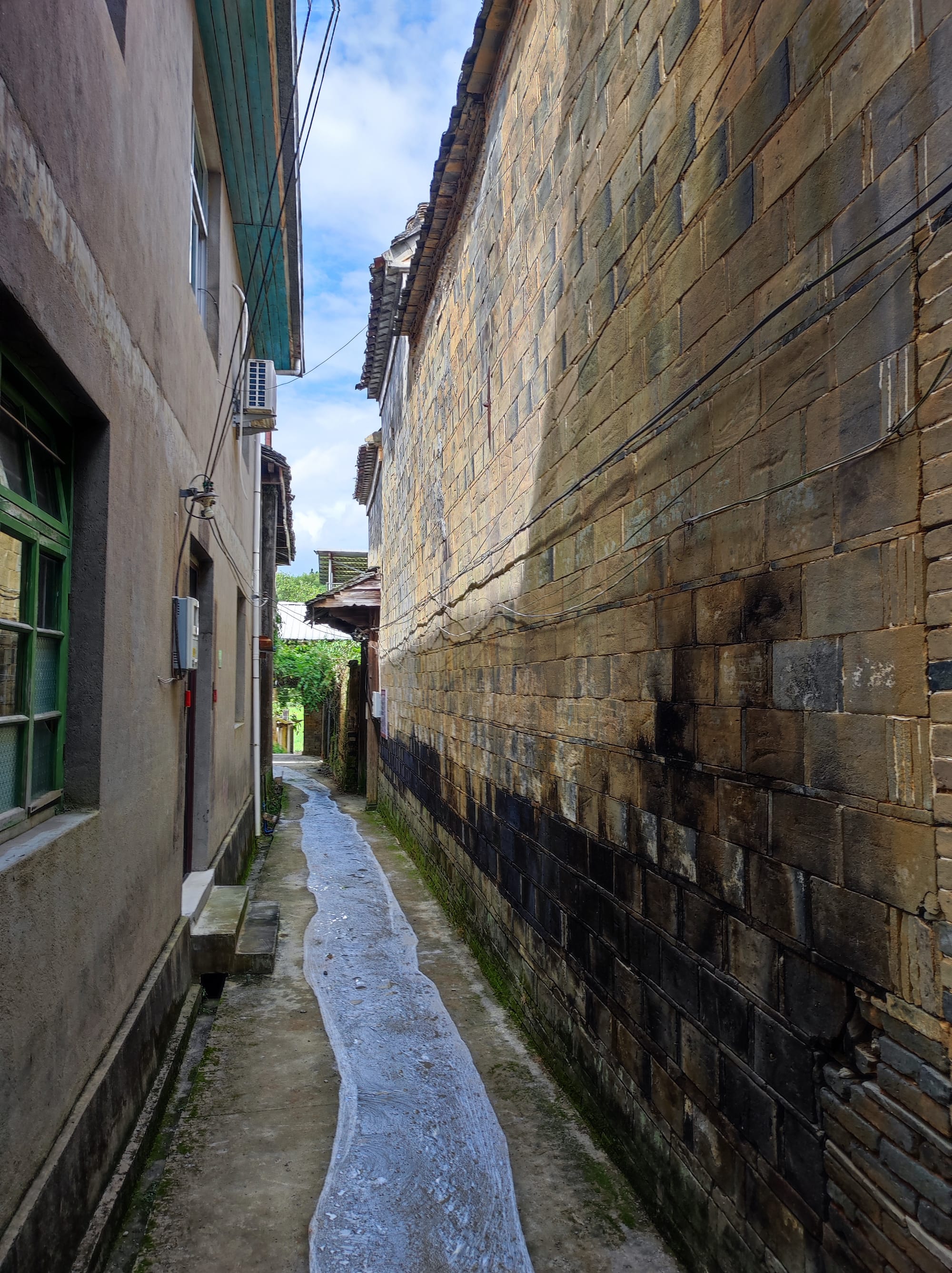
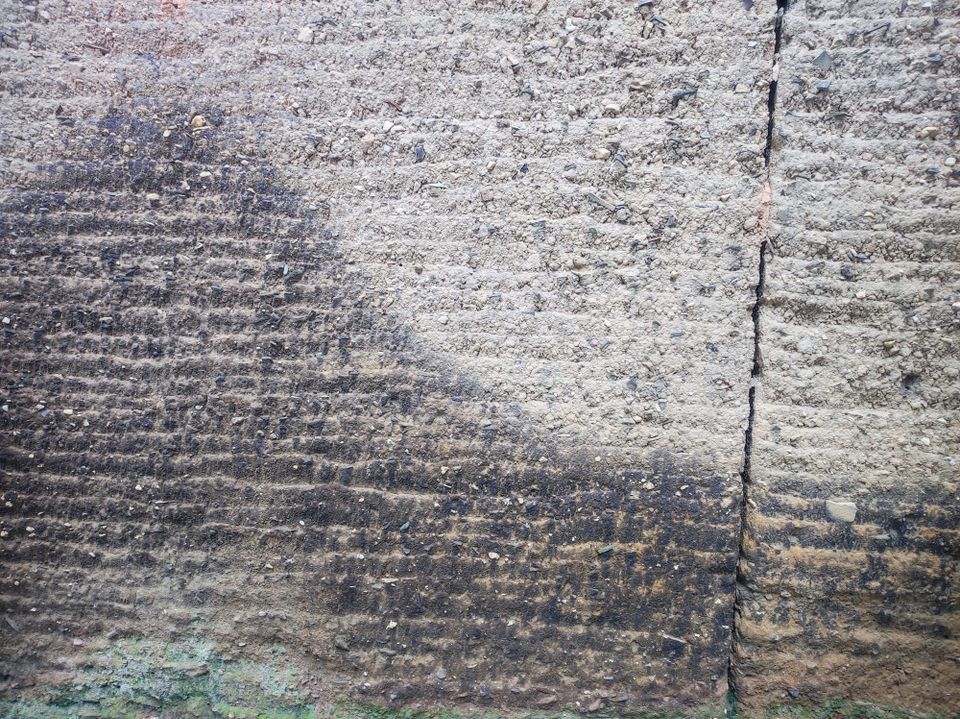
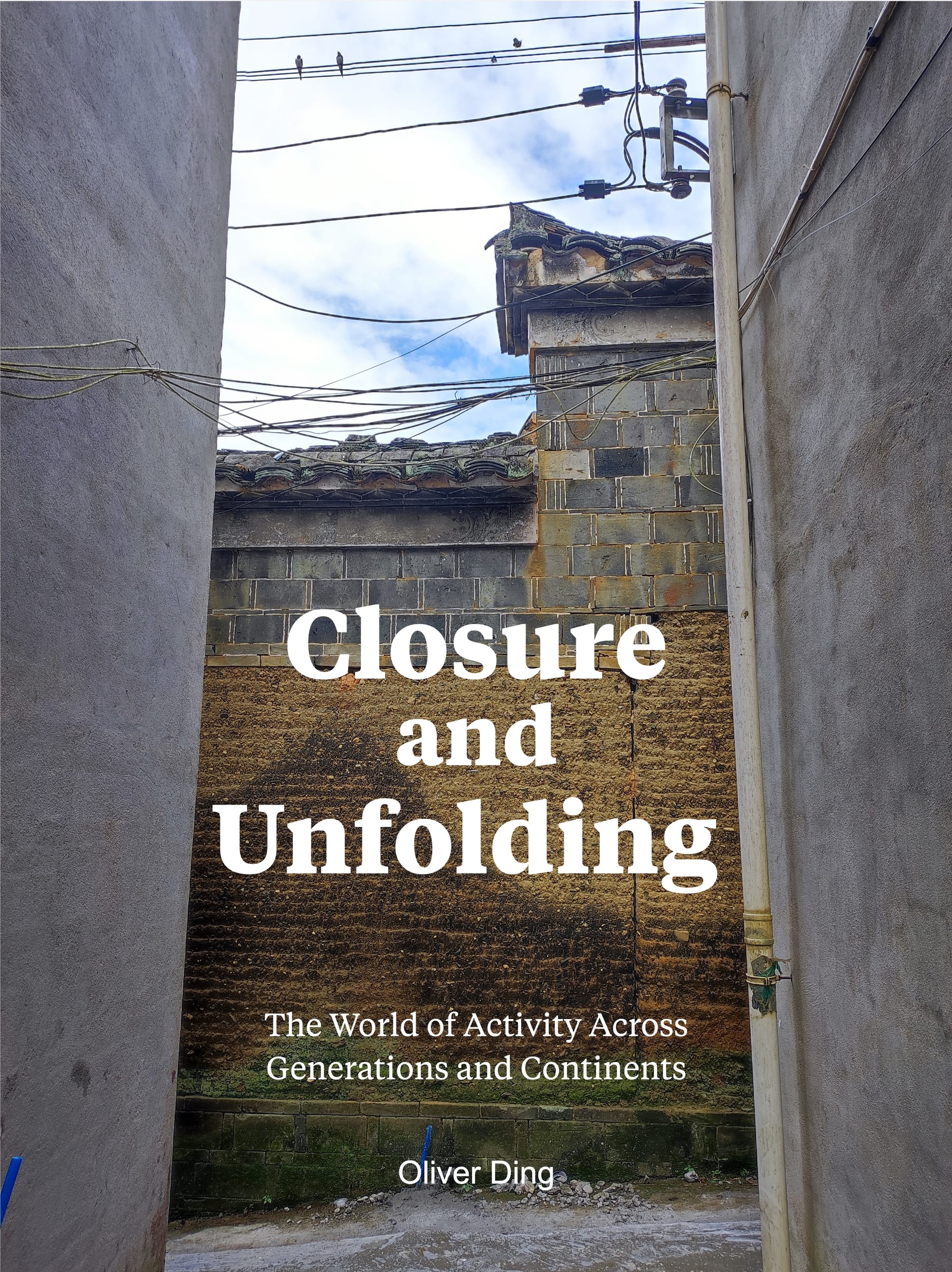
I took several photos. But after capturing this particular one (see below) —the frame that held the two cement walls and the earth wall together—I stopped and stood there for a long time.
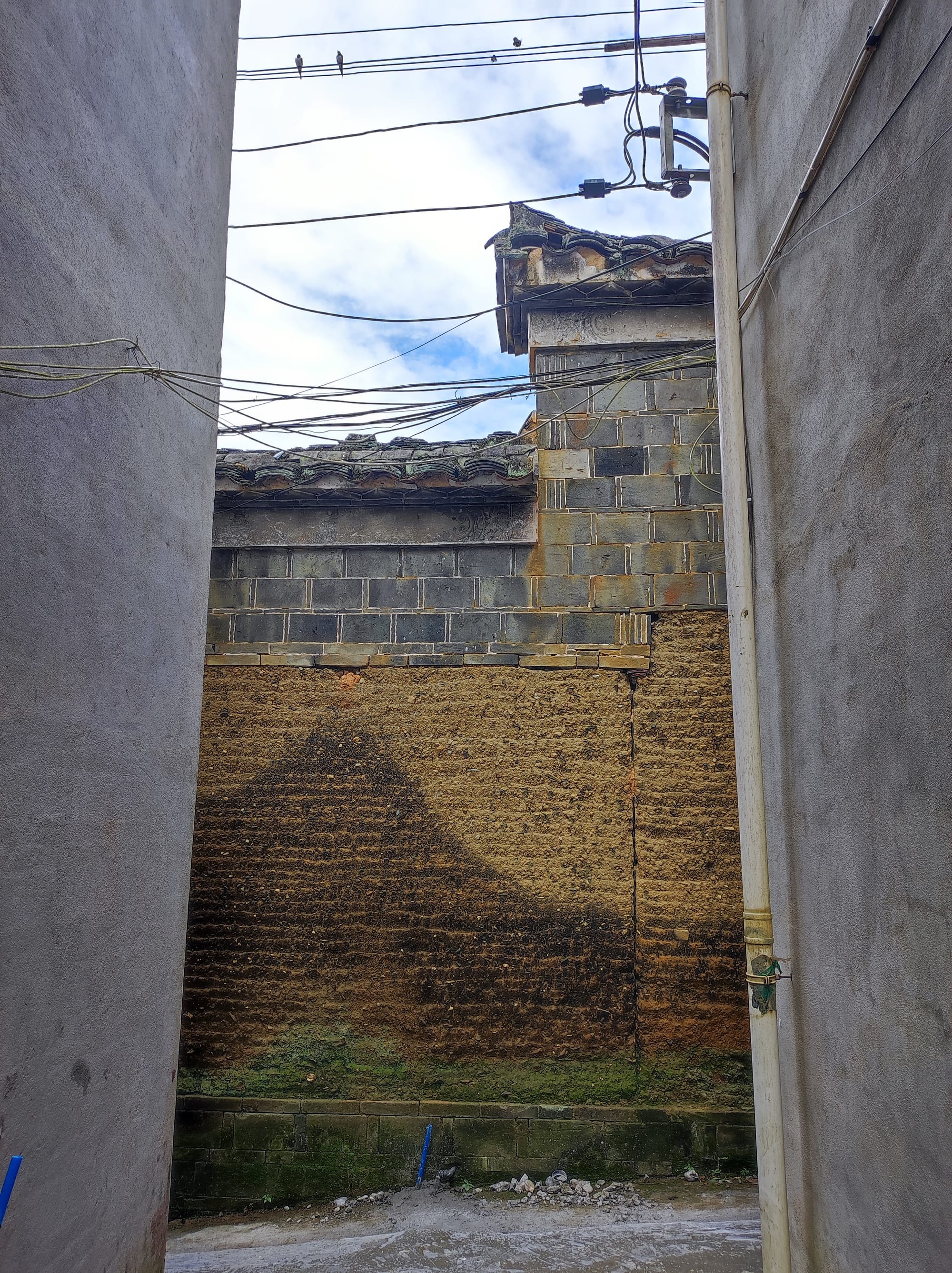
The family gathering the night before and the quiet of the old house—suddenly, they converged in this single image. The cement walls on both sides felt like curtains, and the earth wall in between like a stage.
What I saw was not just a building, but a World of Activity spanning four generations: my aunt and uncle, their world slowly closing; their descendants, their worlds unfolding across continents.
A Creative Theme
Back in the U.S., I kept returning to this photo on my phone and computer, and began taking notes. Slowly, a theme emerged: "Closure and Unfolding."
This theme—closure and unfolding happening simultaneously in the same temporal window—also resonated with the rhythm of my own creative journey in 2025.
Over the past few years, I have worked on connecting Theory with Practice, especially the knowledge engagement journey, developing a series of knowledge frameworks, models, diagrams, and methods for understanding knowledge creators’ creative lives and adult development.
During the 2024 Christmas holiday, I had a reflective conversation with a mentor, revisiting my work on HELLO THEORY, GO Theory, and the Strategic Life Narrative project. Through this reflection, I realized my newest focus had shifted toward Cultural Life Development, marking a detachment from Individual Life Development. This strategic move was encapsulated in the theme of “Cultural Grounding/Cultural Growing.”
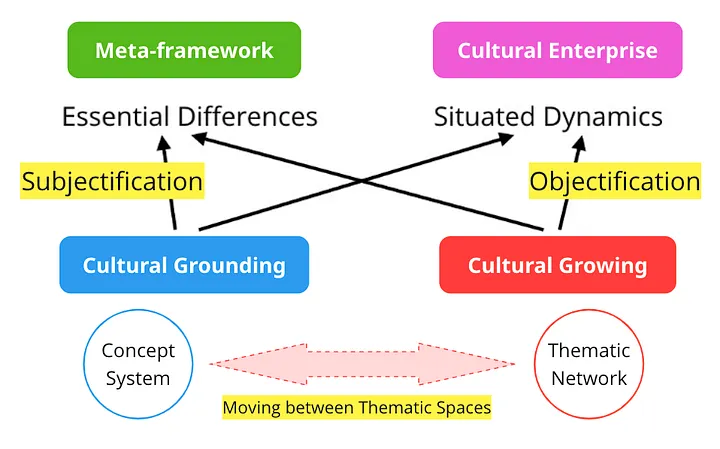
In 2025, while I worked on closing my multi-year journey of Knowledge Engagement and Individual Life Development — culminating in Creative Life Theory v3.1 — I simultaneously unfolded a new journey of Cultural Development. Below are the outcomes of a series of relevant projects:
- The Cultural Genidentity Framework (Feb 2025)
- The “Culture as Thematic Enterprise” Framework (June — September 2025)
- The Weave-the-Narrative Framework (Nov 2025)
- The Cultural Projection Model (Nov 2025)
- Six Faces of the Concept System (Dec 2025)
- The Weave-the-Culture Framework (Dec 2025)
In December 2025, the birth of the World of Life (World of Activity) approach marks a nexus-point where the act of Closing a rich history meets the act of Unfolding a new future.
Later in early 2026, the "Closing while Unfolding" pattern was marked as a member of the Dramatic Life Pattern series.
The connection between the 2025 creative journey and the 2026 thematic trip pushed me to develop the theme further. What began as a travel experience has now grown into a new possible book—the sequel to Homecoming.
A Possible Book
Homecoming was born from the 2025 thematic trip.
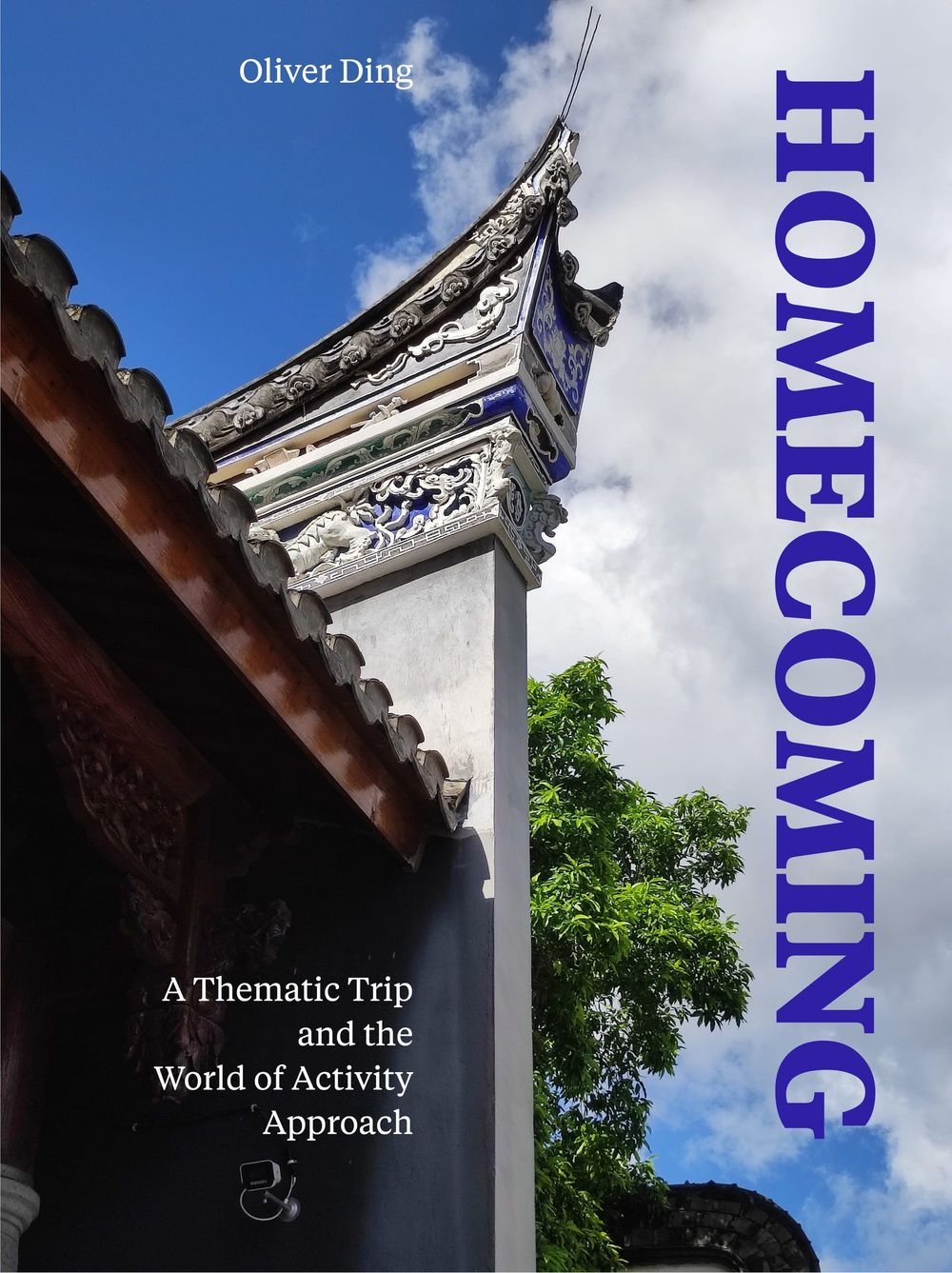
From late June to July 2025, I traveled to China, spending most of my time in Fuzhou, also known as Foochow. Before moving to the U.S., I had lived in Fuzhou for nearly 20 years. This journey became a deeply meaningful re-engagement with familiar places, old friends, and the memories that had shaped my earlier life.
At the beginning of the trip, I revisited Wuyi Mountain, searching for a symbolic object that had inspired my son Peiphen’s name. This moment led me to re-read my 2015 autobiography, A Freesoul.
More specifically, I reunited with an old friend from Beijing, and together we explored the city. One of my classmates served as our guide. In this process, I rediscovered his deep knowledge of local culture and his refined character.
Immersed in this rich experiential context, I began connecting the World of Activity approach with my situational experiences. While in Fuzhou, I mainly used the World of Activity model, also known as the “Flow — Focus — Center — Circle” schema, to reflect on my 2015 autobiography.
I discovered several distinct forms of “World of Activity,” corresponding to different developmental stages of life.
- Hometown: Primordial Situatedness @ World of Activity
- Alien Land: Geographical Expansion @ World of Activity
- Domain: Professional Development @ World of Activity
- Internet: Digital Engagement @ World of Activity
- Foreign Land: Cultural Reconstruction @ World of Activity
Later, I detached my mental focus from the past and attached it to the present. When staying at Fuzhou, I had opportunities to meet with old classmates and friends. We had wonderful conversations and exciting tours around the city.
Paying attention to the present brought new insights to me. Eventually, I discovered two more forms of the World of Activity.
- Inheritance: Generative Anticipation @ World of Activity
- Homecoming: Spatio-temporal Emergence of the World of Activity
Each form represents not merely a change of location or circumstance, but a fundamental reorganization of how the World of Activity structures itself — its boundaries, centers, and internal dynamics.
This is the core contribution of Homecoming: A Thematic Trip and the World of Activity Approach, a first-person reflection on my own World of Activity.
This year, the new thematic trip led me to plan a new possible book:
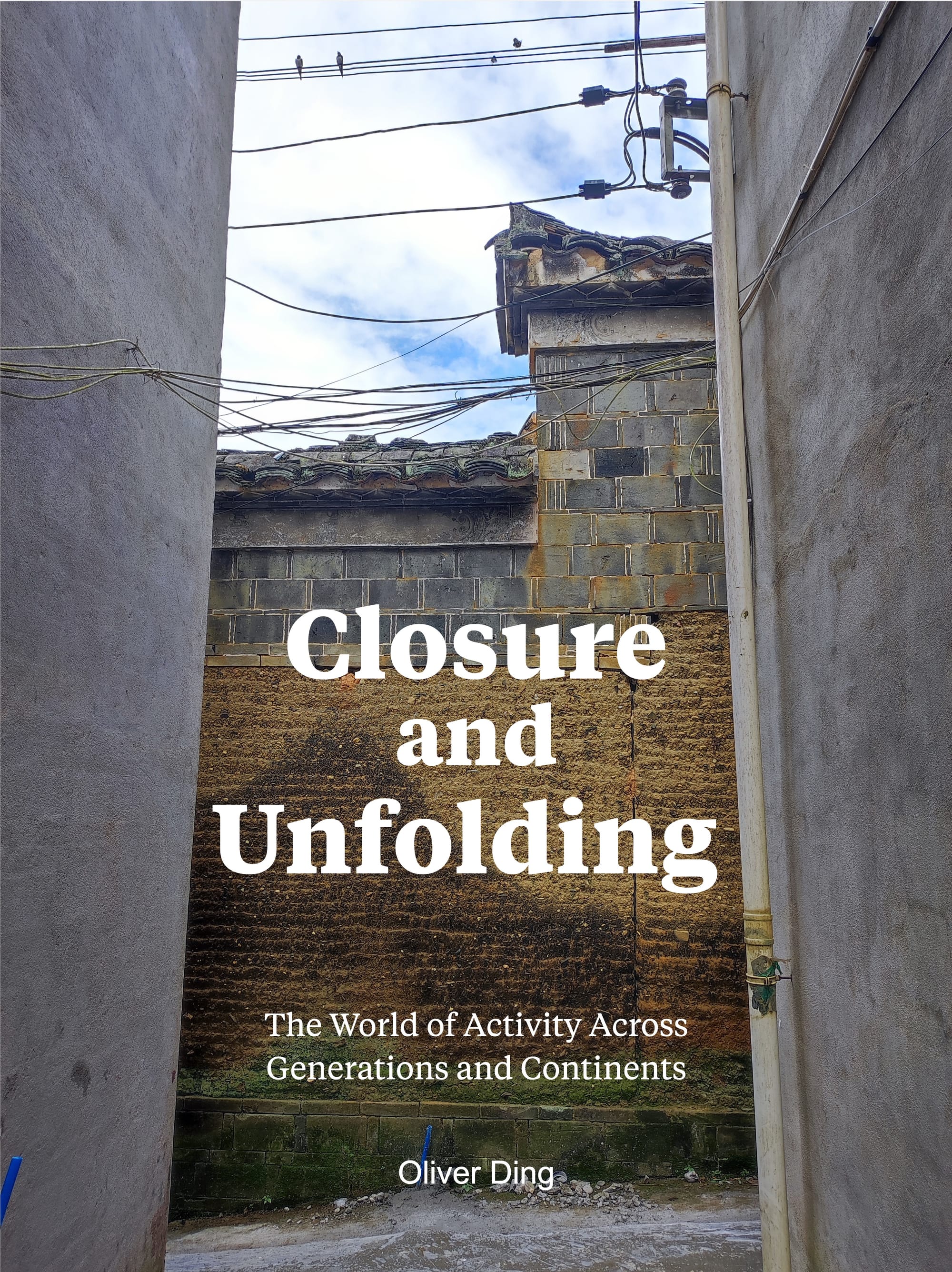
Closure and Unfolding: The World of Activity Across Generations and Continents
Though the title and subtitle, it is clear that my perspective moves from my personal World of Activity to a family across four generations – a form of World of Activity in which a tiny circle develops its diverse centers, generation by generation.
Moreover, I expanded it to a broader nationwide activity: studying abroad – a form of World of Activity across continents, which also echoes the "Studying Abroad and Returning Home" theme within the Significant Themes Framework (2026).
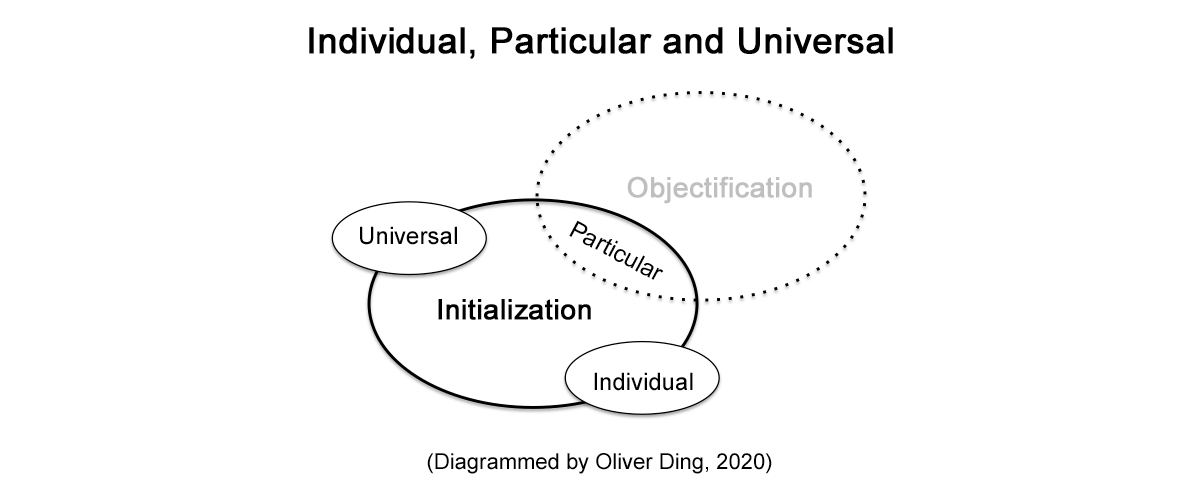
If we use Hegel's concept theory, we see three movements of the same theme:
- Individual: my own creative journey in 2025
- Particular: a family across four generations
- Universal: a nationwide activity of studying abroad and returning home
This three-movement model scales a Dramatic Life Pattern from my own living experience to a general social life pattern. In this way, the theme becomes a concept.
The principle is simple: it is a special form of World of Activity in which closure and unfolding happen simultaneously in the same temporal window. This is not a simple Before - After linear process, but a unique spatial arrangement: two processes that run in two different directions.
For people who are inhabit within this unique spatial arrangement, this theme becomes a valuable spatial heuristic.
The "Slow Cognition" Analysis
The development of the "Closure and Unfolding" theme was a complete cycle of the six operations of Slow Cognition, which is part of Cognitive Hydrology.
From the perspective of Cognitive Hydrology, whether we speak of Knowledge Engagement or Cultural Development, the raw material of both comes from the same place: the cognitive flood that reaches us moment by moment, day by day, through lived experience. Perception, confusion, resonance, surprise, memory, and conversation — these constitute a person's actual cognitive reality. They flow without interruption. Most of them dissipate without a trace.
Cognitive Hydrology asks this question precisely — and answers it through six operations of Slow Cognition:
- Thematic Exploration (Source-seeking): tracing ideas back to their origins, following the stream upward toward its source.
- Embodied Experience (Immersion): you cannot understand water by reading about it. You must wade in.
- Thematic Conversation (Confluence-creating): when streams meet, they interact, create turbulence, and generate new currents.
- Conceptual Thinking (Clarification): when water settles in a lake, sediment falls away, and clarity emerges.
- Strategic Curation (Flow-guiding): water flows naturally, but intelligent intervention — canals, reservoirs — can guide flows productively.
- Continuous Objectification (Mapping): hydrologists create maps not to freeze rivers but to make patterns visible and shareable.
These six operations, working together across long time scales, are how the cognitive flood becomes a creative flow.
In the age of AI, this question takes on new urgency. As the external storage and retrieval of knowledge is taken over at scale by machines, the distinctly human work becomes: how to transform the cognitive flood into a creative flow. Not managing knowledge, but letting lived experience find direction. Not accumulating information, but discovering patterns within the flow.
A series of operations lay behind the birth of the "Closure and Unfolding" theme. Let's see how it unfolded naturally.
#1 – Embodied Experience – July 10 to July 27, 2026
I traveled with my children from the U.S. to Fuzhou, then to Jianyang.
#2 – Thematic Conversation – July 27, 2026
The night before returning to Pengdun, I gathered with my cousins in Jianyang. Over dinner, I listened to stories of our family across four generations: my aunt and uncle still in the old house, my cousins settled in Jianyang, their children now in Fuzhou, Japan, and one preparing for Vienna.
#3 – Embodied Experience – July 28, 2026
The next day, I visited my aunt and uncle in the old house. After saying goodbye, I walked down the lane I used to take to school as a child. I took a photo of the new cement walls on both sides with an old earth wall standing between them.
#4 – Conceptual Thinking – July 28, 2026
After pressing the shutter, I stood there and felt something. The two cement walls like curtains, the earth wall like a stage. The metaphor came on its own: "Closure."
#5 – Thematic Exploration – Aug 1, 2026
Back in the U.S., I kept returning to the photo. I discussed it with DeepSeek. In the conversation, the second half of the pattern emerged: "Unfolding."
#6 – Thematic Exploration – Aug 1, 2026
"Closure and Unfolding" turned out to resonate with my 2025 creative journey—the one-year period when I closed my Knowledge Engagement work while simultaneously opening a new direction in Cultural Development. What I had experienced at the individual level in 2025, I now saw at the family level in Pengdun.
#7 – Conceptual Thinking – Aug 1, 2026
I realized that dramatic life patterns can manifest across different scales: individual, family, and beyond. This insight pushed me to develop the theme further.
#8 – Strategic Curation – Aug 1, 2026
I sketched a three-part book structure: my 2025 creative journey, the family story of four generations, and the broader social dimension (China's urbanization over the past few decades).
#9 – Embodied Experience – Aug 2, 2026
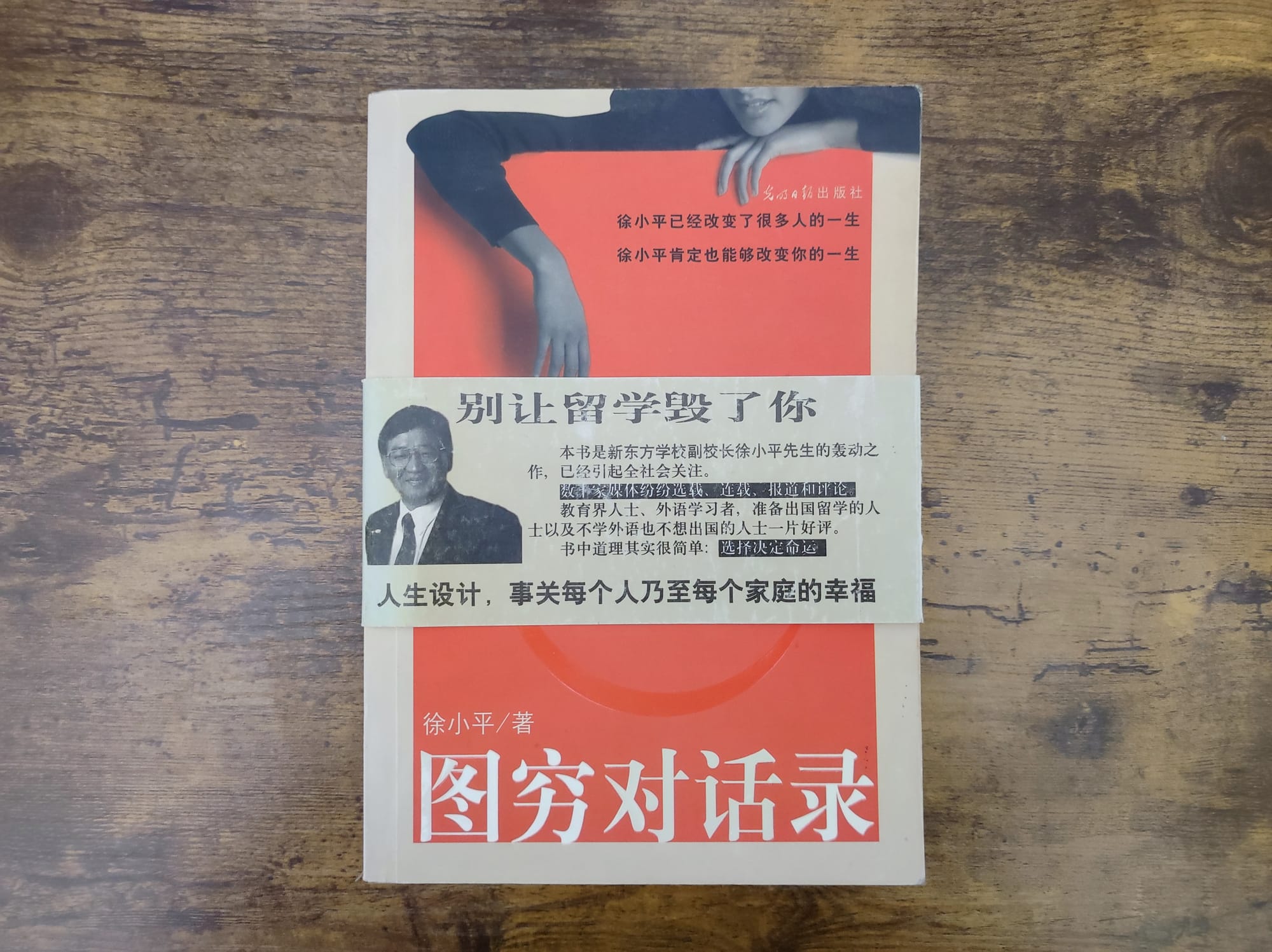
I saw an old book on my desk that I had brought back from Fuzhou: Dialogues on Study Abroad and Life Design (Xu Xiaoping, 2002), a book from the early movement of China's study-abroad boom.
#10 – Thematic Exploration – Aug 2, 2026
It led me to think of the World of Activity case studies I had been working on: stories of overseas Chinese women rebuilding their lives across continents.
#11 – Strategic Curation – Aug 2, 2026
I shifted the "Nation" layer of my book from "urbanization" to "the changing meaning of studying abroad." The third part was set.
#12 – Continuous Objectification – Aug 3, 2026
I used the photo to design a thematic card. The theme now has a name, a cover image, a manuscript outline, and the book is in progress.
#13 - Thematic Conversation - Aug 4, 2026
To respond to a friend's comment on my post on thematic curation on Linkedin, I shared the story with the picture as an example. Later, I published it as an independent post on Linkedin.
#14 - Continuous Objectification - Aug 5, 2026
The Linkedin post was expanded into a long article, framing as a case study of the six operation of Slow Cognition.
#15 - Conceptual Thinking - Aug 5, 2026
While writing the long article, Hegel's concept theory (three movements of concept: individual, particular, and universal) was adopted to frame the three-set structure of the possible book.
#16 - Strategic Curation - Aug 5, 2026
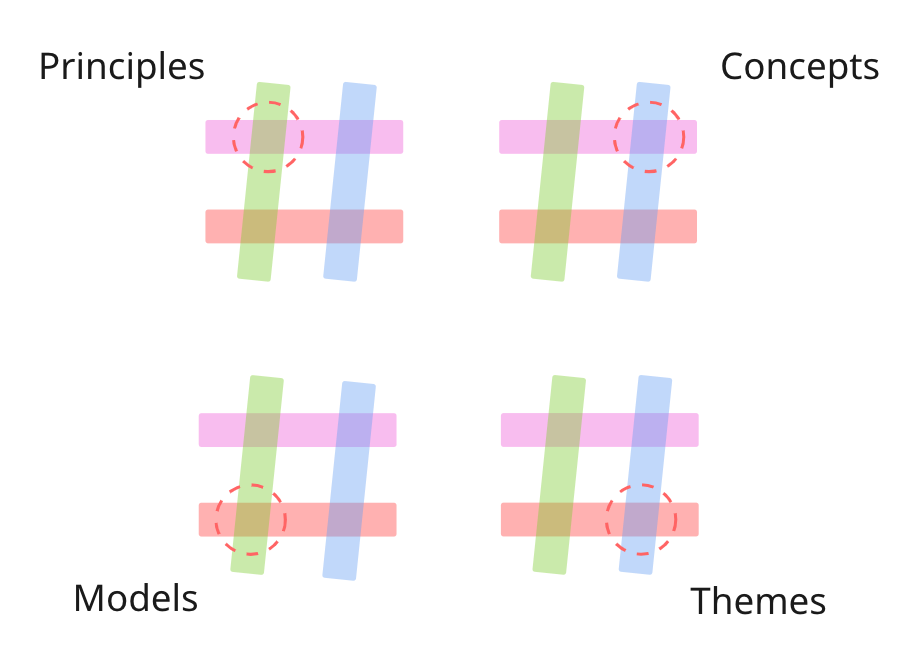
While writing the long article, the Weave-the-Theory model was adopt to optimize the landscape of ideas: Theme, Model, Concept, and Principle were identified.
This case study indicates that six operations of slow cognition are not linear, but weave together within everyday experience.
A Spatial Encounter
The key object of this case study is the photo—the first objectification of my experience. It is worth examining the moment when the experience became an image.
On that lane, I took several photos. Most were documentary: the road, the walls, the village. Only one triggered a lasting emotional response. That is Spatial Heuristics at work: a spatial configuration, encountered in the world, calls out to a concept already forming in the background of experience.
- Emotional Accumulation – The night before, the conversation and reflections during the gathering with my cousins.
- Embodied Experience – I was standing there.
- Symbolic Object – The spatial configuration captured in the photo.
- Metaphorical Association – I immediately saw the metaphor: "Closure."
Other photos from that same walk focused on cement walls or the earth wall separately.
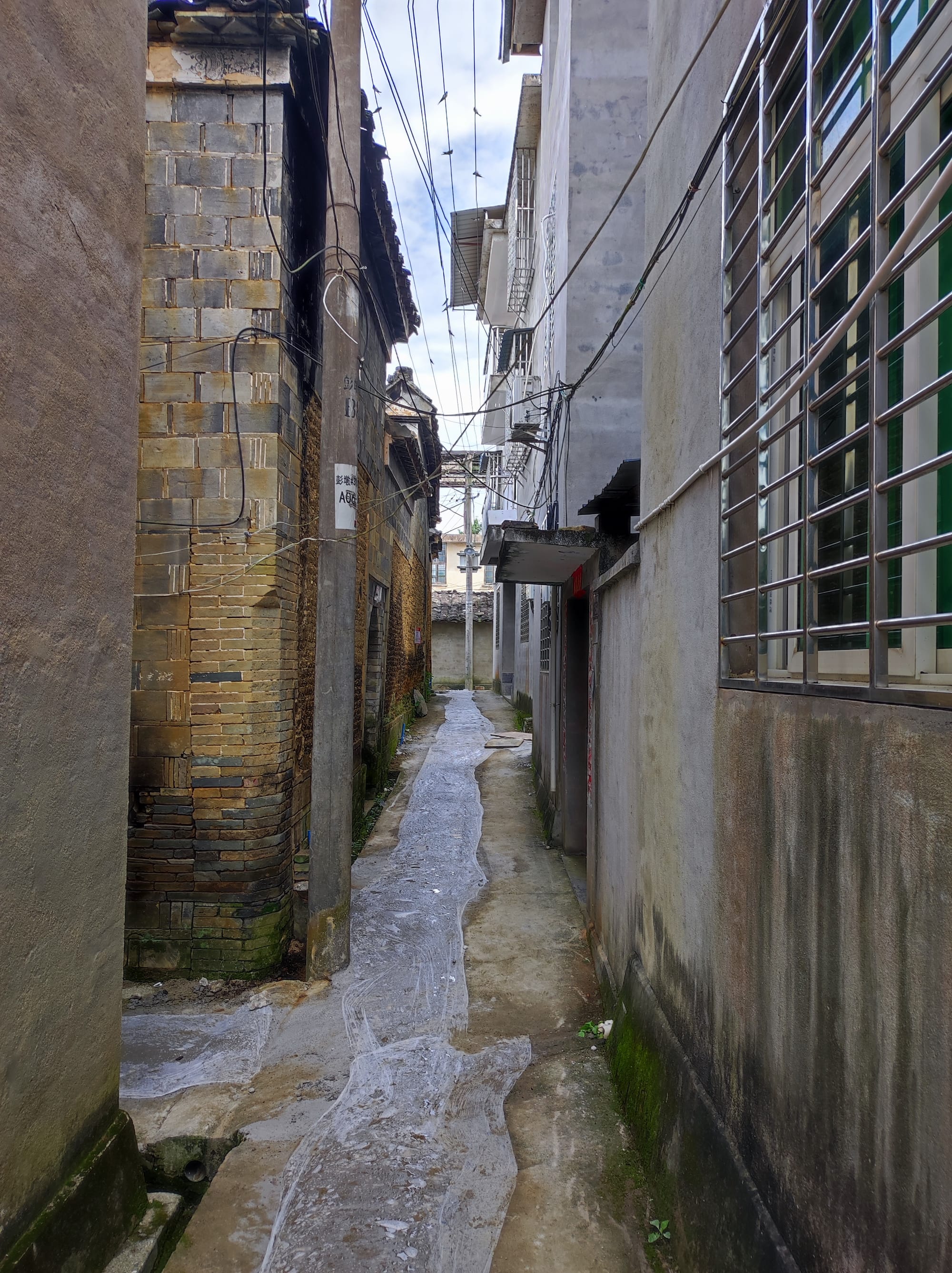
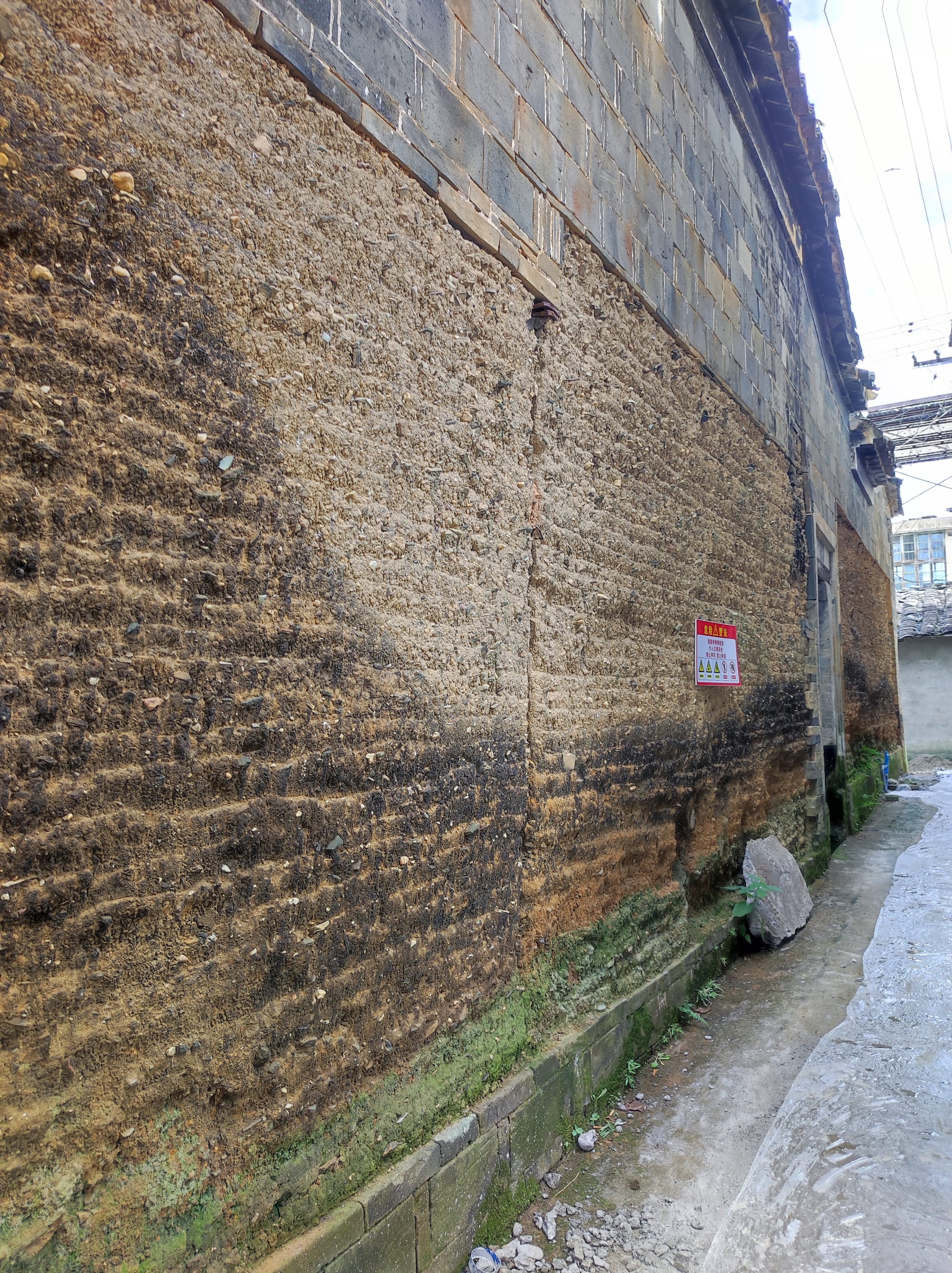
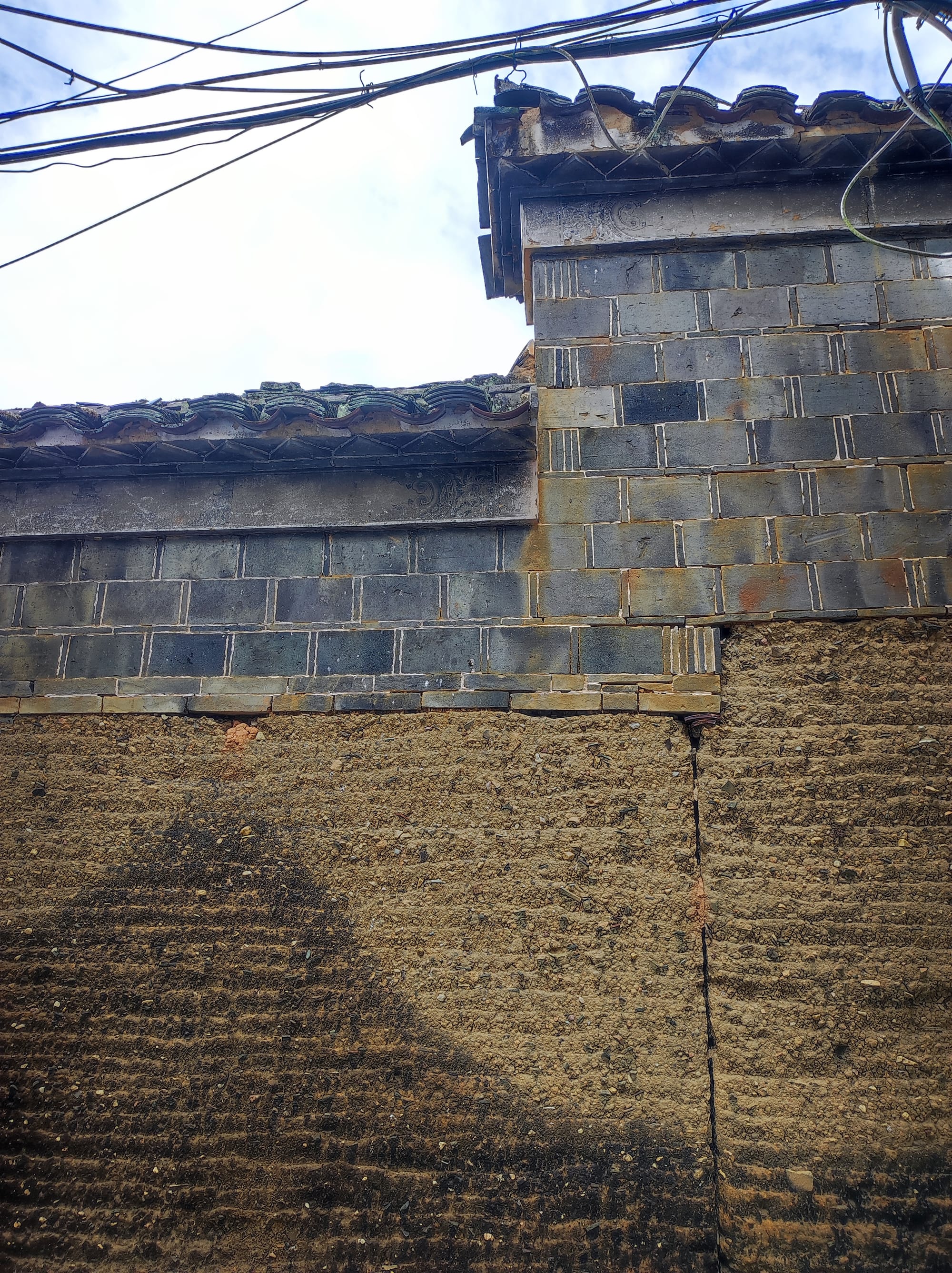
Only this one offered the full spatial configuration—curtains and stage in the same frame, anticipating what would come.
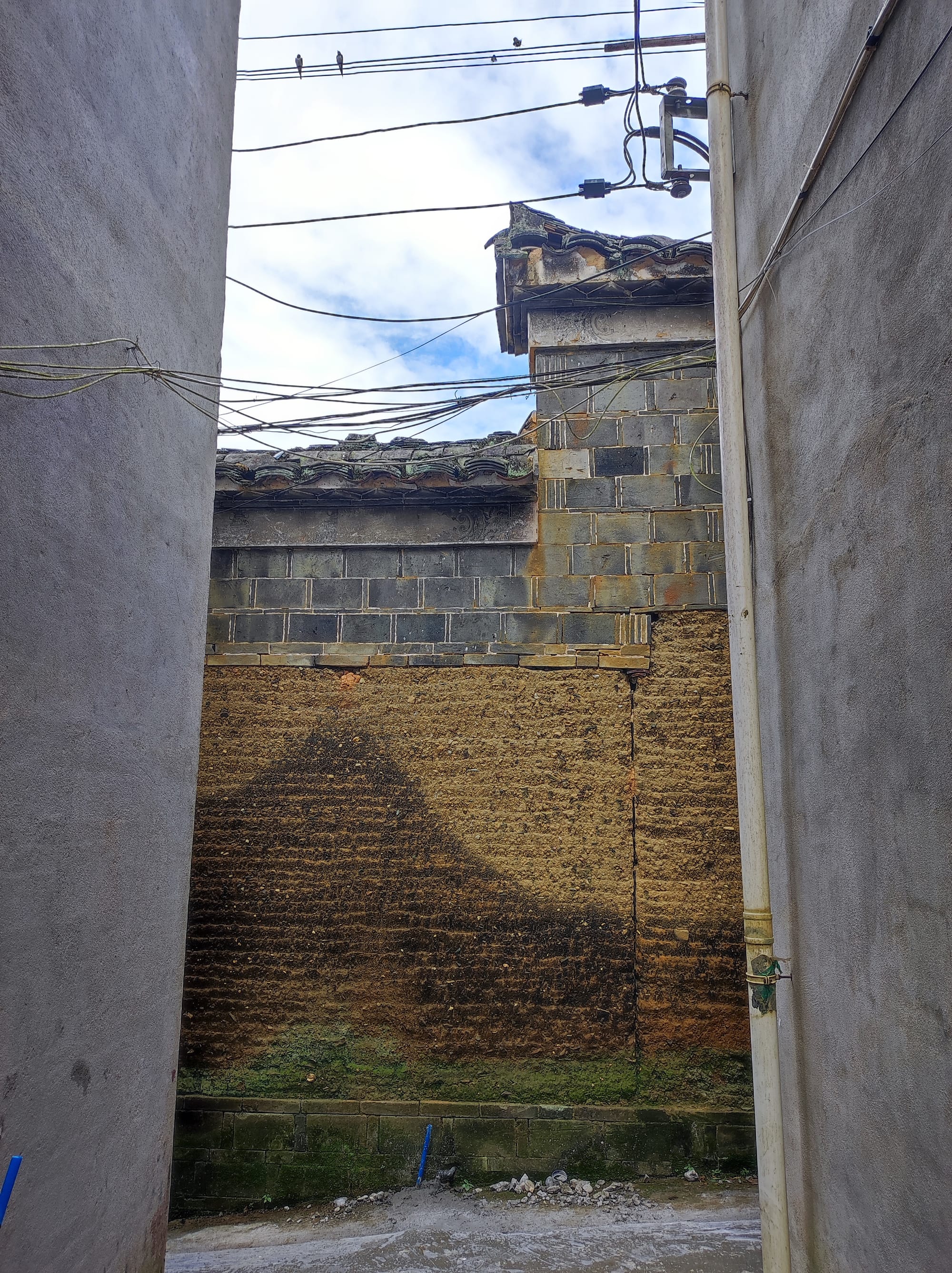
The image itself was not planned. I did not compose it with any intention. But as I looked at the screen, something struck me: the two cement walls on both sides, the old earth wall in between. The spatial arrangement was immediate—two vertical structures framing a third.
I did not think about it. I felt it. And then the metaphor came: "Closure."
Later, when the second half of the metaphor arrived ("Unfolding"), I realized it was already present in the photo. Two directions were running simultaneously, visible in a single frame. The photo had been waiting for the concept to catch up.
Closing and Unfolding
This case study began with a thematic trip and ends with a possible book.
Between them, a concept was born, named, and developed. The process that produced it—from embodied experience to thematic conversation to conceptual thinking to strategic curation to continuous objectification—was not a sequence I followed. It was a flow I entered. The sixteen steps above show how the six operations of Slow Cognition wove together, overlapped, and circled back, rather than unfolding in a straight line.
The photo, the conversations with DeepSeek, the old book from Fuzhou—they were not separate events. They were tributaries, converging in the same watershed.
And this article is itself an instance of Continuous Objectification: the act of making a pattern visible and shareable, so that others might recognize it in their own experience.
The water found its course.
v1.0 - August 5, 2026 - 2,889 words