
by Oliver Ding
September 3, 2026
Hi, and welcome to the Activity Analysis Center, which hosts three theoretical enterprises:
- The Life-as-Activity Approach (including Project Engagement and AAS)
- The World of Activity Approach (including the FFCC Model)
- The Activity Analysis & Intervention (AAI)
The center also functions as a meta-center to support a network of knowledge centers created over the past several years. In 2026, the major strategic action is hosting GO Theory as a theoretical platform to support all theoretical enterprises.
To engage with this work, you can take two paths: Analyst — applying the methodology in practice; or Theorist — contributing to the theoretical development.
On this page:
- Traditional Activity Theory
- An Interdisciplinary Creative Journey
- Knowledge Engagement
- Becoming an Activity Analyst
- Weave the Theory
- Specific Projects and Advanced Analysis Methods
1. Traditional Activity Theory
The center evolved from my early project, the Activity U project, which curated the landscape of Activity Theory in 2020.
I began studying Activity Theory around 2015. In 2020, I worked on the Activity U project, which resulted in two book drafts and the initial development of the Project Engagement approach. From 2021 to 2022, I created the Anticipatory Activity System (AAS) framework and applied it to explore life strategies. In 2023, I designed the Activity Analysis & Intervention (AAI) Program. In 2024, I revisited and refined the Project Engagement approach, developing version 3.1.
Since my primary interest lies in individual development and creative life, I use Life as Activity to highlight my direction of exploration in the field of activity-centered social theories.
If you are interested in traditional Activity Theory, see links below:
- Traditional Activity Theory: articles on concepts from Lev Vygotsky, Aleksei Leontiev, Yrjö Engeström, Andy Blunden, Bonnie Nardi, Clay Spinuzzi, and other activity theorists.
- Appropriating Activity Theory: A Decade of Engaging with a Century-Old Tradition (Possible Book, 2026)
- Revisiting the Genidentity of Activity Theory
2. An Interdisciplinary Creative Journey
Engaging with traditional Activity Theory inspired many insights on human activity and social practices. I also explored other theoretical traditions such as Ecological Psychology, Theoretical Sociology (inspired by Phenomenological Sociology), Creativity Studies, and others.
Over the past ten years, I went on an interdisciplinary creative journey, particularly the Philosophy-Sociology-Psychology path, focusing on the Self-Life-Mind schema. The diagram below shows my journey.
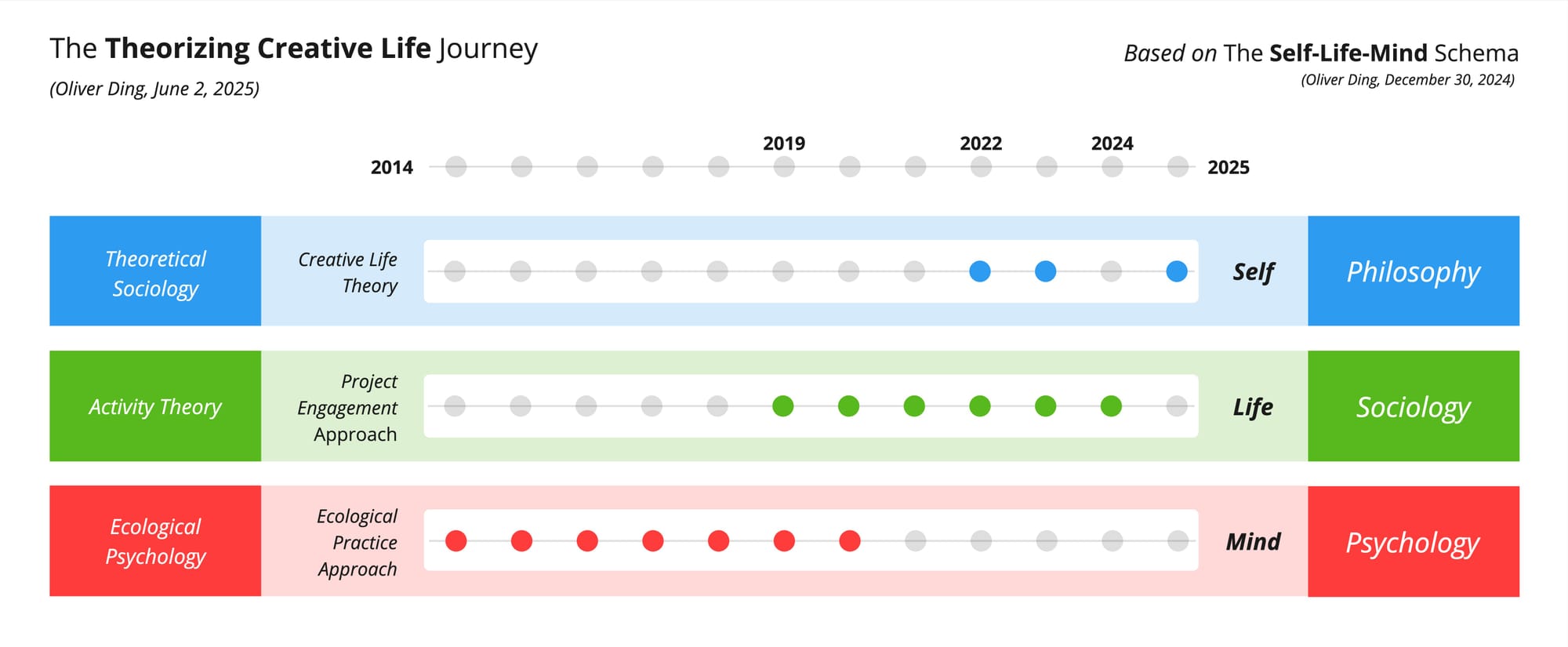
- Early phase (2014–2020): Psychology, especially Ecological Psychology.
- Middle phase (2019–2024): Sociology, especially activity-based social practice theories.
- Late phase (2022, 2023, 2025): Philosophy, especially self and subjectivity.
The diagram only highlights my mental focus on exploring a new discipline at different periods. It does not represent my actions and projects. For example, I actively worked on the Ecological Practice Approach from 2021 to 2025.
Over the past several years, I have drawn on three theoretical traditions as resources to develop three theoretical enterprises:
- The Life-as-Activity Approach - inspired by traditional Activity Theory and other theoretical resources
- The Ecological Practice Approach - inspired by ecological psychology
- Creative Life Theory - inspired by Theoretical Sociology and Creativity Studies
While I maintained boundaries between these approaches, over time, I applied them to study how a person achieves a creative life, resulting in different perspectives and knowledge frameworks.
At some points, I developed a series of concepts, forming the core of a new approach, weaving ideas inspired by other approaches into a meaningful whole, especially for understanding Creative Life.
In June 2025, I named the fourth theoretical enterprise the World of Activity Approach. In December 2025, it was expanded to the World of Life (World of Activity) Approach (also named GO Theory in 2026).
Quick Links
- A GAP Project and a Generative Confluence Journey - How did I develop the World of Activity Approach?
- Weave the Life: The Life-as-Activity Approach (v4.0) and Personal Knowledge Ecology - a possible book (v1, 2026)
- Being by Doing: World of Activity and Creative Life Theory (v3.0) - A possible book
- Container Thinking: The Ecological Practice Approach (v4.0, 2025) - A possible book
3. Knowledge Engagement
While paying attention to the general topics of Activity Theory, each activity theorist also focuses on at least one specific type of activity. Over the past years, my central activity has been Knowledge Engagement — a cluster of practices that revolve around engaging with knowledge, such as:
- Developing Tacit Knowledge
- Knowledge Curation
- Thematic Exploration
- Concept Creation
- Framework for Work
- Meta-frameworks
- Creative Diagramming
- Methodological Empathy
- Spatial Heuristics
- Thematic Trip
- Theoretical Activity
- Knowledge Ecology
After working on a series of knowledge projects, I developed a set of knowledge frameworks, diagrams, and models, eventually writing 60 book drafts, which I called Possible Books.
Quick Link:
- The "Theme–Concept–Framework" Transformation (2023–2026) - featured 23 possible books
- Concepts - a category of the site
- Cultural Themes - a category of the site
- Diagrams - a category of the site
- Frameworks - a category of the site
- Weave the Theory - a possible book (v1.0, 2026)
4. Becoming an Activity Analyst
In June 2026, the Activity Analysis Center made a major transition: moving from theoretical development to practical analysis. The new operational core is Activity Analysis & Intervention (AAI).
The primary goal of AAI is to support Activity Analysts in:
- Navigating the knowledge ecology
- Curating situational toolkits
- Developing signature programs
AAI is not a method for applying a fixed toolkit to other people's problems. It is an approach to developing a different kind of practitioner: the analyst who can navigate a knowledge ecology, understand concrete situations, curate appropriate conceptual resources, and gradually develop their own signature developmental programs.
Currently, the AAI program takes the World of Activity Toolkit (v2.0) as its primary knowledge ecology.
Quick Links:
- Becoming an AAI Analyst - the practical path
- Activity Analysis & Intervention (AAI) 2026
- The World of Activity Toolkit (v2.0, 2026)
5. Weave the Theory
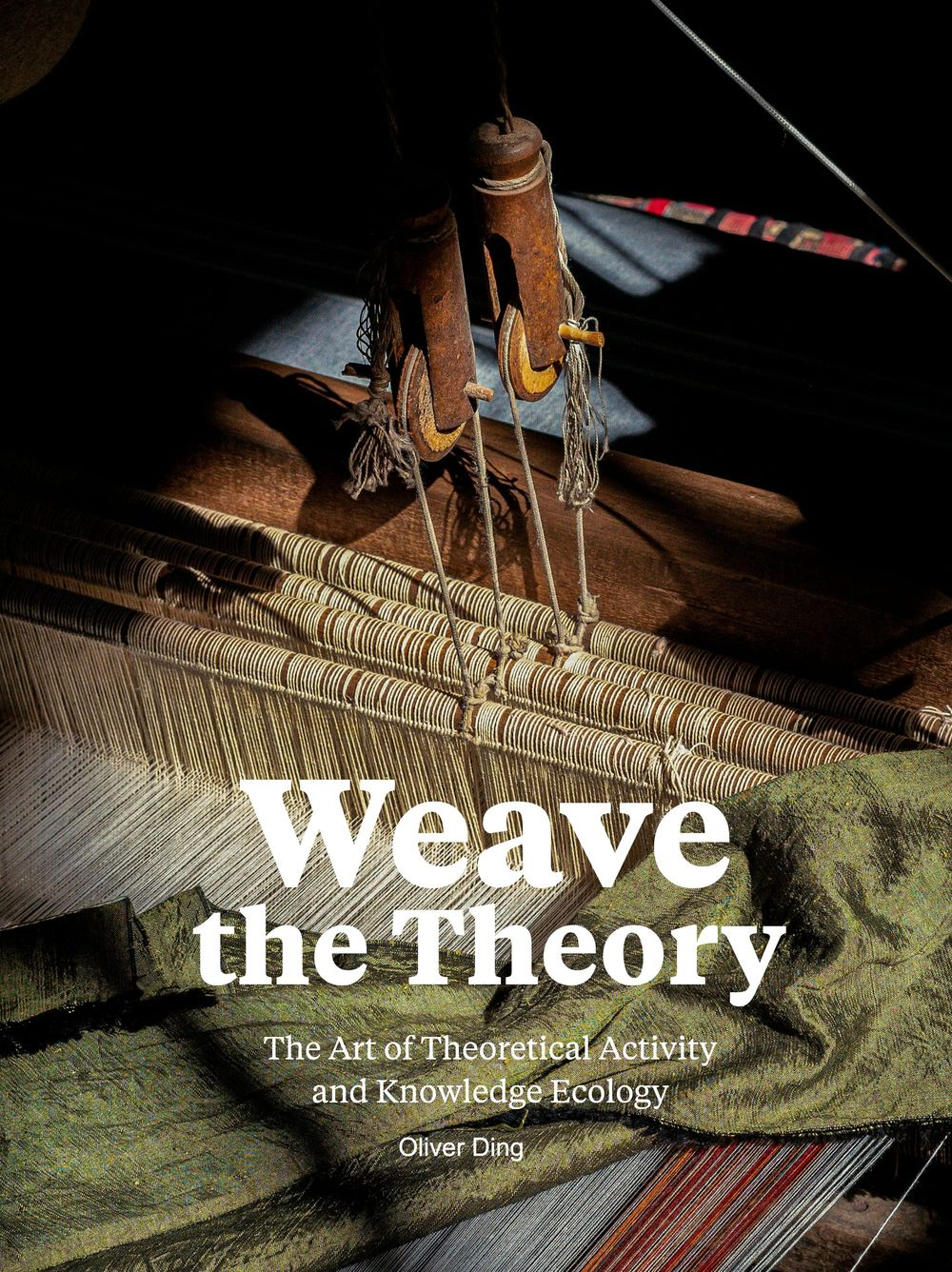
For those drawn to the Theorist path, explore the recent book draft: Weave the Theory: The Art of Theoretical Activity and Knowledge Ecology.
Theoretical activity is a special type of human activity. It encompasses the full range of practices through which creators engage with theoretical knowledge: building theories, developing frameworks, curating existing concepts, integrating traditions, and theorizing about observed phenomena. What distinguishes theoretical activity from other forms of knowledge work is not its subject matter but its orientation: it is activity that takes theoretical knowledge itself as its object.
Three concepts are central to understanding theoretical activity at different scales:
- Theoretical Enterprise
- Theoretical Tradition
- Theoretical Platform
The book presents case studies ranging from individual theoretical enterprises developed over years to a large-scale tradition developed over a century — demonstrating that theoretical activity follows recognizable structural patterns that can be analyzed, compared, and learned from.
Quick Links
6. Specific Projects and Advanced Analysis Methods
I continuously launch specific projects and develop advanced analysis methods through case studies and concept development.
In the first half of 2026, two major projects were launched under the GO Theory platform: Anticipatory Cultural Sociology (ACS) and Strategic Developmental Psychology (SDP). ACS explores cultural development at the collective scale; SDP examines individual life development across the life course. These projects have generated new concepts (such as Gejunction) and new analytical methods.
Some case studies and contents are only available to paid members.
Quick Links
- Anticipatory Cultural Sociology: Creation, Projection, and Agency - a possible book (2026)
- Strategic Developmental Psychology - a possible book (2026)
- Generative Confluence (1, 2, 3) - Lake 42: The Great Confluence - a possible book
- Revisiting and Rebuilding: A Strategy for Creative Identity Development - a possible book (2026)
- Developmental Episode Analysis - Joint Center: Revisiting the van Gogh brothers' Creative Life
- Gejunction Analysis - Gejunction in the Wild (Collection, v1,2026)
- Case Studies - a category of the site
- Dramatic Life Pattern - a category of the site
- Supportance Analysis: How a Theoretical Platform Supports Creative Work - an article
- Genidentity Analysis - an article
v1.0 - September 3, 2026 - 1,303 words