
Joint Center: Revisiting the van Gogh brothers' Creative Life
A Case Study of Creative Pairs in the World of Activity Framework
by Oliver Ding
August 10, 2026
Introduction
In a recent theoretical extension of the World of Activity framework (Ding, 2026), I proposed the proposition "Center as RelationField" and introduced a structural axis distinguishing Intimate Centers from Non-Intimate Centers. That work operated entirely within the first-person perspective that defines the World of Activity framework: how a single person holds, maintains, or loses Centers within their own activity world, and how dual-center configurations structure a person's developmental trajectory across life stages.
As I continued developing Creative Life Theory, however, I noticed a recurring phenomenon that the existing framework did not name: two independent creators, each experiencing their own Center as "mine," yet from an external view, these two Centers appear to be nearly the same object—highly overlapping, almost identical. This is not a matter of collaboration in the everyday sense, nor is it an institutional partnership. It is a structural feature of subjective experience: my Center and your Center, from the inside, feel like distinct centers of our respective activity worlds; from the outside, they look like one.
I call this configuration a Joint Center.
The term needs to be distinguished from its everyday usage. In ordinary language, a "joint center" might suggest a shared office, a formal partnership, or a legally incorporated enterprise. In the World of Activity framework, Joint Center refers to something else: two first-person perspectives, each experiencing their own Center as "mine," yet from an external view, these two Centers are highly overlapping—almost the same object. The configuration does not require institutionalization. A Joint Center can exist without a joint venture, without a formal agreement, without any institutional structure. It is a structure of subjective experience—not a legal or organizational form.
The case study focuses on Vincent and Theo van Gogh—one of the most extensively documented creative pairs in history. Their 18-year correspondence (659 surviving letters from Vincent to Theo, 46 from Theo to Vincent) provides unusually rich, publicly accessible material for tracing the dynamics of a Joint Center across its full lifecycle. The choice of the van Gogh brothers is methodologically deliberate: their case is well-documented, historically significant, and already part of the scholarly conversation on creative collaboration (see Shenk, 2014; John-Steiner, 2000), making it a suitable test case for the new conceptual tools developed here.
Contents
Introduction
Part 1: Joint Center — Two First-Person Perspectives, One Shared Structure
1.1 Joint Center and Joint Focus
1.2 Joint Center Without Institutionalization
1.3 Nested Structure and Co-Oriented Structure
Part 2: Analytical Framework and Method
2.1 The Case
2.2 Method: Developmental Episodes
2.3 The RelationField Framework
2.4 The Ap-Re-Pro-Co Model
2.5 From Case to Framework
Part 3: Case Study — The Van Gogh Brothers' Creative Life
3.1 Phase 1 (1872-1880): Joint Focus — Creative Life Discovery
3.2 Phase 2 (1880-1885): Joint Center — Strategic Life Support
3.3 Phase 3 (1886-1888): Curator Supports Creator
3.4 Phase 4 (1888-1890): Center Expansion
3.5 Phase 5 (1890): Subject Degeneration
3.6 The Full Spectrum of Joint Center Dynamics
Part 4: Theoretical Development
4.1 Joint Center: A Structural Extension of the First-Person Framework
4.2 Nested and Co-Oriented: Two Forms of Joint Center Overlap
4.3 The Circle as Developmental Platform in Nested Joint Centers
4.4 Center Expansion and Center Collapse: Two Negative Extremes
4.5 Subject Degeneration: A Dimension Not Visible in Healthy Cases
4.6 Joint Center and Institutionalization
Part 5: Contribution to Creative Life Study
5.1 Relation to Existing Scholarship
5.2 The Discovery-Performance Cycle
5.3 The Curator-Creator Pair
5.4 RelationField as an Analytical Framework for Creative Pairs
Conclusion
References
Part 1: Joint Center—Two First-Person Perspectives, One Shared Structure
Before defining Joint Center formally, two preliminary clarifications are needed. First, Joint Center names a phenomenon—two first-person perspectives whose Centers are highly overlapping—not a model or a theory. The phenomenon is observable; the model for explaining it comes later (Part 2). Second, this phenomenon must be distinguished from its everyday usage: a Joint Center is not a joint venture, a formal partnership, or an institution. It can exist without any institutional form. With these clarifications in place, the formal definition follows.
1.1 Joint Center and Joint Focus
The FFCC model—Flow, Focus, Center, Circle—describes the structure of a person's World of Activity from their own first-person perspective. A Center, in this framework, is an organizing core around which a person's activity stabilizes: it is what I am actively developing, maintaining, and building my activities around.
This first-person anchoring is essential. The FFCC model describes the structure of my experience—not an objective map of relationships or institutions.
The FFCC model's four ecological forms can be extended from the individual scale to what happens when two first-person perspectives converge:
- Joint Focus: Two first-person perspectives, each experiencing the same thematic direction as an emerging focus, though neither has yet stabilized it as a sustained creative core.
- Joint Center: Two first-person perspectives, each experiencing their own Center as "mine," yet from an external view, these two Centers are highly overlapping—almost the same object.
Both terms describe structures of subjective experience. The Focus→Center movement in FFCC has a parallel in this convergence: a shared thematic direction can crystallize into a shared Center.
1.2 Joint Center Without Institutionalization
A Joint Center does not require institutionalization. It can exist without:
- A formal partnership agreement
- A shared legal entity
- A named collaboration or brand
- Any institutional structure
What it requires is: two people who, from their own first-person perspectives, are each actively developing and maintaining the same creative object as their Center. The shared object is the Center—not the institution that might later be built around it.
In the van Gogh case, Vincent and Theo never signed a partnership agreement. They never incorporated a business. Their Joint Center was sustained entirely through correspondence, mutual support, and shared commitment to the same creative object.
The Joint Center concept, by separating the structure of experience from the form of organization, makes visible a whole class of creative pairs that institutional frameworks would miss.
1.3 Nested Structure and Co-Oriented Structure
Joint Center names a family of structures, not a single configuration. Two subtypes of overlap are particularly relevant to this case:
Nested Structure: One person's Object is the other person. A's Center is X; B's Center is A (or "A's X"). The two Centers are nested—B's Center contains A as its Object. This is an asymmetrical form of overlap.
In the van Gogh case, this appears as:
- Vincent's Subject-Object: Vincent → Art
- Theo's Subject-Object: Theo → Vincent
Theo's Object is not Art—it is Vincent. Theo's Center overlaps with Vincent's Center because Theo's Object is the person whose Center is Art.
Co-Oriented Structure: Both persons' Objects point to the same external Object. A's Center is X; B's Center is also X. The two Centers overlap symmetrically—both face the same external object, though their positions may differ.
In the van Gogh case, this appears as:
- Vincent's Subject-Object: Vincent → Art
- Theo's Subject-Object: Theo → Art
Both face the same external Object, but Vincent from the THEORY/PRACTICE position, Theo from the END/MEANS position.
These are two distinct forms of overlap. Nested and co-oriented are both Joint Center structures—they describe different configurations of two Centers aligning around the same referent.
Part 2: Analytical Framework and Method
This article examines a single case: the relationship between Vincent van Gogh and his brother Theo, documented through their surviving correspondence—659 letters from Vincent to Theo, 46 from Theo to Vincent, spanning 1872 to 1890. The letters provide unusually rich material for tracing a Joint Center across its full lifecycle: they are not retrospective accounts but live documentation of two first-person perspectives in ongoing interaction.
The analysis proceeds through a combination of framework and method—first identifying developmental episodes from the correspondence, then applying the RelationField framework to describe the structural configuration of each episode.
2.1 The Case
The van Gogh case exhibits several characteristics that make it particularly suitable for introducing the Joint Center concept. Both participants are independent creators: Vincent as a painter with a complete artistic vision, Theo as an art dealer with a sophisticated critical eye and an active role in the Paris art market. Their Joint Center was sustained over an extended period—roughly eighteen years—allowing observation of structural change across multiple phases. It operated through high-trust engagement without institutional scaffolding—no formal partnership agreement, no shared legal entity, no named organization. And both participants experienced the same creative object—Vincent's art and its reception—as their own Center. From the inside, each experienced this as "my Center." From an external view, these two Centers were nearly identical.
These characteristics make the van Gogh brothers a useful test case for the concept. They do not delimit its broader applicability.
2.2 Method: Developmental Episodes
The analysis proceeds by identifying and examining developmental episodes—discrete periods in the Joint Center's history in which its Subject-Subject (Subject-Object) structure can be observed through specific events and correspondence. The term "developmental" is used in a neutral sense: it denotes the Joint Center's actual trajectory over time, without presuming progress, growth, or improvement. An episode may be formative, stable, tense, expansive, or degenerative—all are developmental episodes.
Each episode is identified by shifts in the structural configuration of the RelationField. The boundary of an episode is not determined by external historical events (though events often provide markers) but by changes in the Subject-Subject (Subject-Object) structure itself. For example, the shift from Phase 2 to Phase 3 is marked not by Vincent's move to Paris alone, but by the structural change in Theo's role: from financial supporter to curator whose Circle became a developmental platform. Similarly, Phase 4 begins not with Vincent's departure from Paris, but with the introduction of Gauguin as a third-party participant—an attempt at Center Expansion that altered the Joint Center's structure.
This episode-based method allows the analysis to track the Joint Center's evolution without imposing a predetermined narrative arc. The phases emerge from the material, not from a prior theory of how Joint Centers should develop.
2.3 The RelationField Framework
The analysis of Joint Center requires a framework capable of describing the relationship between two first-person perspectives without abandoning the first-person orientation of the World of Activity framework. The RelationField framework provides this.
The RelationField framework (v3.0) is built on the proposition:
Subject-Subject (Subject-Object) = RelationField
A relationfield consists of a kernel—the relation between a subject and an object (person or thing)—and an outer ring—how that relation is carried, narrated, and transmitted among subjects. The framework dissects a relationfield through four dimensions: R (Relation), S (Support/Supportance), N (Narrative), and C (Curation).
In Joint Center analysis, the Subject-Subject (Subject-Object) structure is the primary unit of observation. It allows us to describe:
- What each participant's Object is
- Whether the two Objects align, overlap, or diverge
- How the Subject-Subject relationship enables, constrains, or transforms the Subject-Object relations
2.4 The Ap-Re-Pro-Co Model
The Ap-Re-Pro-Co model extends the RelationField framework by providing five spatial directions for describing movement within a relationfield:
| Direction | Description |
|---|---|
| Outside | Outside any shared container; no Joint Center exists |
| Toward Subject | Moving with oneself as the endpoint; the other's output is treated as means |
| Toward Object | Moving with the other's output as the endpoint; one serves as appreciator or supporter |
| Toward Part | Within the shared whole, focusing on one's own part |
| Toward Whole | Within the shared whole, attempting to influence the overall direction |
| Together | Jointly, simultaneously, treating the shared whole with both participants present |
In the van Gogh case, the Ap-Re-Pro-Co model helps track shifts in the relationship between the two brothers—whether they are operating Together, whether one is moving Toward the Whole, whether the structure remains within the shared container.
2.5 From Case to Framework
This case study serves two purposes. First, it demonstrates the applicability of the RelationField framework—with the Subject-Subject (Subject-Object) structure as its core—to the analysis of creative pairs. Second, it reveals structural patterns that extend the World of Activity framework beyond individual-level analysis: Joint Center, nested and co-oriented forms of overlap, Center Expansion, and Subject Degeneration.
The analysis also contributes to creative life research beyond the World of Activity framework. The AAS framework's Discovery-Performance cycle, the Create-Curate-Weave triad, and the identification of the Curator-Creator pair as a foundational Subject-Subject configuration all emerge from this case and point toward broader implications for understanding how creative lives are structured, supported, and sustained.
Part 3: Case Study—The Van Gogh Brothers‘ Creative Life
The van Gogh correspondence provides unusually rich material for analyzing a Joint Center:
- Documentation: 659 letters from Vincent to Theo, 46 from Theo to Vincent, spanning 1872-1890.
- Longevity: 18 years of sustained engagement, with a full lifecycle.
- Creative Pair: Vincent was a painter with a complete theory of color and expression; Theo was an art dealer with a sophisticated critical eye. Both were high-capacity creators in their own domains.
Using the Subject-Subject (Subject-Object) structure, five phases can be identified. Each phase is a time slice—a structural description of the RelationField at that period, not a stage in a developmental sequence.
3.1 Phase 1: Joint Focus — Creative Life Discovery (1872-1880)
This phase spans the eight years before Vincent made his decisive turn to art. Both brothers were in the art industry—Vincent at Goupil in The Hague, London, and Paris; Theo at Goupil in Brussels, then The Hague and Paris. Their Subject-Object structures pointed in the same direction: career discovery within the art world. Neither had yet stabilized a creative Center of their own, but they shared a thematic direction, and their correspondence documented the emergence of that direction.
Episode 1.1: "We Spent Some Pleasant Days Together" (1872-1873)
The correspondence opens in September 1872. Theo, aged 15, had just visited Vincent in The Hague and returned home. Vincent's first letter expresses what would become a consistent theme: the pleasure of shared time, and the absence that follows.
Dear Theo, Thanks for your letter, I was glad to hear that you got back safely. I missed you the first few days, and it was strange for me not to find you when I came home in the afternoon.
We spent some pleasant days together, and actually did go for some walks and see a thing or two whenever we had the chance.
The letter also contains one of Vincent's earliest statements about the art trade—a sentiment that would stay with him:
I find the art trade an excellent profession. The more you work at it, the more you develop a serious love for it.
Theo entered Goupil in Brussels early the following year. Vincent wrote to congratulate him:
I'm very pleased that you've started at Goupil's... I'm sure you'll like it, and I hope that you will have a pleasant time there.
The letter ends with Vincent's characteristic attention to small pleasures—"I hope that you will sometimes take a walk along the boulevards, perhaps you'll meet some pretty girls there"—and the practical: he asks Theo to send him the address of a man named Schmidt.
In 1873, Vincent was transferred to London. His letters to Theo from this period describe his new life: the lodging, the view from his window, the books he was reading. He writes of a rented room "with a view of the garden, and a view of the square, from which they can see the houses and the park." He recommends books: "I hope you are reading Michelet's L'Amour, it is a book that makes one think and gives one much to think about."
This is a period of discovery. Both brothers are exploring the same field—the art industry—as young professionals. Vincent is the pathfinder; Theo follows. Their Subject-Object relation is diffuse but pointing in the same direction.
Episode 1.2: Vincent's English Crisis—Love and Loss (1873-1876)
Vincent's time in London brought him into contact with a young woman, Ursula or Eugénie (the precise identity is uncertain). He was deeply affected and, when rejected, underwent a psychological crisis that would shape his subsequent years. He wrote to Theo:
I am keeping busy. I have to, for I can't help being very much preoccupied by something that I just can't get out of my head. I'm always thinking of her.
The rejection, combined with a growing restlessness about the art trade, led Vincent to leave Goupil in 1876. He turned to religion, taking a position as a teacher and lay preacher in Ramsgate and then Isleworth, England. His letters to Theo from this period show a man searching for a different kind of vocation—one that would align with his increasingly intense spiritual convictions:
I want to preach the gospel everywhere, and I want to do it in a way that the poor and the simple can understand.
Theo, meanwhile, had moved to Paris, where he was working at Goupil's headquarters, rapidly advancing in the firm. The brothers' paths were diverging. Vincent's Object—career discovery—was moving away from art toward religious vocation; Theo's Object remained within the art industry, where he was flourishing.
Episode 1.3: The Borinage Failure and the Turning Point (1878-1880)
Vincent's religious turn took him to the Borinage, a coal-mining region in Belgium, where he worked as an evangelist among the miners. His letters from this period describe a life of extreme poverty and identification with the poor—he gave away his clothes, slept on the floor, and lived among the miners.
I have been in the Borinage for some time now, and I have seen the miners and their families, and I have shared their life. It is a hard life, but it is a true life.
Theo continued to send money and supplies. In a letter of November 1879, Vincent acknowledges a package he had received:
I thank you for the package, which I received in good order. It was very useful to me... It has been a great help to me in my work.
Vincent failed to secure a permanent position. His religious career ended as abruptly as it had begun. The year 1880 was one of estrangement—he did not write to Theo for months, and the family, including Theo, despaired of him.
The turning point came in the summer of 1880. Theo, in a letter that has not survived, suggested that Vincent become an artist. Vincent's response, written in July or August, marks the moment when his Subject-Object kernel finally found its Object:
I have sketched the ten sheets of "Les Travaux des Champs" by Millet... I have finished the sixty sheets [of Bargue's Exercices au Fusain]... I hope that you will not be too dissatisfied with the drawings after Millet when you see them.
It was a decision—not yet a sustained practice, but a direction. The Object had been found.
Phase 1 Discussion: Parallel Career Discovery
During these eight years, the brothers shared a thematic direction but no stable Center. Vincent's Subject-Object kernel moved from art trade (Goupil) through religious vocation (Ramsgate, Isleworth, Borinage) and finally settled on becoming an artist. Theo's Subject-Object kernel remained within the art industry, but he was also discovering his professional identity.
At no point in this phase did both brothers orient themselves toward the same stable creative object. The Object for both was "career discovery in the art world," but each was discovering it separately. In FFCC terms, this was a Joint Focus—a shared thematic direction without a shared Center.
This phase also established the Subject-Subject relationship that would become the container for the Joint Center: brotherly trust, mutual affection, Vincent as pathfinder, Theo as the one who followed and, increasingly, supported. The nested structure that would define Phase 2—Theo's Object becoming Vincent himself—was not yet in place, but the conditions for it were being laid: a shared field of interest, a deep emotional bond, and an asymmetry in which Vincent led and Theo sustained.
3.3 Phase 2: Joint Center — Strategic Life Support (1880-1885)
This phase begins with Vincent's decision to become an artist and ends with his completion of The Potato Eaters, his first major ambitious work. During these five years, Theo's Object shifted from "finding his own position in the art world" to Vincent himself. Theo provided monthly financial support, material resources, and professional guidance. The Subject-Object structure became nested: Vincent's Object was Art; Theo's Object was Vincent. This was the Joint Center's first stable form—asymmetrical, support-based, but already a shared structure.
Episode 2.1: "These Apparent Fruitless Struggles" — Vincent's Decision (1880)
In the summer of 1880, after a year of estrangement, Vincent wrote to Theo reestablishing contact. Theo had suggested, in a letter that has not survived, that Vincent become an artist. Vincent's response is a breakthrough—the first time he articulates his Object with clarity.
Dear Theo, I received in good order the prints, etchings, etc., which you sent me some time ago, and I thank you very much. You did me a great service by sending them.
I have sketched the ten sheets of "Les Travaux des Champs" by Millet... I have finished the sixty sheets [of Bargue's Exercices au Fusain]...
I hope that you will not be too dissatisfied with the drawings after Millet when you see them.
Vincent had been working in isolation, teaching himself to draw. He was no longer the failed evangelist drifting through the Borinage—he had found his direction. A few weeks later, he wrote again, this time with a fuller articulation of what this new path meant:
Your letter has done me good and I thank you for having written to me in the way you have... I am still working on Bargue's Cours de Dessin, and intend to finish it before I go on to anything else, for both my hand and my mind are growing daily more supple and strong as a result.
These studies are demanding and sometimes the books are extremely tedious, but I think all the same that it's doing me good to study them.
So you see that I am working away hard, though for the moment it is not yielding particularly gratifying results. But I have every hope that these thorns will bear white blossoms in due course and that these apparently fruitless struggles are nothing but labour pains. First the pain, then the joy.
This letter introduces a theme that will run through the entire phase: Vincent's belief that the path to mastery is through disciplined struggle. And Theo, by sending materials and responding with encouragement, is already occupying the nested position—his Object is Vincent's development.
Episode 2.2: "I Want to Earn That 100 Francs a Month" — The Financial Commitment (1881)
In early 1881, Theo formalized his support. He began sending Vincent a monthly allowance, enabling him to pursue his work without the constant scramble for survival. Vincent acknowledged this in a letter of April 1881:
I heard from Pa that you've already been sending me money without my knowing it... at least I'll earn the 100 francs a month necessary to support myself once I'm surer of myself as a draughtsman and find steady work.
This formal commitment transformed the Subject-Subject relationship. Theo's Object was now explicitly Vincent—not as a brother to be loved, but as an artist to be supported. The nested structure had become institutionalized in practice: Theo's activity was organized around making Vincent's activity possible.
Later that year, Vincent moved to Etten, where he continued to draw and paint. He wrote to Theo about his progress:
I am applying myself to drawing with all my might, and I am trying to get a better understanding of proportion and perspective... I am beginning to feel that I am making progress, though it is slow.
The letters from this period are filled with practical details: what he is working on, what materials he needs, how his studies are progressing. Theo, in response, provides money, advice, and the occasional shipment of supplies. The Joint Center is now operating—two Centers, nested.
Episode 2.3: The Hague Years — Mauve and the Search for Technique (1882-1883)
In early 1882, Vincent moved to The Hague to study with Anton Mauve, his cousin by marriage and a successful painter. This was Vincent's first formal training. Mauve taught him watercolor and oil technique, though their relationship was strained by Vincent's temperament—he would later write that Mauve was "unreasonable and too quick to condemn."
The letters to Theo during this period document Vincent's technical development in vivid detail. He wrote about his work on the Sorrow drawing:
I am working on the drawing of the woman with the child, and I am trying to give it a certain depth and feeling... I want to make it a work that will be worthy of the name.
He also wrote of the challenges he faced with figure drawing. His letters are filled with exact observations about anatomical structure, lighting, materials and their costs:
I am working on the figure, and I am beginning to understand better how to handle the proportions and the movement... It is a difficult thing, but I am determined to master it.
Theo's role in this period was not just financial—he was Vincent's connection to the larger art world. He shared news of exhibitions, provided professional contacts, and occasionally connected Vincent with potential buyers. In a letter from late 1882, Vincent thanks Theo for a shipment of drawing materials:
I received the package with the drawing paper and the charcoal, and I am very pleased with it. It will be very useful for my work.
Episode 2.4: "It Is Very Dark, Though" — The Potato Eaters (1885)
In 1885, Vincent was in Nuenen, working on what would become his first major painting: The Potato Eaters. He had been studying peasant life for months, sketching heads and hands, building toward a large composition. When it was finished, he sent a sketch to Theo, who showed it to the dealer Portier and reported back.
Vincent wrote to Theo on his birthday, April 30, 1885:
I would like to have sent you the painting of the potato eaters for this day, but although it's coming along well, it's not quite finished yet. Although I'll have painted the actual painting in a relatively short time, and largely from memory, it's taken a whole winter of painting studies of heads and hands.
Theo's feedback arrived a few days later. The painting was "very dark"—aligned with Portier's judgment that it would not sell in Paris. Vincent responded, defending his choices with detailed reasoning:
It's very dark, though, and in the white, for instance, white has hardly been used at all but simply the neutral colour that occurs if one mixes red, blue, yellow together... The subject here is a grey interior, lit by a small lamp.
Now the flesh tones... what was to be done? — I had finished all the heads and even finished them with great care — but I quickly repainted them without mercy, and the colour they're painted now is something like the colour of a really dusty potato, unpeeled of course.
He then described the painting's mood:
I have tried to bring home the idea that these people, eating their potatoes by the light of their lamp, have dug the earth with the same hands they are now putting into the dish, and so it speaks of manual labour, and of how they have honestly earned their food.
Vincent refused to lighten it. He was not painting for Parisian taste; he was painting what he believed was true.
Phase 2 Discussion: The Nested Structure in Operation
During these five years, the Joint Center took its first stable form. Theo's Object was Vincent himself—his well-being, his development, his ability to continue working. Vincent's Object was Art—the relentless pursuit of technical mastery and a truthful representation of life.
The Subject-Subject relationship made this possible. Theo did not attempt to control Vincent's artistic direction; he provided the conditions under which Vincent could pursue his own. The nested structure was asymmetrical but functional: Theo's Center contained Vincent as its Object, and Vincent's Center contained Art as its Object. The two Centers overlapped because Theo's Center was organized around the person whose Center was Art.
The Potato Eaters episode reveals a shift in Theo's role. For the first time, Theo provided substantive professional feedback—not just financial support, but market intelligence and artistic judgment. Vincent defended his choices with technical reasoning. The relationship was evolving from "patron and artist" toward something closer to "professional partners."
This was a Joint Center in its most foundational form: one person supported, the other worked—but both oriented toward the same creative outcome. The structure was nested, not yet co-oriented. Theo's engagement with Art was mediated through Vincent. But the foundation for Phase 3 was already being laid: Theo was becoming not just a supporter, but a professional dialogue partner.
3.4 Phase 3: Curator Supports Creator (1886-1888)
This phase begins with Vincent's arrival in Paris in February 1886 and ends with his departure for Arles in February 1888. During these two years, he lived with Theo, sharing his apartment and daily life. The Joint Center's nested structure remained—Theo's Object was still Vincent—but the support had been upgraded. Theo was no longer just a financial patron; his Circle had become the platform for Vincent's artistic development. Theo's Paris network—the avant-garde, the dealers, the galleries—became the channel through which Vincent accessed the contemporary art world.
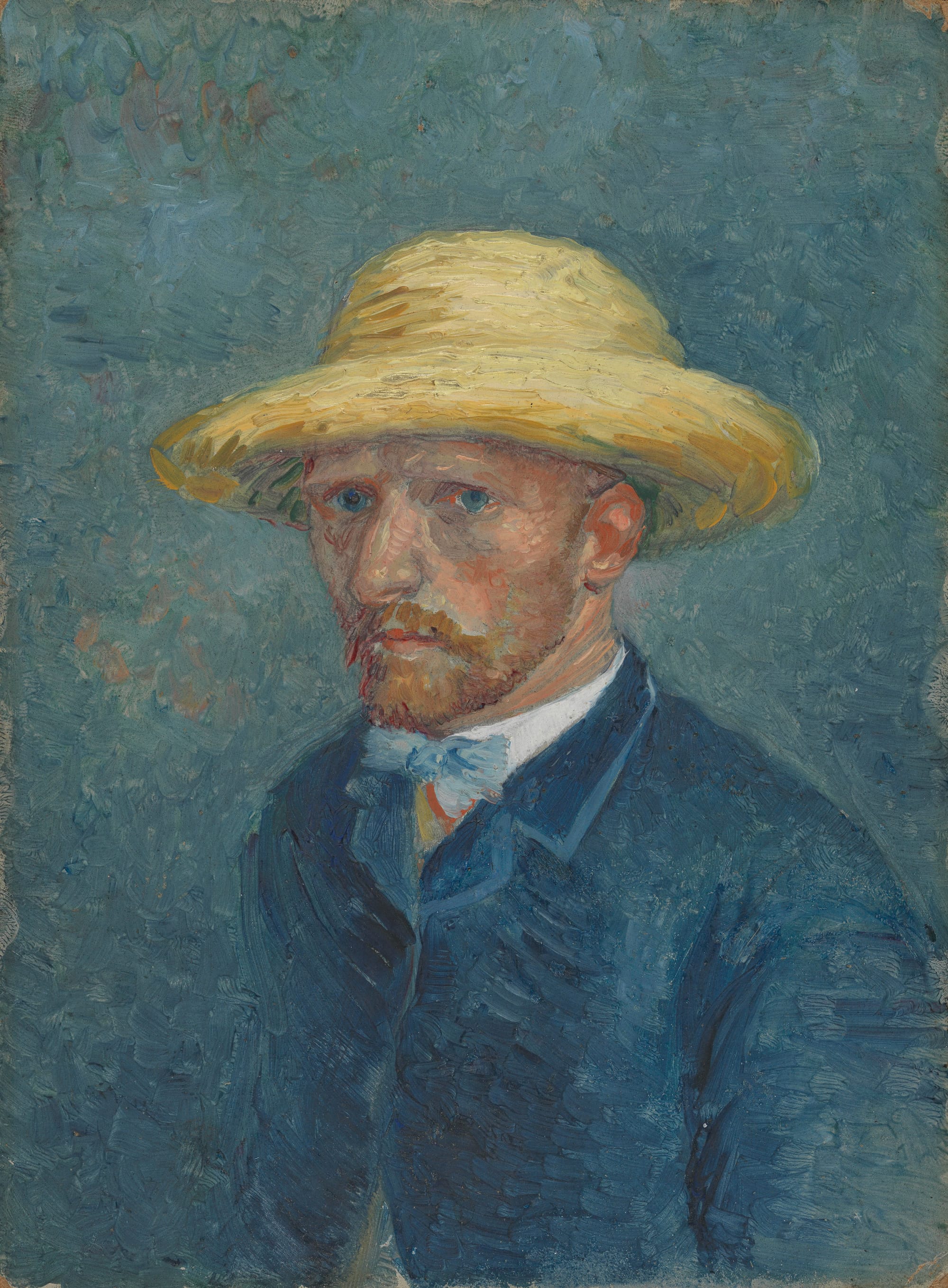
Episode 3.1: "Not Postpone Going to Paris" — The Move (February 1886)
In early 1886, Vincent was in Antwerp, where he had been studying at the Academy. His funds ran out. He wrote to Theo with urgency:
It's at the moment when my money has entirely gone — entirely — that I write to you again. If you can send anything, even if it were five francs, don't neglect to do it... I only know that all these things definitely make me see that I can do nothing other than act as I've told you. That's to say, not postpone going to Paris.
His decision to come to Paris was not merely a financial necessity. He articulated a strategic purpose:
I'm quite sure that it will help me at Cormon's if I spend the interim doing nothing but drawing. Cormon will be like the others in that he won't have much time... And anyone who wants to go to those fellows for advice must take with them as much prior knowledge as possible.
Vincent wanted to enter Cormon's studio—a training ground for young artists—and Theo was the door through which he could enter. He traveled directly to Paris, arriving in late February without telling Theo in advance. Theo was surprised but welcomed him.
Episode 3.2: "The Different Effects Produced by Atmospheric Variations" — Rue Lepic (1886-1887)
Vincent moved into Theo's apartment at 54 Rue Lepic in Montmartre. This was not a temporary arrangement—it was Vincent's home for two years. The apartment became his studio, his living space, and his base for navigating Paris.
Theo, in a letter to their sister Wilhelmina, described the apartment and its significance:
The different effects produced by atmospheric variations make it a subject [for countless paintings].
Theo understood that the apartment itself was a resource for Vincent's work. He had chosen a place with a view, with light, with the changing sky that could be painted again and again. This was not accidental—Theo was actively constructing an environment conducive to Vincent's practice.
The two brothers lived together, sharing space, money, and a daily rhythm. This proximity intensified their interaction. The Subject-Subject relationship was no longer conducted through letters; it was face-to-face, day-to-day, with all the friction and intimacy that entails. Vincent saw Theo's professional life up close; Theo saw Vincent's working habits directly.
Episode 3.3: "I Made His Acquaintance" — The Paris Art World (1886-1887)
Through Theo, Vincent entered the Paris avant-garde. Theo was well-positioned—he was the manager of Goupil's Montmartre branch, dealing works by Monet, Degas, Pissarro, Gauguin, and Seurat. His network was Vincent's entry point.
Vincent met the key figures of the avant-garde: Pissarro, Seurat, Signac, Toulouse-Lautrec, Gauguin. He visited exhibitions and studios. In a letter to his sister Wilhelmina, he described his encounter with Pissarro:
I made his acquaintance through Theo, and I have seen his work. He is a painter who sees things in a different way, and I have learned a great deal from him.
He wrote to Theo in 1887 about his developing relationship with the Parisian painters:
I have been working with the painters here, and I am beginning to understand their methods and their ideas... It is a new world for me, and I am learning a great deal.
Vincent's style underwent a rapid transformation. His palette lightened. His brushwork became more broken, more animated. He absorbed the influences of Impressionism and Pointillism, but he did not simply copy them—he synthesized them into something new. The letters from this period show him processing the visual experiences, thinking about color and light in new ways.
Episode 3.4: "The Painter of the Future" — Reflections on Two Years (1888)
By early 1888, Vincent had been in Paris for two years. He had learned from the avant-garde, but he had also begun to feel the limits of the city. The intensity of the Paris art world—the debates, the competing styles, the constant exposure to other artists' work—was both stimulating and overwhelming. Vincent wrote to Theo about his need to leave:
I have been in Paris for two years now, and I feel that I need to get away from the city and find a quieter place to work... I want to go south, to a place where the light is stronger and the colors are more vivid.
Theo, who understood Vincent's temperament, did not resist. He supported the decision, as he had supported all of Vincent's decisions. But the two years in Paris had changed the Joint Center. Theo's Circle—his network, his position, his judgment—had become the platform on which Vincent's work had developed.
Vincent wrote in early 1888, in words that capture the culmination of these two years:
It is not the painter of the past who will create the art of the future, but the painter who is working now, who is struggling with the problems of today.
Phase 3 Discussion: Circle as Developmental Platform
The structural feature that distinguishes Phase 3 from Phase 2 is the nature of Theo's support. In Phase 2, his support was primarily financial and material—money for food, rent, supplies. In Phase 3, his support was structural. His Circle became the platform for Vincent's development.
Theo's Object remained Vincent. The nested structure did not change. But the means by which Theo sustained Vincent had been upgraded. Theo was no longer just sending money from a distance; he was embedding Vincent in the Paris art world, giving him access to the networks that would shape his future work.
The apartment on Rue Lepic was a concrete expression of this. It was not just a place to sleep—it was a studio, a view, a daily encounter with the Paris sky. Theo had chosen it with Vincent's work in mind.
The introductions to the avant-garde were another expression. Theo could have simply provided money and remained a distant supporter. Instead, he brought Vincent into his Circle, opening doors that Vincent could not have opened on his own.
This is the operational meaning of "Curator Supports Creator." The curator does not create the work, but the curator creates the conditions under which the work can be seen, and in a deeper sense, can be made. Theo's Circle—his position, his network, his judgment—was the developmental platform that enabled Vincent's artistic development during this critical period.
3.5 Phase 4: Center Expansion (1888-1890)
This phase begins with Vincent's departure from Paris in February 1888 and ends with his voluntary admission to Saint-Rémy in May 1889. The nested Joint Center remained intact—Theo's Object was still Vincent, and he continued to provide financial and logistical support. But Theo introduced a new element: he brought a third-party participant into the Joint Center's operation. The invitation to Gauguin was a Center Expansion—an attempt to upgrade the Joint Center from a two-person support structure into a multi-person creative community. The expanded structure did not stabilize.
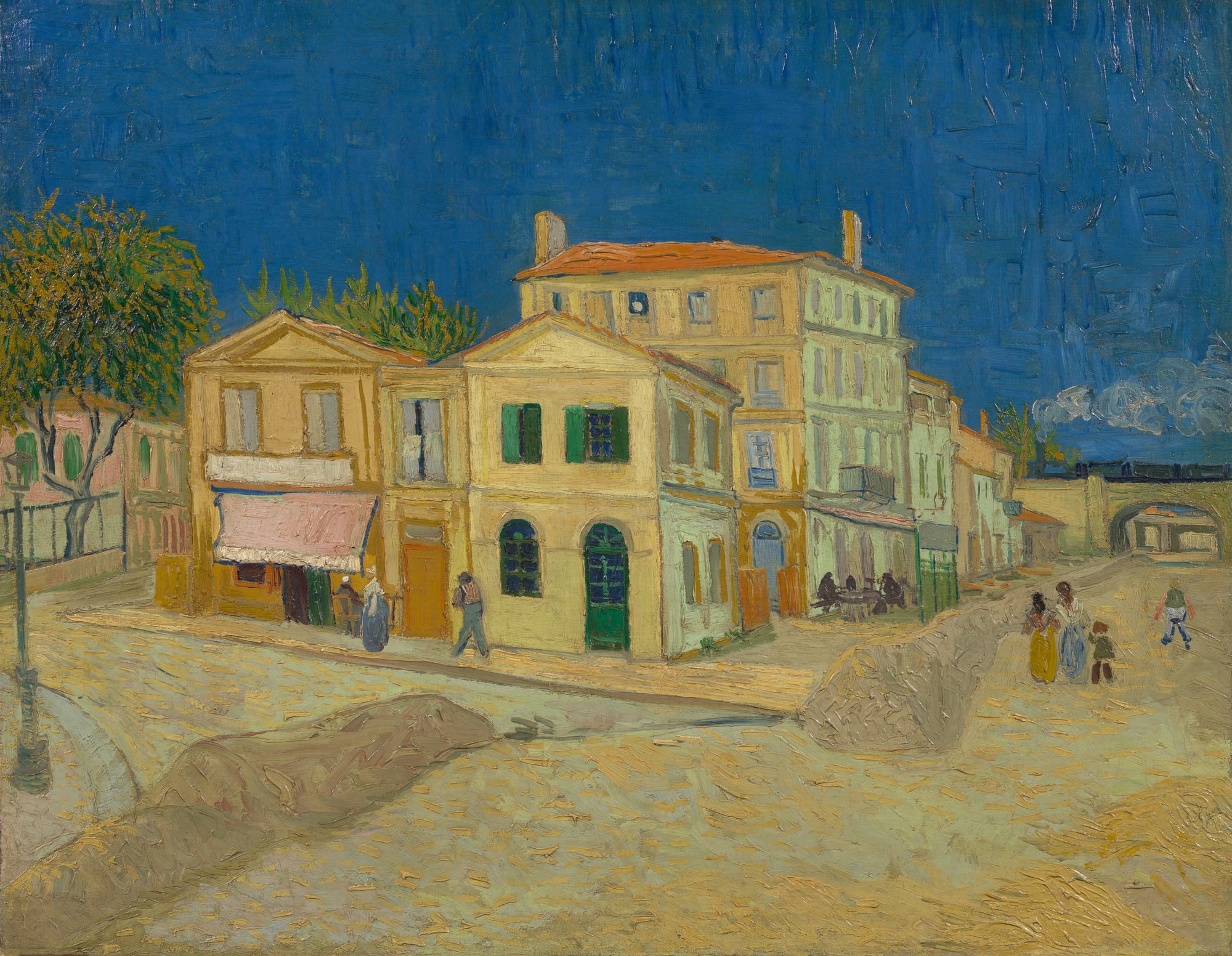
Episode 4.1: "It's a Good Thing to Get Away from Paris" — Departure for Arles (February 1888)
After two years in Paris, Vincent felt the need to leave. He wrote to Theo:
I am leaving Paris tomorrow, and I am going to Arles, in the south of France. I feel that I need to get away from the city and find a quieter place to work... The south is a place where the light is stronger and the colors are more vivid.
Theo agreed. He had experienced Vincent's restlessness firsthand. He arranged for the move, sending funds and making sure Vincent had what he needed.
Upon arriving in Arles, Vincent wrote:
I have arrived here safely, and I am already at work. The country is beautiful, and the light is wonderful. I think I will be able to do good work here.
He found a small apartment—the famous Yellow House—and began preparing it as a studio. His letters to Theo in the first months of 1888 are filled with enthusiasm for the light, the landscape, and the possibilities of the south:
The sun here is so strong that it gives a brightness to the colors that I have never seen before. I am working on a series of paintings of the orchards in blossom, and I think they will be some of the best I have done.
Episode 4.2: "Make Your House a Place Where Artists Will Feel at Home" — The Studio of the South (Spring 1888)
Vincent's ambition expanded from painting the landscape to founding an artistic community. He envisioned the Yellow House as a "Studio of the South"—a place where artists could come together, work, and support each other. He wrote to Theo with growing excitement:
I want to make this house a place where artists can come and work... I have been thinking about the idea of a studio of the south, where painters can live and work together... It would be a place where we could exchange ideas and learn from each other.
Theo, who was managing Vincent's affairs from Paris and saw the potential in the idea, responded with cautious encouragement. He wrote to Vincent:
I hope that your efforts will succeed in making your house a place where artists will feel at home.
Behind the encouragement, Theo saw an opportunity. He began to identify potential participants. Gauguin was in Brittany, struggling financially and artistically. Theo had been handling Gauguin's work for years. He recognized that this was the moment to propose a collaboration.
Episode 4.3: "Gauguin's Coming" — The Invitation (Summer 1888)
Theo wrote to Vincent with news:
I have been in correspondence with Gauguin, and he has expressed interest in joining you in Arles.
Vincent responded immediately:
Gauguin's coming! I am so glad. I have been wanting to meet him and work with him for a long time. I think he will be a great addition to the studio.
Theo orchestrated the arrangement. He paid Gauguin's travel expenses. He negotiated the financial terms, ensuring Gauguin would receive support while in Arles. He sent regular updates to both parties, coordinating schedules and logistics. He wrote to Gauguin:
The move to Arles would be good for you. You will have a place to work, and Vincent will be there to share ideas with.
Gauguin accepted. In October 1888, he arrived in Arles.
Episode 4.4: "Excessively Electric" — Gauguin in Arles (October-December 1888)
The two artists began working together. The collaboration was intense. Gauguin brought a different approach to painting—more abstract, more symbolic, less tied to direct observation. Vincent absorbed what he could but defended his own direction.
The weeks that followed were artistically productive and interpersonally volatile. They painted side by side, discussing and debating color, form, and ideas. Vincent described the dynamic to Theo on December 17-18:
Gauguin and I talk a lot about Delacroix, Rembrandt &c. The discussion is excessively electric. We sometimes emerge from it with tired minds, like an electric battery after it's run down.
Despite the tension, Vincent was hopeful. On December 23, he wrote a short letter to Theo about their joint progress:
I think the work we are doing is going to be important. We are both learning from each other, and I think we will be able to produce something that will be remembered.
But the tensions were too deep. Their artistic disagreement escalated into a personal argument. Vincent's mental state, already fragile from months of isolation and intensity, broke under the strain. Later that evening, Vincent cut off part of his left ear and wrapped it in newspaper.
Episode 4.5: The Collapse and Aftermath — Expanded Joint Center Unstable (December 1888 - May 1889)
The incident unraveled everything. Gauguin left Arles immediately, returning to Paris. The Yellow House, which had been the symbol of Vincent's dream, stood empty.
Theo, in Paris, received the news. Gauguin wrote to him briefly, a letter that failed to capture the full extent of the event:
Everything considered, I am obliged to return to Paris.
Theo's response was practical. He continued to support Vincent, arranged for treatment, and managed the practical and financial fallout. But the Center Expansion had failed. The ambitious attempt to bring a third creator into the structure had ended in disaster.
Vincent spent the following months in hospitals, first in Arles, then in Saint-Rémy. He painted when he could, but his condition was unstable. The idea of the "Studio of the South" was no longer discussed.
Phase 4 Discussion: Center Expansion — Third-Party Participant Introduced
The structural feature of Phase 4 was the Center Expansion—Theo's introduction of a third-party participant into the Joint Center. This changed the Joint Center's structure in two ways.
First, it created a new Joint Center within the existing one. Vincent and Gauguin formed a co-oriented Joint Center: both faced Art as their Object. This existed alongside the nested Joint Center, where Theo's Object remained Vincent. Two Joint Centers coexisted, one nested inside the other. This coexistence placed pressure on the original structure. Vincent was required to be both Object (in relation to Theo) and Subject (in relation to Gauguin)—two positions that demanded different kinds of engagement.
Second, the new Joint Center was co-oriented. Gauguin did not support Vincent; he worked alongside him. This was not a curator-creator relationship, as in Phase 3. It was a peer relationship—symmetric, dialogical, and potentially unstable. Two strong creative temperaments, sharing the same space, working on similar problems, produced both the "excessively electric" energy Vincent described and the collapse that followed.
Theo's role in the expansion was complex. He was not simply a passive observer. He orchestrated the invitation—he saw an opportunity, recognized the potential, and invested resources. But he could not control the outcome. The structure he introduced generated its own dynamics, and those dynamics exceeded the original Joint Center's capacity to contain them.
The nested Joint Center did not collapse. Theo continued to support Vincent through the crisis. But the expansion attempt ended with the collapse of the co-oriented Joint Center and the destabilization of Vincent's mental state. The Joint Center returned to its two-person nested form, but under transformed conditions—it was no longer supporting a creative project; it was sustaining a person in crisis.
Center Expansion and Center Collapse. Center Expansion, as a pattern, describes a Joint Center's attempt to grow beyond its original two-person structure by incorporating additional participants. It joins Center Collapse—identified in earlier World of Activity case studies—as one of two negative extremes in Center dynamics.
- Center Collapse: the Center loses its internal coherence and structure, regressing from Center to Focus to Flow. It is an inward disintegration—the Center cannot hold itself together.
- Center Expansion: the Center attempts to absorb too much external structure, introducing new participants or objects that destabilize its existing configuration. It is an outward over-extension—the Center cannot maintain its boundaries.
Both are failures of Center stability, but in opposite directions: one inward, one outward; one through loss, one through excess. The van Gogh case provides a rare empirical instance of Center Expansion—a Joint Center's attempt to grow beyond its original participants, with consequences that demonstrate the structural risks of expansion without sufficient integration.
3.6 Phase 5: Subject Degeneration (1890)
This phase covers the final year of Vincent's life, from his admission to Saint-Rémy in May 1889 to his death in July 1890. The nested Joint Center remained intact—Theo's Object was still Vincent, and he continued to provide financial and logistical support. But the Subject itself—Vincent—had become the problem. His capacity to sustain his Subject-Object relation to Art had been eroded by his mental condition. The Joint Center's function shifted from creative collaboration to survival maintenance.
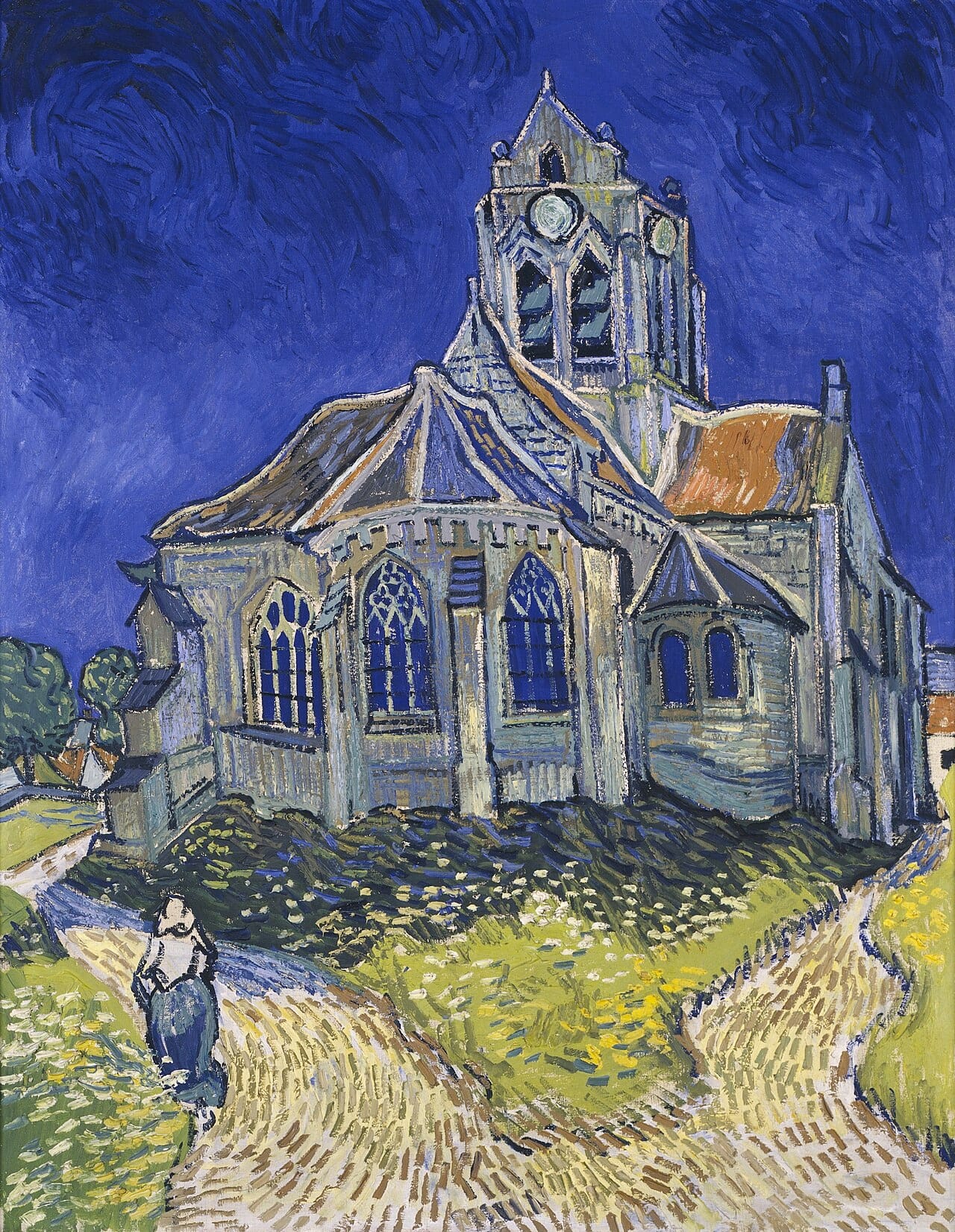
Episode 5.1: "The Crises I Feel Cowardly" — Admission to Saint-Rémy (May 1889)
In early 1889, after the Arles incident and subsequent hospitalizations, Vincent made the decision to admit himself to the asylum at Saint-Rémy-de-Provence. He wrote to Theo:
I want to tell you that I have decided to enter the asylum at Saint-Rémy... I hope that I will be able to work there, and that I will be able to recover my health.
Theo arranged the admission. He wrote to the director, handled the financial arrangements, and continued to send supplies and money. Vincent's letters from Saint-Rémy reflect a mind struggling to maintain its connection to work:
I am painting again, but it is difficult. The work helps me to keep my mind occupied, but sometimes I feel that I am not making progress.
He also wrote openly about his condition:
In the crises I feel cowardly in the face of anguish and suffering.
The content of the Joint Center had shifted. Theo was no longer supporting a creative project—he was supporting a person trying to survive. The nested structure remained, but its function had been transformed.
Episode 5.2: "I Am Painting Again" — The Intermittent Work (1889-1890)
Despite his condition, Vincent continued to paint during lucid periods. His letters to Theo from Saint-Rémy describe both the work and its difficulty:
I have finished a new painting, and I think it is one of the best I have done. It is a view of the asylum from the garden, with the trees and the sky.
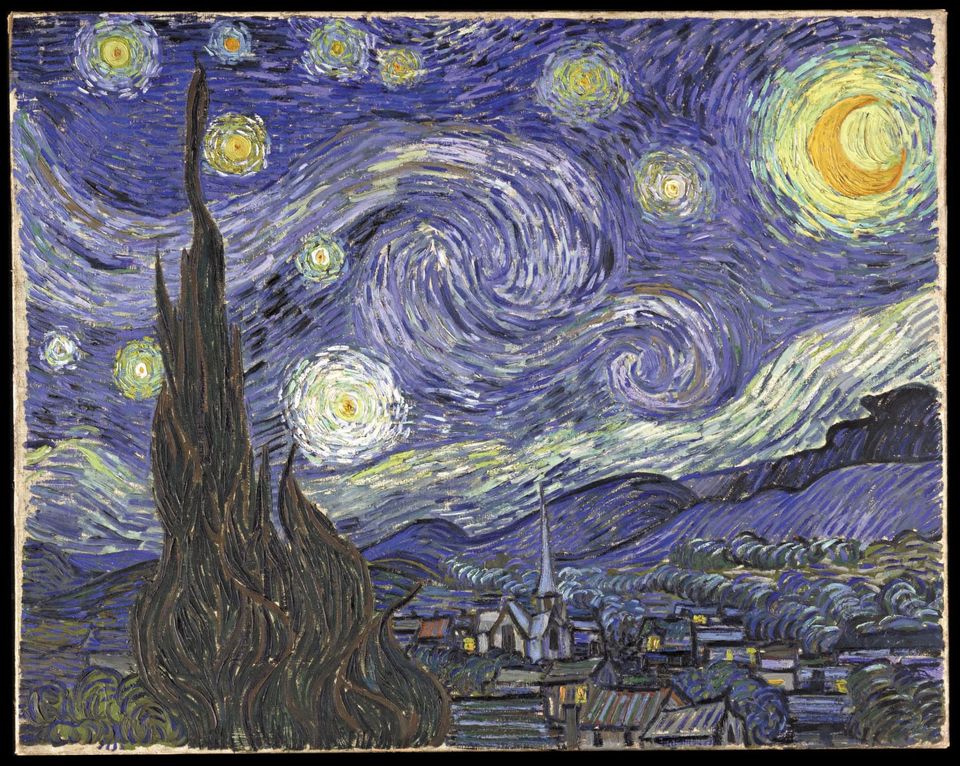
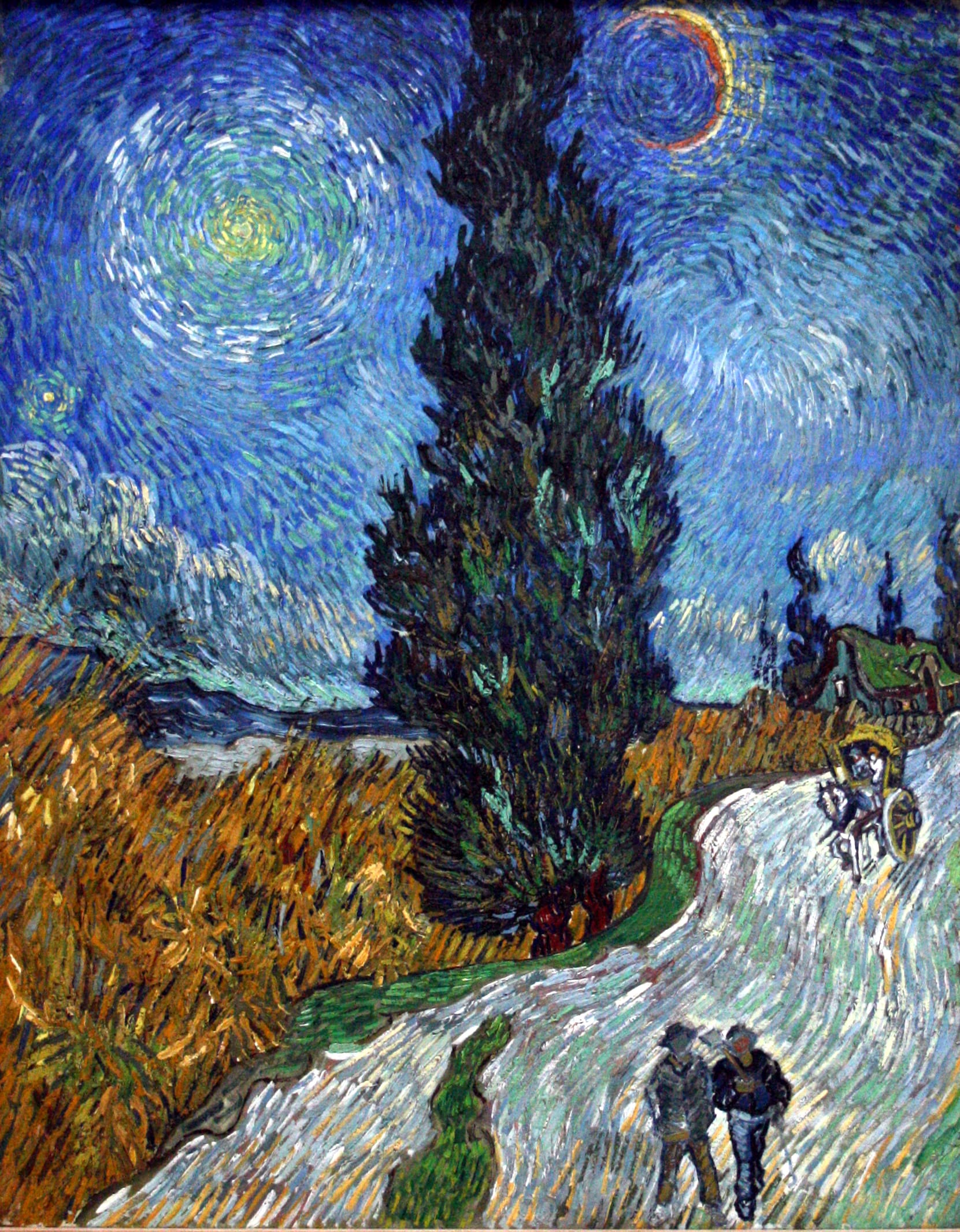
In this period, he produced some of his most famous works: The Starry Night, Irises, Wheatfield with Cypresses. But his output was uneven. The letters reflect the gap between his ambition and his capacity:
I want to do so much, but sometimes I feel that I cannot do any more. The work is difficult, and I have to struggle to keep going.
Theo continued to support him, sending money, arranging for Vincent's paintings to be exhibited in Brussels and Paris, and managing the practical affairs that Vincent could no longer handle himself.
Episode 5.3: "The Days Pass" — Auvers-sur-Oise (May - July 1890)
In May 1890, Vincent left Saint-Rémy and moved to Auvers-sur-Oise, a village north of Paris, where he lived under the care of Dr. Gachet. He was closer to Theo and could see him more often. His letters from Auvers reflect a brief period of stability:
I have found a good place to stay, and I am working again. The weather here is beautiful, and the scenery is wonderful.
He continued to paint at a remarkable pace, completing a painting nearly every day. But the underlying condition remained. In late July, he wrote to Theo a letter that is now famous for its tone of calm despair:
I am giving my work all my attention, and I am trying to do as well as I can. I have painted some canvases that I think are good... But the days pass, and I cannot do any more.
On July 29, 1890, Vincent died from a gunshot wound sustained two days earlier. Theo received the news and traveled to Auvers to be with his brother in his final hours. Six months later, in January 1891, Theo died.
Phase 5 Discussion: When the Subject Itself Becomes the Problem
Phase 5 reveals a dimension that healthy cases do not show. In most Joint Center analyses, the Subject is healthy, and the focus falls naturally on the Object—the creative project, the work, the shared center. But when the Subject's own capacity to sustain a Subject-Object relation erodes, the Joint Center's function shifts.
The nested structure did not collapse. Theo's Object remained Vincent. But the content of the Joint Center changed fundamentally: it was no longer about creative production—it was about survival. Theo's role shifted from "curator" to "caretaker."
This phase makes visible a structural condition that is often invisible when the Subject is healthy: nested Joint Centers depend not only on the supporter's resources but also on the supported person's capacity to sustain their own Subject-Object relation. If that capacity erodes, the Joint Center may continue to exist structurally, but its function shifts. It ceases to be a creative structure.
Theo continued to support Vincent to the end. The Joint Center did not fail because of a breakdown in the Subject-Subject relationship or a failure in the nested support structure. It failed because the Subject itself—Vincent's capacity to be a creator—had been eroded. This is the limit case of the nested Joint Center: when the Object of support is no longer capable of sustaining the creative work that the Joint Center was built to support, the Joint Center's content shifts from creation to survival.
3.7 The Full Spectrum of Joint Center Dynamics
Across the five phases of the van Gogh case, the Joint Center followed a trajectory from Joint Focus to nested Joint Center, through a period of structural support (Theo's Circle as platform), an attempt at expansion (Gauguin's inclusion), and finally Subject degeneration. The nested structure remained intact throughout—Theo's Object was always Vincent—but its content changed dramatically.
| Phase | Vincent's S-O | Theo's S-O | S-S Relationship | RelationField Structure | Classification |
|---|---|---|---|---|---|
| 1 (1872-1880) | Career discovery in art | Career discovery in art | Family → Professional transition | Two kernels, same direction, no stable shared object | Joint Focus / Creative Life Discovery |
| 2 (1880-1885) | Becoming an artist | Supporting Vincent | Structured partnership | Nested: Theo's Object = Vincent | Joint Center (nested) / Strategic Life Support |
| 3 (1886-1888) | Developing own art | Vincent (with mature Circle) | Face-to-face daily interaction | Nested: Theo's Circle = developmental platform | Joint Center (nested) / Curator Supports Creator |
| 4 (1888-1890) | Establishing artist community | Vincent (plus introducing Gauguin) | Intense, with expansion attempt | Nested structure + temporary co-oriented structure | Joint Center (nested) with expansion attempt |
| 5 (1890) | Creation (capacity eroding) | Vincent (survival maintenance) | Crisis-oriented | Nested structure intact, Subject capacity eroded | Joint Center (nested) with Subject degeneration |
This case demonstrates that Joint Centers are not static structures. They evolve, they respond to external pressures, they attempt to expand, and they can degrade when the Subject's own capacity erodes. The Full spectrum of Joint Center dynamics includes both the creative—the health operations of Phase 2 and Phase 3—and the pathological—the expansion collapse of Phase 4 and the Subject degeneration of Phase 5.
Part 4: Theoretical Development
The van Gogh case has yielded five structural patterns—Joint Focus, nested Joint Center (Strategic Life Support), nested Joint Center (Curator Supports Creator), Center Expansion, and Subject Degeneration. These are not merely descriptive labels for a single historical case; they identify recurring structural configurations within the World of Activity framework. What follows formalizes these patterns as theoretical contributions, each extending the framework's capacity to describe how two first-person perspectives can share a Center, and how such a shared Center can change, expand, or degrade over time.
4.1 Joint Center: A Structural Extension of the First-Person Framework
The World of Activity framework has always operated from the first-person perspective: it describes how a person experiences and organizes their own activity world. Joint Center extends this understanding by identifying a special case: two first-person perspectives can have Centers that are, from an external view, nearly identical.
This extension does not introduce a new analytical scale or a third-person perspective into the framework. It remains a framework for describing subjective experience. What it adds is the recognition that subjective experience—the experience of having a Center—can be intersubjectively shared without ceasing to be subjective.
4.2 Nested and Co-Oriented: Two Forms of Joint Center Overlap
The van Gogh case reveals that Joint Center overlap can take different structural forms:
Nested: One person's Object is the other person. Asymmetrical overlap. The support structure (Theo → Vincent → Art) enables the other to sustain their Center.
Co-Oriented: Both persons face the same external Object. Symmetrical overlap. Both operate as creators or participants in relation to the same Object.
Both are Joint Centers. Nested is not "less" of a Joint Center—it is a different form of the same phenomenon.
4.3 The Circle as Developmental Platform in Nested Joint Centers
Phase 3 reveals a structural variation within nested Joint Centers: when the supporter's Center matures, their Circle can become the developmental platform for the supported person's work. Theo's Paris network became the channel through which Vincent accessed the avant-garde. The support shifted from financial (Phase 2) to structural (Phase 3)—but the nested structure remained.
4.4 Center Expansion and Center Collapse: Two Negative Extremes
Phase 4 introduces a structural pattern that had not been identified in previous World of Activity case studies: Center Expansion—a Joint Center's attempt to grow beyond its original two-person structure by incorporating additional participants.
This pattern pairs with Center Collapse, identified in earlier case studies, as two negative extremes in Center dynamics:
| Center Collapse | Center Expansion | |
|---|---|---|
| Direction | Inward disintegration | Outward over-extension |
| Mechanism | Center loses internal coherence | Center attempts to absorb too much external structure |
| Trajectory | Center → Focus → Flow | Two-person → Multi-person → Destabilization |
| Failure mode | Cannot hold itself together | Cannot maintain its boundaries |
The van Gogh case provides a rare empirical instance of Center Expansion—a Joint Center's attempt to grow beyond its original participants, with consequences that demonstrate the structural risks of expansion without sufficient integration. The nested Joint Center (Theo → Vincent) attempted to accommodate a co-oriented Joint Center (Vincent × Gauguin) within it. The new structure did not stabilize. Its collapse had lasting consequences for both the Joint Center and its participants.
4.5 Subject Degeneration: A Dimension Not Visible in Healthy Cases
Phase 5 reveals a dimension that healthy cases do not show: when the Subject's own capacity degrades, the Joint Center's function shifts from creative collaboration to survival maintenance. The structural configuration may remain intact, but the content of the Joint Center changes fundamentally.
This is the theoretical contribution of phase 5: nested Joint Centers depend not only on the supporter's resources but also on the supported person's capacity to sustain their own Subject-Object relation. If that capacity erodes, the Joint Center ceases to function as a creative structure—even if the structure itself remains intact.
4.6 Joint Center and Institutionalization
The van Gogh case demonstrates that a Joint Center can operate without any institutional form—without a partnership agreement, without a named organization, without legal structure. It was sustained entirely by correspondence, trust, and shared commitment. Institutionalization is not a defining feature of Joint Center; it is one possible form among many.
Part 5: Contribution to Creative Life Study
The theoretical developments above extend the World of Activity framework's internal language. But the Joint Center concept also speaks outward—to the broader study of creative life, to existing scholarship on creative pairs, and to the practical question of how creative collaborations are structured and sustained. What follows situates this analysis within existing research on creative pairs, extends it through the Discovery-Performance cycle, and proposes the Curator-Creator pair as a foundational configuration in creative life research.
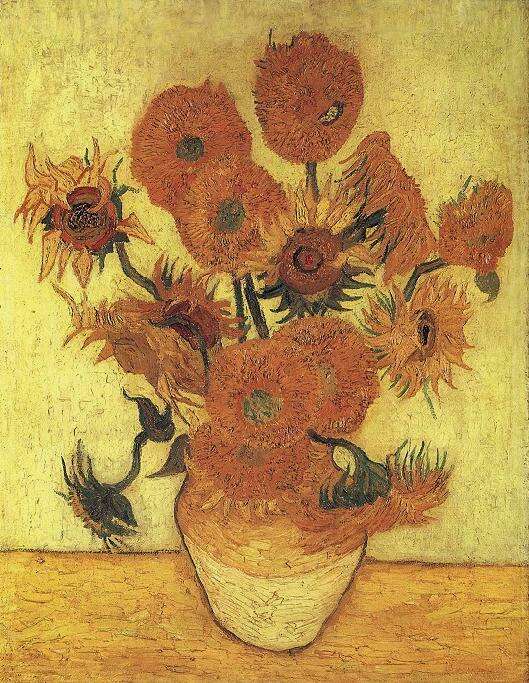
5.1 Relation to Existing Scholarship
This analysis situates itself within a well-established field of van Gogh scholarship, but its approach differs from existing research in several ways.
Biographical and narrative studies—exemplified by Jan Hulsker's dual biography Vincent and Theo van Gogh: A Dual Biography (1985) and Deborah Heiligman's popular account Vincent and Theo: The Van Gogh Brothers (2017)—focus on documenting events, relationships, and emotional dynamics. They answer the question "what happened, to whom, and when." This analysis does not replace that work; it adds a structural layer: it asks not only what happened, but what was the structure of the relationship at each phase, and how did that structure change?
Epistolary and archival studies—most notably the Van Gogh Museum's digital letters project (2010), which makes 651 surviving letters from Vincent to Theo and 46 from Theo to Vincent publicly accessible—provide the raw material for all scholarship. Scholars have used these letters to trace Vincent's intellectual development, reconstruct his networks, and analyze his artistic influences. This analysis draws on the same material but reads it through a different lens: the letters are treated not just as sources of content but as traces of a RelationField in operation—evidence of how two first-person perspectives maintained a shared Center over time.
Social art history—such as the Van Gogh Museum's 2023 collection catalogue, which documents how the brothers strategically built their art collection and cultivated professional networks—focuses on the brothers' relationship to the external art world. It treats Vincent and Theo as a joint enterprise operating within the art market. This analysis shifts the focus inward: from the brothers' external networks to the internal structure of their relationship itself. The Circle in FFCC becomes relevant here—not as an external network of social connections, but as the relational ecosystem within which the Joint Center operates, and which can serve as a developmental platform (as in Phase 3, when Theo's Circle became Vincent's entry point to the avant-garde).
Psychological and psychoanalytic interpretations—which have explored Theo's "savior complex," Vincent's dependent personality, and the co-dependent dynamics between them—tend to explain the relationship through individual character traits and emotional motivations. This analysis offers a non-psychologized alternative. It does not speculate on what either brother "really felt" or "unconsciously intended." Instead, it describes the structural configuration of their Subject-Subject (Subject-Object) relation, the changes in its form over time, and the consequences of those structural changes—all without requiring claims about inner states that cannot be directly observed.
The RelationField framework contributes to this landscape by providing a structural language for describing creative pairs. It does not compete with biographical detail or archival precision; it complements them by asking a different kind of question. Where traditional scholarship asks "what was their relationship like?" the RelationField framework asks: "What was the Subject-Subject (Subject-Object) structure of their relationship at each point in time, and how did that structure shape what the Joint Center could contain, produce, and sustain?"
5.2 The Discovery-Performance Cycle
To further investigate the dynamics of activity unfolding within the Joint Center, it is worth adopting the Anticipatory Activity System (AAS) framework. In previous World of Activity case studies, I have used a similar approach—curating AAS together with the FFCC model to build a case-specific analytical toolkit.
The AAS is a theoretical framework for understanding a structure that shows up everywhere in human life but is rarely named directly: the simultaneous presence of Self and Other, Present and Future, in any meaningful activity. When a person makes a career decision, develops a creative project, or navigates a relationship, they are not simply responding to what is immediately in front of them. They are operating within a system shaped by anticipation—by what they expect from themselves, from others, and from the future they are moving toward. The AAS framework makes this structure visible and workable.
At the heart of AAS is a distinction between two types of activity. First-order Activity is goal-directed: you know what you are trying to achieve, and you act toward it. Second-order Activity is something different—it is the activity of discovering what your goal should be in the first place. Before you can pursue a direction, you need to find it. Before you can commit to a project, you need to understand what kind of project is worth committing to. This prior activity—exploratory, anticipatory, oriented toward a future that has not yet taken shape—is what AAS was built to describe and support.
The tension between these two modes of activity is not a new concern. James March's influential distinction between exploration and exploitation captures something similar: the pull between searching for new possibilities and deepening existing ones. Organizational theorists, cognitive scientists, and philosophers of action have each approached this territory from their own angles. What distinguishes AAS from these traditions is not the recognition of the tension, but the refusal to treat it as a tension at all. Rather than positioning First-order and Second-order Activity as competing orientations—a binary that must be balanced or traded off—AAS understands them as forming a self-referential loop. The outcome of Second-order Activity produces the Significant Insights that give direction to First-order Activity. The outcome of First-order Activity generates the results and rewards that feed back into Second-order Activity. They are not rivals. They are the two halves of a single system that refers back to itself.
In the study of creative life development, the AAS framework uses the terms Life Discovery and Life Performance, which correspond to Second-order Activity and First-order Activity respectively.
The van Gogh case reveals both dimensions operating at multiple levels.
At the macro level, Vincent's early career—the Goupil years, the religious turn, the Borinage period—was a sustained phase of Life Discovery: he was searching for his direction, trying on different identities, exploring what kind of life he wanted to lead. Once he committed to becoming an artist in 1880, his activity shifted toward Life Performance: disciplined practice, technical mastery, the execution of specific projects (The Potato Eaters, the Arles series). But even within the Performance phase, Discovery continued—the Paris years were a discovery of a new artistic language; the Arles period was a discovery of a new ambition (the Studio of the South). Discovery did not end when Performance began; it continued alongside it, feeding back into it.
At the micro level, the same alternation appears within specific projects. Painting a canvas was Performance—executing a known skill, completing a defined task. But conceiving the "Studio of the South" and inviting Gauguin was Discovery—imagining a new form of artistic community. Hosting an exhibition was Performance; reimagining what an artist's life could be was Discovery. Finding a way to share working and living space with a fellow artist—to discover how two strong creative temperaments could coexist productively—was Discovery; recovering in a hospital bed, painting when one could, was Performance of a different kind.
The Self-Other dimension of AAS is equally visible. Theo was not merely a passive supporter; he was an active participant in Vincent's anticipatory system. His advice, his market intelligence, his network—all of these shaped what Vincent anticipated for himself. Vincent, in turn, shaped Theo's anticipations: Theo's career decisions, his professional identity, his sense of what was possible in the art world were all influenced by his relationship with Vincent. The Joint Center functioned as a shared anticipatory system: each brother's expectations for the future were co-constructed through their ongoing exchange.
This analysis breaks the narrow imagination of an artist's life as merely "painting." A painter's creative life encompasses far more: the discovery of direction, the performance of craft, the negotiation of relationships, the navigation of institutions, the maintenance of health—all of these are part of the creative life. AAS provides a language for describing how these diverse activities cohere within a single anticipatory system.
5.3 The Curator-Creator Pair
The van Gogh brothers' curator-creator relationship represents a particularly important type of Subject-Subject relation in creative life—one that can be essential to a creator's career development. Research in creativity studies and cultural sociology has long recognized the significance of such supportive relationships, though it has not always had a structural language for describing them.
In my recent book Weave the Theory: The Art of Theoretical Activity and Knowledge Ecology (May 2026), I introduced the Create—Curate—Weave triad as a framework for understanding knowledge work. This framework, it now appears, has broader applicability to creative life research.
Create and Curate name two essential movements of intellectual and creative life. Create is the outward movement: generating new ideas, frameworks, concepts, artworks—pushing the work into new territory. Curate is the inward movement: organizing existing elements into coherent structures, making the accumulated work intelligible and transmissible. The tension between them is real—the person who creates prolifically often struggles to organize what they have made; the person who curates carefully often finds it hard to generate something genuinely new.
Weave is the third element that resolves this dualism—not by eliminating the tension but by transforming it into a productive dynamic. To weave is to hold both movements simultaneously: to create in a way that is already organized, to curate in a way that is still generative.
From the perspective of the RelationField framework, this triad is perfectly instantiated in the van Gogh case. Theo was the Curator: he organized, promoted, preserved, and transmitted Vincent's work. Vincent was the Creator: he produced the paintings, developed the theories, pushed the boundaries of artistic expression. The Joint Center they formed wove Create and Curate together into a single, sustained, productive dynamic.
This is not a partnership of equals in the sense of two creators working side by side. It is a complementary partnership—a division of labor in which each participant contributes a distinct function to the shared enterprise. The Curator-Creator pair is a subtype of Joint Center that deserves further study: it appears repeatedly in creative life (artists and dealers, writers and editors, scientists and publishers), but it has rarely been analyzed as a structural configuration in its own right.
5.4 RelationField as an Analytical Framework for Creative Pairs
The van Gogh case demonstrates the applicability of the RelationField framework to the analysis of creative pairs. The Subject-Subject (Subject-Object) structure provides a precise language for describing what is shared, how it is shared, and how the structure of sharing changes over time.
The contribution of the RelationField framework to creative pairs research is its structural orientation. It provides a language for describing the architecture of a collaboration—its form, its changes, its vulnerabilities—without reducing it to individual personalities, emotional dynamics, or institutional arrangements.
Furthermore, this analysis has called upon a set of analytical frameworks that, together, constitute a toolkit for creative life research:
- The FFCC Model (Flow-Focus-Center-Circle): the primary model of the World of Activity approach, providing the foundational language for describing how activity organizes itself
- Joint Center: the phenomenon of two first-person perspectives whose Centers are highly overlapping—the subject of this study
- RelationField (Subject-Subject (Subject-Object) structure): the analytical model for describing the structure of the relationship
- The Ap-Re-Pro-Co Model: for tracking spatial directions of relational movement within a RelationField
- Anticipatory Activity System (AAS) : for analyzing the Discovery-Performance cycle and the Self-Other-Present-Future structure
- Weave-the-Theory (the Create-Curate-Weave triad) : for understanding complementary creative partnerships
These frameworks are not a fixed toolkit to be applied uniformly to all cases. They are the frameworks called upon by this specific case—curated together to address the particular questions raised by the van Gogh brothers' Joint Center. Other cases may call upon different frameworks, or the same frameworks used differently. This is consistent with the methodological principle of the World of Activity approach: calling a toolkit relevant to the specific case rather than applying a closed system.
Conclusion
This article has introduced Joint Center as a concept that extends the World of Activity framework's understanding of what a Center can be. A Joint Center is two first-person perspectives, each experiencing their own Center as "mine," yet from an external view, these two Centers are highly overlapping—almost the same object.
Using the van Gogh brothers as the primary case study, I have traced five phases of their Joint Center, each identified by its Subject-Subject (Subject-Object) structure:
- Phase 1 (1872-1880): Joint Focus — Creative Life Discovery
- Phase 2 (1880-1885): Nested Joint Center — Strategic Life Support
- Phase 3 (1886-1888): Nested Joint Center — Curator Supports Creator
- Phase 4 (1888-1890): Center Expansion — Third-Party Participant Introduced
- Phase 5 (1890): Subject Degeneration
The RelationField framework provided the analytical language for this analysis. It allowed the Joint Center to be described not through psychological interpretation or biographical narrative, but through the structural configuration of Subject-Subject (Subject-Object) relations across time.
The van Gogh case demonstrates that a Joint Center can exist without institutionalization, without formal agreement, without any organizational structure. It is sustained by the structure of experience—not by contracts. By separating the structure of experience from the form of organization, the Joint Center concept makes visible a whole class of creative relationships that institutional frameworks would miss.
The analysis also revealed two structural patterns that had not been identified in previous World of Activity case studies: Center Expansion—the attempt to incorporate additional participants into a Joint Center—and its pairing with Center Collapse as two negative extremes in Center dynamics. Together, they describe the two directions in which a Center can fail: inward disintegration and outward over-extension.
The RelationField framework, with its extensions for Joint Center analysis, is now available for examining other creative pairs—historical or contemporary—whose collaborations have produced significant work. Its structural orientation offers a complement to existing biographical, archival, and art-historical approaches: it asks not only what creative pairs produced, but how their relationship was structured to make that production possible.
v1.0 - August 10, 2026 - 12,286 words
References
Ding, O. (2025). Homecoming: A Thematic Trip and the World of Activity Approach. Activity Analysis Center.
Ding, O. (2026). World of Activity: Center as RelationField and the Dual-Center Pattern. Activity Analysis Center.
Ding, O. (2026). Weave the Theory: The Art of Theoretical Activity and Knowledge Ecology. Activity Analysis Center.
Heiligman, D. (2017). Vincent and Theo: The Van Gogh Brothers. Henry Holt and Co.
Hulsker, J. (1985). Vincent and Theo van Gogh: A Dual Biography. Fuller Publications.
John-Steiner, V. (2000). Creative Collaboration. Oxford University Press.
Shenk, J. W. (2014). Powers of Two: How Relationships Drive Creativity. Houghton Mifflin Harcourt.
Van Gogh Museum. (2010). The Complete Letters of Vincent van Gogh. Digital edition.
Van Gogh Museum. (2023). Collection Catalogue. Various authors.
Van Gogh, V., & Van Gogh, T. (1872-1890). The Complete Letters of Vincent van Gogh. Van Gogh Museum.
Keywords: Joint Center, Creative Pair, Van Gogh, RelationField, Center Expansion, Center Collapse, Ap-Re-Pro-Co, Anticipatory Activity System, Create-Curate-Weave