
Closure and Unfolding: Part 2 - Across Generations
Four generations under one roof
by Oliver Ding
August 14, 2026
In July 2026, I traveled to China to visit family. I traveled back with my children—from the U.S. to Fuzhou, then to Jianyang, and finally to Pengdun, a small village about 12 km from Jianyang where I grew up. At Jianyang, I went to Kaoting Academy to pay my respects to Zhu Xi. After coming back to Houston, I developed the theme of Closure and Unfolding from this trip and began planning a new possible book. This is the second section of that book, "Across Generations", which tells the story of a single image, a family, and the pattern that holds them together.
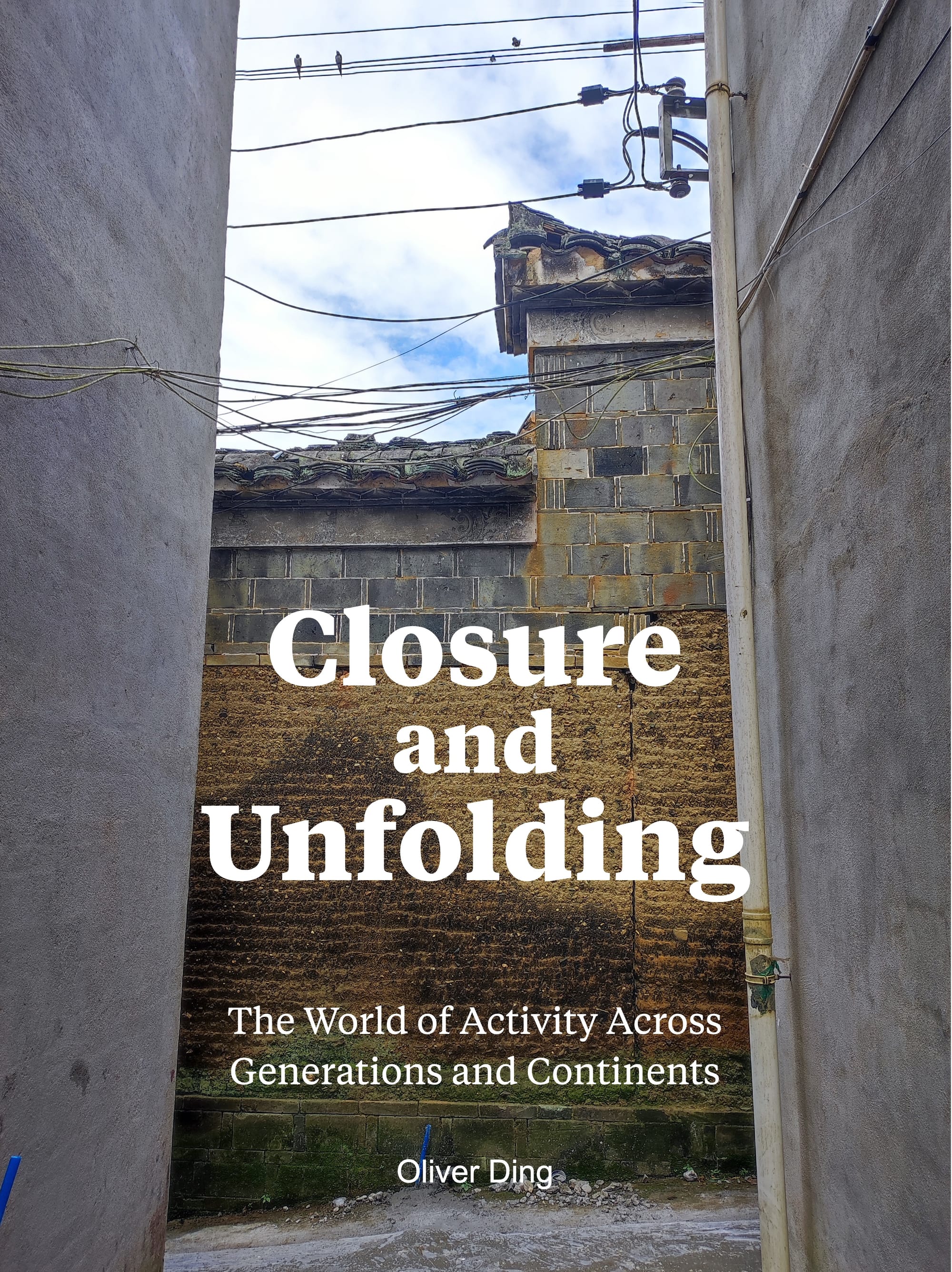
In July 2026, I walked down the lane I used to take to elementary school in Pengdun, the small village where I grew up. The road was being paved with concrete. New cement walls were rising on both sides, with an old earth wall still standing in between. I took a photograph. When I looked at it later, I saw something I had not noticed in the moment: two curtains framing a stage. The old world was closing. The new world was unfolding.
That image became a visual anchor for this book. But it was never just about architecture. It was about the family whose lives had unfolded within those walls—and beyond them.
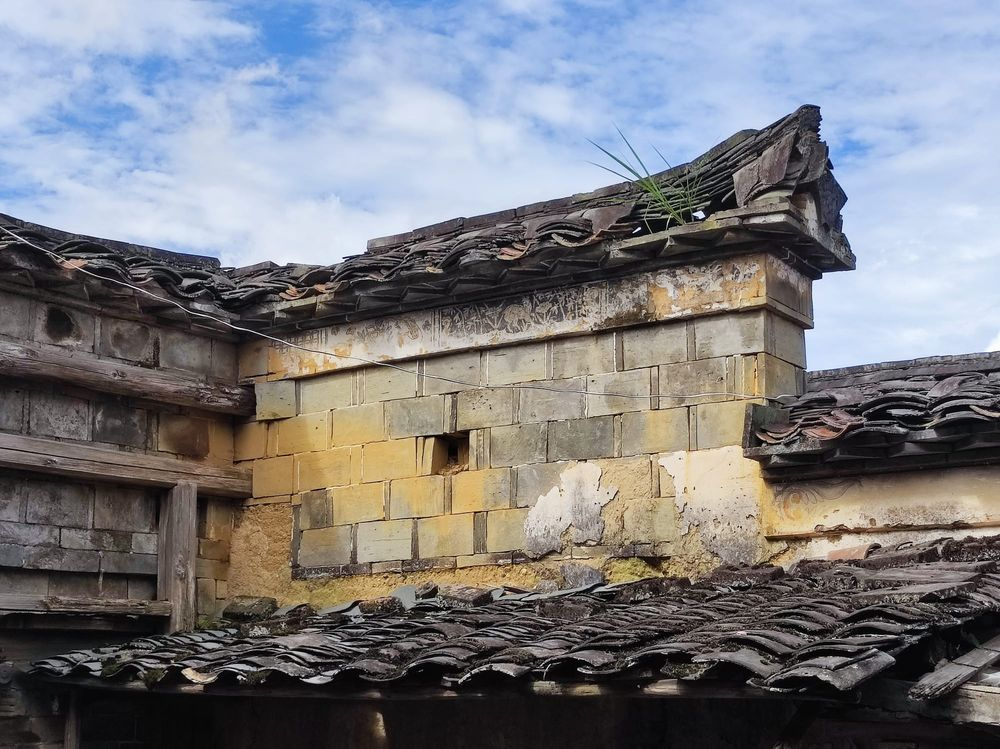
My aunt and uncle still live in the old ancestral house, a Ming-Qing dynasty building now marked as a "historic architecture." When I was a child, I could walk from my home to theirs without stepping into the rain, passing through two other families' sections. Now the whole house stands nearly empty. Their world is closing.
The night before, I had gathered with my cousins in Jianyang. They had all left Pengdun years ago—some for Fuzhou, some for other cities, one for Japan. We talked about their children: a university student heading to Vienna for a Model UN conference, a young professional working in Fuzhou, another living in Japan. A new generation was unfolding across continents.
This is the pattern that the photograph captured: closure and unfolding happening simultaneously, in the same temporal window.
The three chapters in this part approach the core theme from the Particular perspective—in Hegel's sense—shifting the lens from my individual experience to a family across four generations.
Chapter 2.1 recounts my visit to my aunt and uncle in the old house, and what I felt standing in that space.
Chapter 2.2 steps back to examine the broader historical context: China's urbanization over the past decades, the mass migration from villages to cities that reshaped the lives of millions—including my cousins and their children.
Chapter 2.3 widens the lens further, drawing on Xin Guo's research on three generations of Chinese mothers to show how the pattern of closure and unfolding appears across the female line as well.
Chapter 2.1: Four Generations Under One Roof
The ancestral house in Pengdun—a Ming-Qing building where my aunt and uncle still live. How a place that once held multiple families now stands nearly empty. The closing of a world, told through the walls, the courtyards, and the people who remain.
Chapter 2.2: Urbanization
China's urbanization over the past four decades—the mass migration from villages to cities that transformed the landscape of everyday life. A general overview of how the closing of rural worlds and the unfolding of urban futures has shaped a generation, and the family I witnessed is just one thread in that larger fabric.
Chapter 2.3: Narratives from Three Generations of Women
Xin Guo's 2021 research traces three generations of Chinese mothers across twelve families. By comparing their growing-up experiences, mothering practices, and intergenerational transmission, the study reveals how changing social structures shape women's subjectivities across time. Here, the pattern of closure and unfolding is lived and passed down through the female line.
v1.0 - August 14, 2026 - 698 words