
Closure and Unfolding: Part 3 - Across Continents
Departure and return, leaving and coming home
by Oliver Ding
August 14, 2026
In July 2026, I traveled to China to visit family. I traveled back with my children—from the U.S. to Fuzhou, then to Jianyang, and finally to Pengdun, a small village about 12 km from Jianyang where I grew up. At Jianyang, I went to Kaoting Academy to pay my respects to Zhu Xi. After coming back to Houston, I developed the theme of Closure and Unfolding from this trip and began planning a new possible book. This is the third section of that book, "Across Continents," which tells the story of a generation on the move—and the longer arc of human migration that surrounds it.
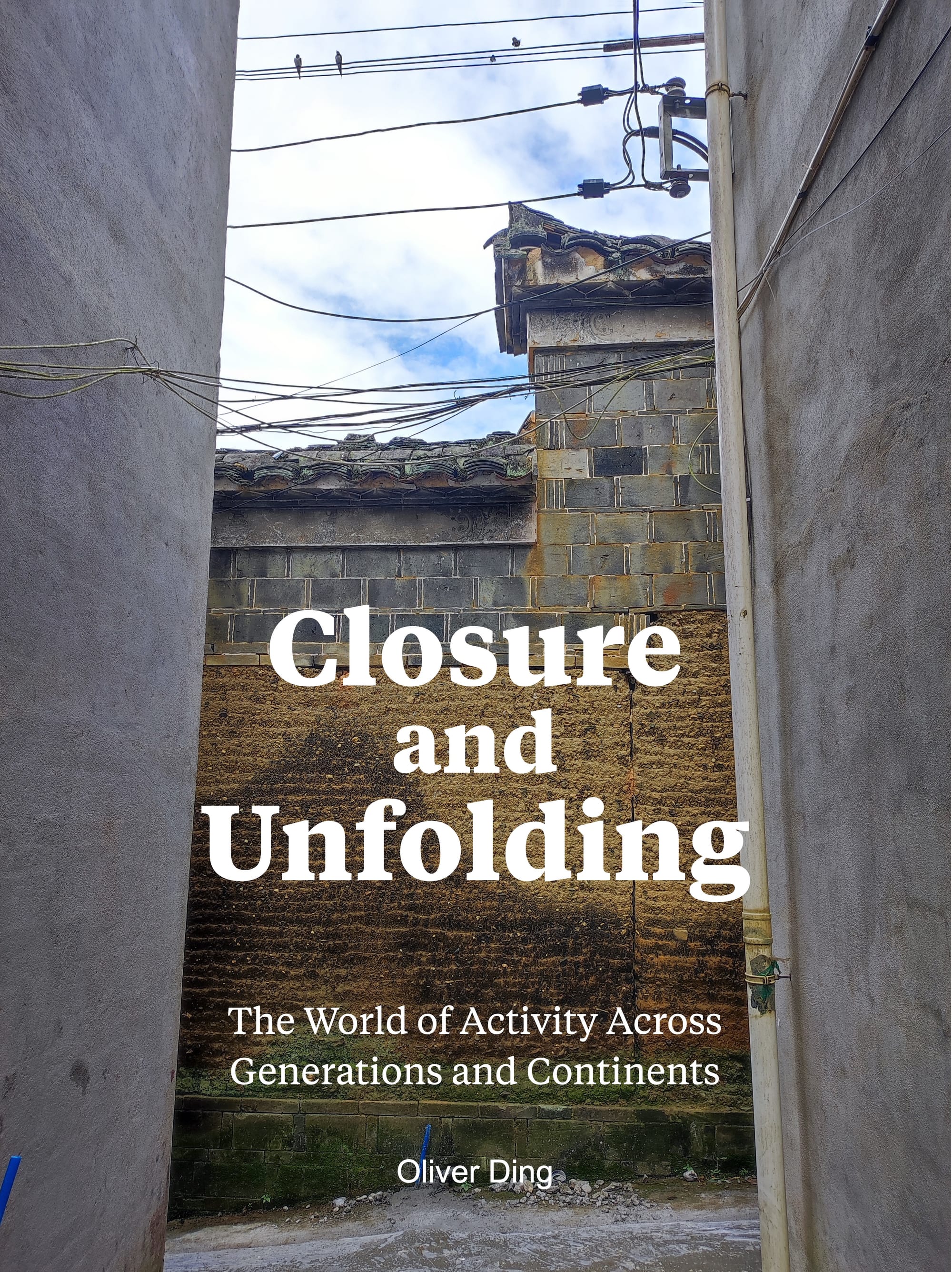
If Part 1 was the Individual—my own journey of closing and unfolding—and Part 2 was the Particular—one family across four generations—then Part 3 is the Universal: the movement of people across oceans, across centuries, in search of a future.
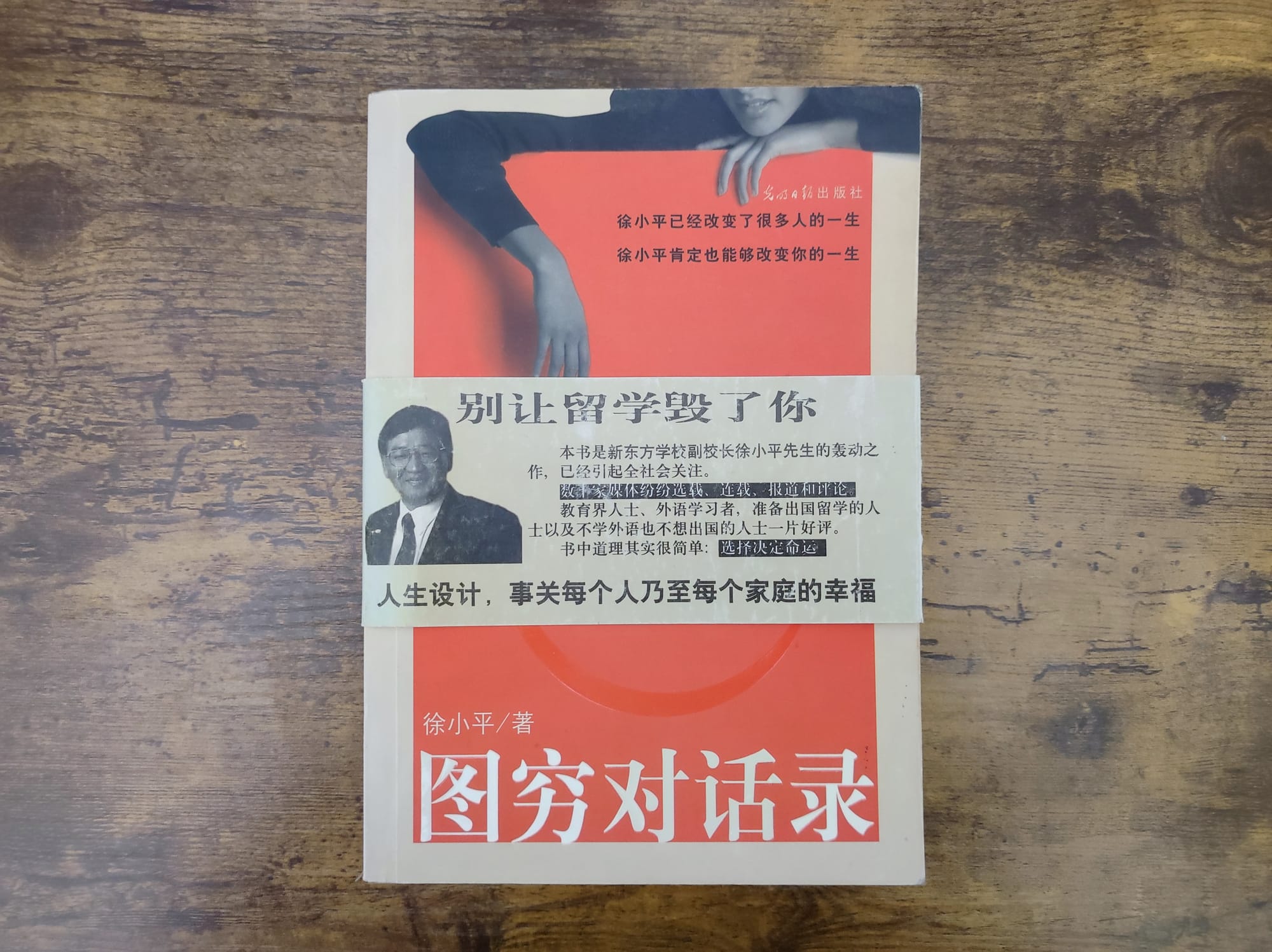
In Fuzhou, I was staying in the house I still keep there. One day, I looked at my bookshelf and saw an old book: Dialogues on Study Abroad and Life Design (Xu Xiaoping, 2002). I had picked it up years ago and forgotten about it. But this time, it caught my attention.
At that moment, I was working on a series of case studies using the World of Activity approach. The subtitle of Xu's book—"Life Design"—resonated with what I was doing. I thought: I should use this book as inspiration to build a collection of case studies on overseas Chinese. I would do as many as Xu had documented, and compile them into a book of my own.
I also became curious about Xu himself. I knew he had been a prominent figure in the study-abroad movement. What had happened to him in the years since he wrote that book? The answer was remarkable. He went on to become a co-founder of New Oriental, the education giant that would later IPO on the NYSE. After that, he founded ZhenFund, a venture capital firm that remains one of the most active and respected early-stage investors in China today. His own life, I realized, had followed a pattern of closure and unfolding—closing one chapter, opening another, each time at a larger scale.
But after I returned to Houston, something shifted. The new theme of Closure and Unfolding had taken shape—not just as a personal pattern, but as something that could be seen across generations. My focus moved from "life design" as a private project to the broader historical current it had emerged from. The book was no longer about individual cases. It was about what Xu's book represented: two decades of Chinese students crossing oceans, closing one world and unfolding another.
The three chapters in this part trace that current. Chapter 1 tells the story of the book on the shelf, and how it opened a window onto the study-abroad wave that transformed China. Chapter 2 turns to the women who crossed those oceans—case studies of Chinese women rebuilding their lives across continents. Chapter 3 steps back to see the larger arc: from the Nanyang migrants of the 19th century to the global movement of people today, and the eternal rhythm of departure and return that runs through all of it.
Three chapters, one ocean, a generation in motion—and the longer human story of which it is a part.
Chapter 3.1: Dialogues on Study Abroad and Life Design
How an old book on a Fuzhou shelf—Xu Xiaoping's Dialogues on Study Abroad and Life Design (2002)—caught my attention at the right moment. At first, it was about "life design" and the World of Activity case studies I was planning. But after the new theme emerged, the book became something else: a window into the study-abroad wave that transformed China over two decades.
Xu's own story—from New Oriental to ZhenFund—became a living example of the pattern this book explores. The students in his book, the wave they rode, and the world they entered: all of them were living a closure and unfolding, whether they knew it or not.
Chapter 3.2: Women Across Oceans
A series of case studies on Chinese women who rebuilt their lives abroad. Crossing the date line was not just a geographical move—it was a reorganization of identity, work, and belonging. How the pattern of closure and unfolding appears in their stories, and what those stories tell us about the human cost and gain of life across continents. Their journeys are not just individual stories; they are part of a larger pattern of migration that has shaped the modern world.
Chapter 3.3: The New World and the Odyssey
On the train from Fuzhou to Shenzhen, passing through Chaoshan, the screen was playing travel ads and trailers—including one for The Love Letter to Grandma (给阿嬷的情书). I thought of the generations who had left from these coastal towns centuries ago, crossing the South Seas in junks. They were searching for what Europeans once called the New World—not a place on a map, but a chance to begin again.
That same summer, Christopher Nolan's The Odyssey was in theaters. Two films, one Chinese and one Western, both about the same thing: leaving home and trying to return. One through the eyes of a granddaughter retracing her grandmother's journey across the South Seas; the other through the eyes of a hero who spent ten years finding his way back to Ithaca.
There is a rhythm to this kind of life: departure and return, leaving and coming home. The Chinese diaspora has known it for centuries, just as the Greeks knew it in the story of Odysseus. To leave home and to long for home are not opposites. They are two halves of the same pattern. Closure and unfolding. A door closing behind you, another opening ahead.
This chapter brings together the figures who have appeared throughout this book: my cousin's daughter, heading to Vienna for Model UN; the students in Xu Xiaoping's book, crossing the Pacific; the friends who have left for Hong Kong, Singapore, Jakarta, Bangkok—not as exiles, but as people building futures in new places; and my own journey across the international date line, still trying to understand what it means to leave and to return.
A meditation on departure and return, across cultures and centuries—and the closing chapter of the movement from Individual to Particular to Universal.
v1.0 - August 14, 2026 - 1,113 words