
Closure and Unfolding: Part 4 - Zheng Xin Cheng Yi
正心诚意 — Rectifying the Mind and Cultivating Sincerity
by Oliver Ding
August 12, 2026
In July 2026, I traveled to China to visit family. I returned to my hometown, Jianyang, and went to Kaoting Academy to pay my respects to Zhu Xi. After coming back to Houston, I developed the theme of Closure and Unfolding from this trip and began planning a new possible book. This is the fourth section of that book, "Zheng Xin Cheng Yi" (正心诚意 — Rectifying the Mind and Cultivating Sincerity), which recounts my visit to Kaoting Academy and my connection with Zhu Xi (朱熹).
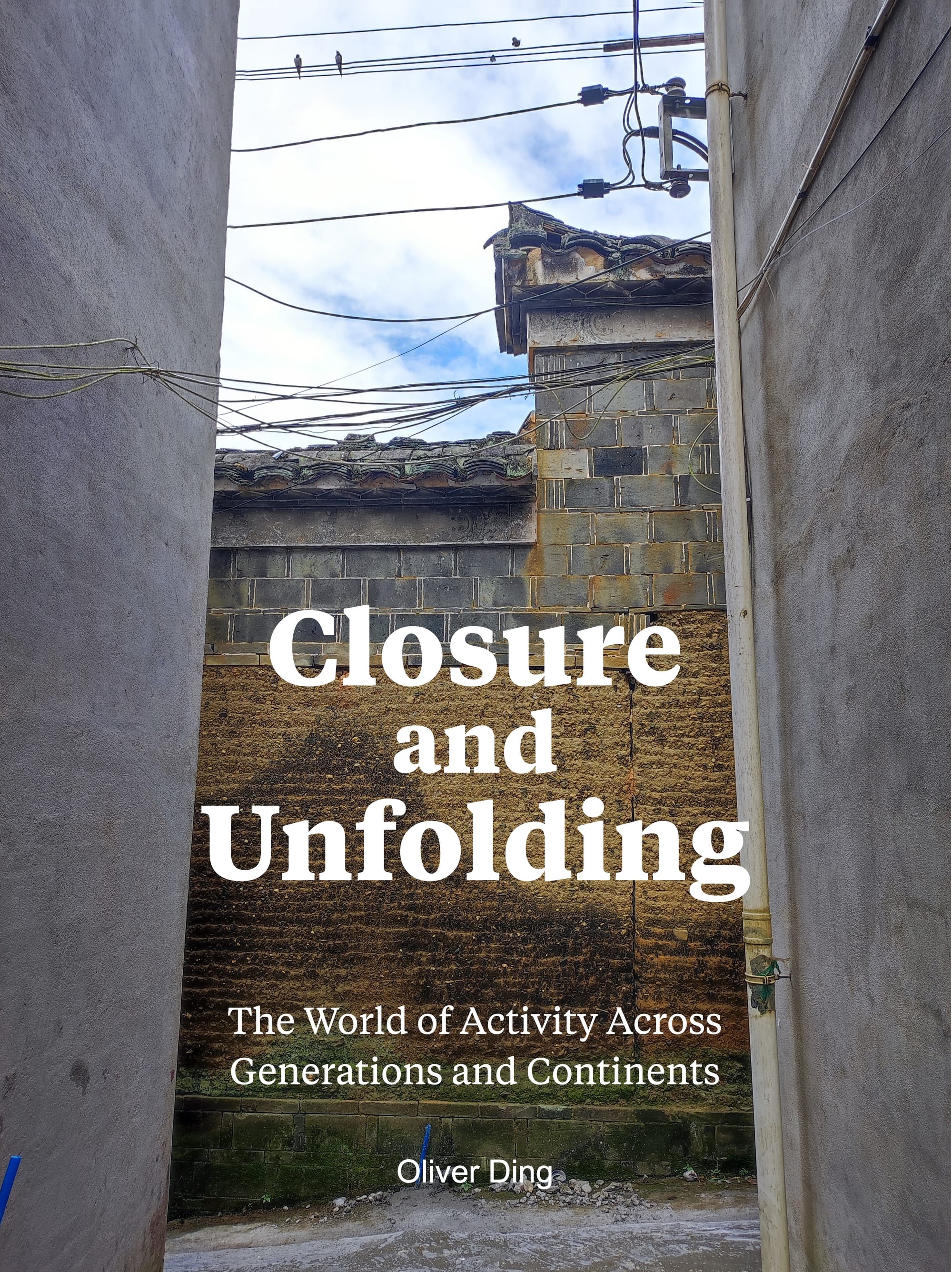
In July 2026, I brought my children back to China for a three-week family visit. It was their first time returning to my hometown, Jianyang, and their first time meeting their uncle and elders there. One place I deliberately arranged for the trip was Kaoting Academy, where Zhu Xi taught in his later years.
In my heart, this was more than sightseeing. Over the past few years, Zhu Xi's name had appeared more and more frequently in my creative notes—from Kwang-Kuo Hwang's scientific interpretation of his thought as a case study for Creative Life Theory, to the inspiration Zhouyi Benyi (Original Meaning of the Book of Changes) gave to my thinking on formal structures on GO Square, to the "Ren-based Activity Theory" (仁体活动论) I was beginning to conceive. Yet most of these engagements remained at the textual and conceptual level. I had not yet faced him again in real space, standing on the ground where he once stood.
I had waited a long time for this trip.
At Kaoting Academy, I took a photo—holding a printed A4 sheet of the GO Square diagram, standing inside the memorial hall. It was not an ordinary travel souvenir. It was documentation of a dialogue across eight hundred years: a theorist from Jianyang, carrying conceptual tools forged in a foreign land, returning to the place where he started, to have a face-to-face exchange with the one who had first shaped the cultural temperament of this region.
After coming back to Houston, I revisited this experience repeatedly, slowly recognizing its place in my entire creative trajectory. I realized that my connection with Zhu Xi was itself in the process of closing and unfolding. For many years, he had been part of my hometown sentiment—an emotional guide, a figure I turned to for comfort by browsing his Wikipedia entries. But I had never truly entered his intellectual world, never seriously engaged with his philosophical system, never treated him as a thinker with whom I could have a dialogue. That old state was now being closed. A new state was opening.
That encounter at the academy was not merely the endpoint of a nostalgic journey. It became the core content of "Zheng Xin Cheng Yi"—the fourth part of this book. In the Confucian tradition, zheng xin (正心) and cheng yi (诚意) are two of the Eight Entries (ba tiao mu, 八条目) from the Great Learning (Daxue, 大学), referring to the inward practices of rectifying the mind and making one's intentions sincere—foundational disciplines for moral cultivation. Zhu Xi, in his Collected Commentaries on the Great Learning (Daxue Zhangju, 大学章句), elaborated on them as essential steps in the sequence of self-cultivation.
In this book, I use the phrase differently: to name the act of sitting down with a great thinker from the past, carrying one's own lived experience and conceptual tools, and engaging in a creative dialogue across time. For me, this marks a turning point—from treating Zhu Xi as an emotional guide to engaging him as an intellectual mentor. I am finally entering his intellectual world, not as a distant admirer, but as a fellow traveler in thought.
It is the final settling point of the entire manuscript—after the narrative has moved outward from the individual (Part 1), to the family (Part 2), to the era (Part 3), it finally returns to the level of thought, where one's entire journey is gathered and reflected upon in conversation with a worthy predecessor.
What follows is what I experienced, perceived, and understood before and after that "encounter"—about a person, a place, and a connection that spans eight hundred years.
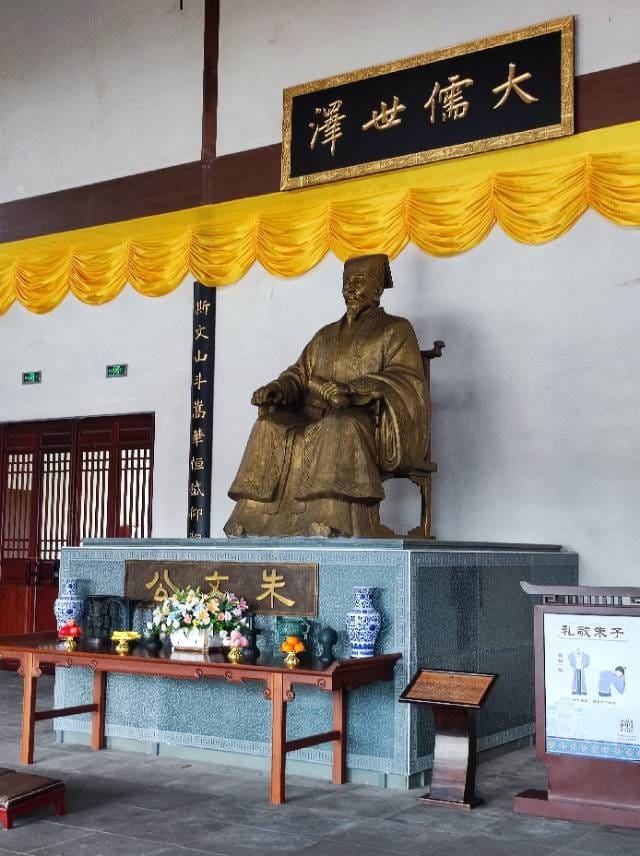
Chapter 4.1 - A Jianyang Boy
How I grew up with Zhu Xi as a quiet presence—from emotional guide to role model to fellow worker to intellectual resource—long before I ever walked through the gates of Kaoting Academy.
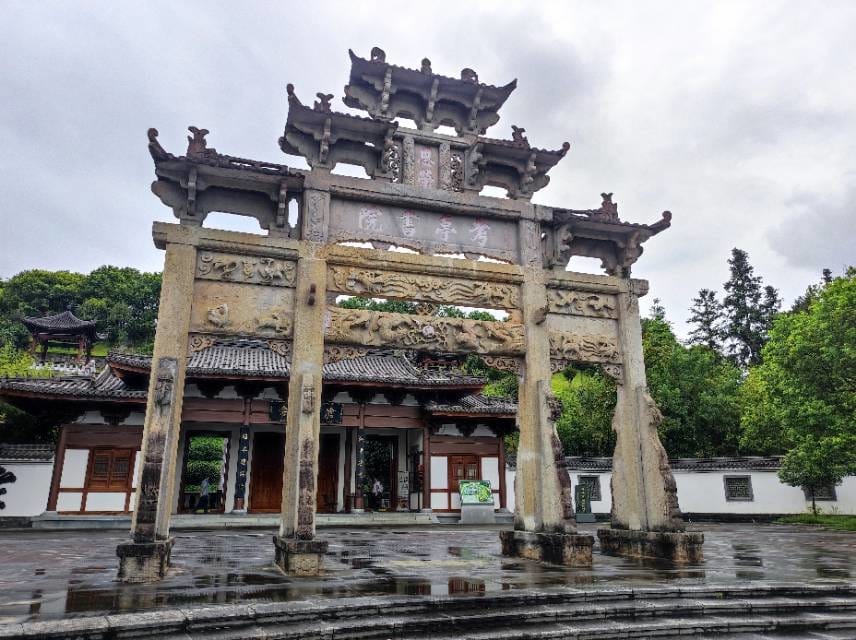
Chapter 4.2: Visiting Kaoting Academy
The day I returned to Jianyang with my two sons, and my middle school classmate showed us around Kaoting Academy—where I finally stood on the ground where Zhu Xi once stood.
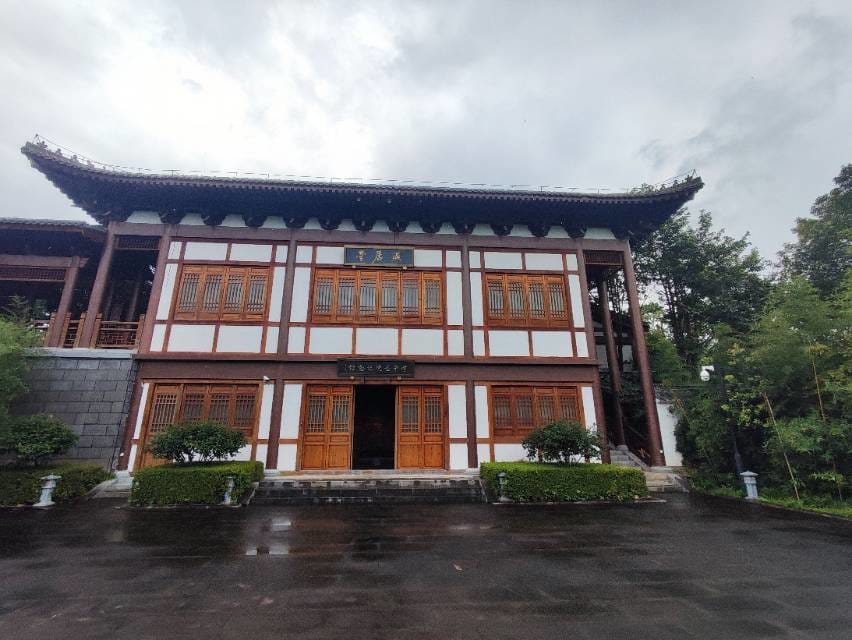
Chapter 4.3: Creative Projects with Zhu Xi
The projects that engaged me with his thought—some indirect, some direct—and why they matter for the work I am doing now.
v1.0 - August 14, 2026 - 850 words