
Lake 42 | Epilogue: Cognitive Hydrology
The Natural Mother’s Way of Cognitive Flow
by Oliver Ding
February 7, 2026
Epilogue of Lake 42: The Great Confluence.

On the first day of 2026, I walked around a lake near my home with
my wife, reflecting on the past year and my journey of writing more
than 42 possible books.
But my relationship with water — with rivers, with lakes, with the patterns they create — began much earlier.
Thirty years ago, as an adolescent in Fujian Province, I lived within the Min River watershed. My geographical expansion from childhood village to provincial capital followed the river’s natural course — from mountain sources through converging tributaries to the broad waters approaching the sea.
Now, three decades later, on the other side of the Pacific, I walk by another lake and recognize the same patterns — not in geography this time, but in the structure of my creative life.
This is the story of how water taught me to think.
1
In Homecoming, I described my adolescent World of Activity as expanding along the Min River system. From my village in Pengdun, I moved to Jianyang, where the Chongyang Creek flows down from Wuyi Mountains and meets the Mayang Creek — their confluence forming the Jian River. In Nanping, it becomes the Min River, which finally reaches Fuzhou and approaches the sea.
This was not just geographical movement. It was an education in hydraulics, ecology, and the nature of knowledge itself.
Each semester, I traveled downstream — following the current toward broader horizons. Each vacation, I traveled upstream — against the flow, returning to sources. This rhythmic movement, this oscillation between source and confluence, between mountain and sea, established a pattern that would shape my intellectual life.
In Fuzhou, I encountered the famous words of Lin Zexu: “The sea embraces all rivers; its vastness comes from its openness” (海纳百川, 有容乃大).
This phrase immediately resonated with my embodied experience. I had lived it — following one small creek as it joined others, becoming a river, becoming part of something vast.
I adopted Lin Zexu’s words as my personal motto. What I didn’t realize then was that I was also adopting a methodology:
- Multiple streams converge into larger bodies
- Openness enables vastness
- The sea doesn’t reject any tributary
- Greatness comes from receptivity, not exclusion
Decades later, when I discovered the “Generative Confluence” pattern in June 2025, I was re-discovering what the Min River had already taught me: knowledge grows through the convergence of multiple streams, each maintaining its own character while contributing to a larger whole.
In Homecoming, I wrote about “Natural Mother as Teacher.” The Min River watershed wasn’t just scenery — it was a meta-framework, though I had no language for it then. The river taught me:
- Flow: Ideas move; they don’t sit still
- Confluence: Separate streams meet and merge
- Cycles: Water returns — evaporation, precipitation, circulation
- Scale: Small creeks feed great rivers; local feeds global
- Direction: There is an orientation (toward the sea), but many paths
These weren’t abstract principles. They were lived realities, embodied experiences that became the “hidden meta-framework guiding my intellectual development.”
My father worked at a municipal water plant in Jianyang, where he managed the treatment of water drawn from the Chongyang Creek — the same mountain stream I would follow downstream years later, as it merged into the Jian River, then broadened into the Min River on its journey to the sea.
He taught me that working with water systems requires both respect for natural flows and intelligent human intervention. This wasn’t abstract wisdom — it was daily practice, drawn from managing the very waters that would later teach me about confluence, flow, and cycles.
Years later, when I developed the Ecological Practice Approach and began thinking about “containers,” “flows,” and “strategic curation,” I was essentially translating what I had learned from the river — and from my father’s work with the river — into theoretical language.
The water system was my first meta-framework. I just didn’t know it yet.
The river taught me about convergence — how streams meet and merge. But it would take decades to understand that knowledge systems could converge differently: not by merging and losing identity, but by generating new centers while preserving original flows.
This difference — between natural confluence and generative confluence — would become central to my theoretical work.
2
In June 2020, I launched the HERO U project with an image of a person standing before a mountain, contemplating the ascent. The metaphor was intentional: “Knowing is hard. Achieving significant outcomes from knowing is even more challenging. It’s like climbing a mountain.”

What I didn’t know then was that this image would become the first frame in a five-year visual narrative.
Over the next five years, as I created book drafts on knowledge curation (2020– 2022), knowledge engagement (2022–2023), and knowledge enterprise (2023–2024), I chose cover images based on aesthetic intuition and thematic resonance. Each choice felt right in its moment, for its specific project.
But when I looked back in 2025, a pattern emerged — one I had never consciously designed:
Departure: Campfire and Campsite
The campfire and campsite symbolize the beginning of an expedition. At this stage, explorers are still unfamiliar with their surroundings, remaining highly alert to every change in the environment.
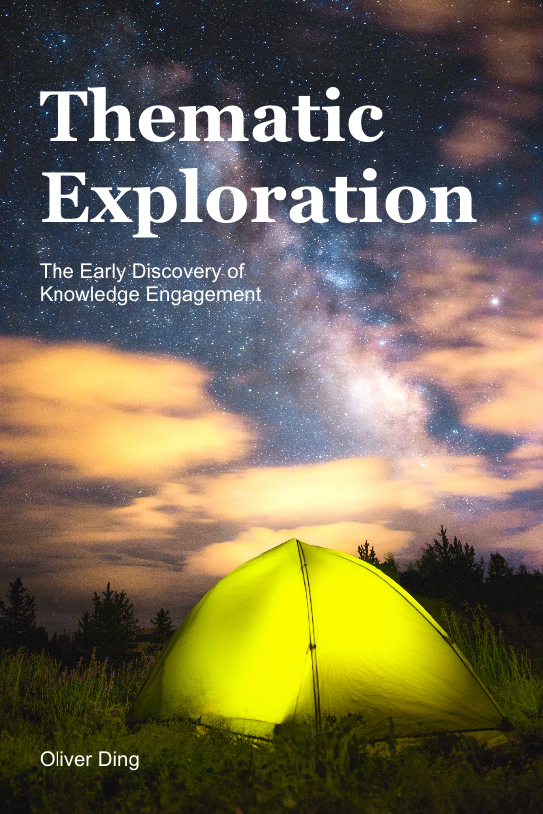
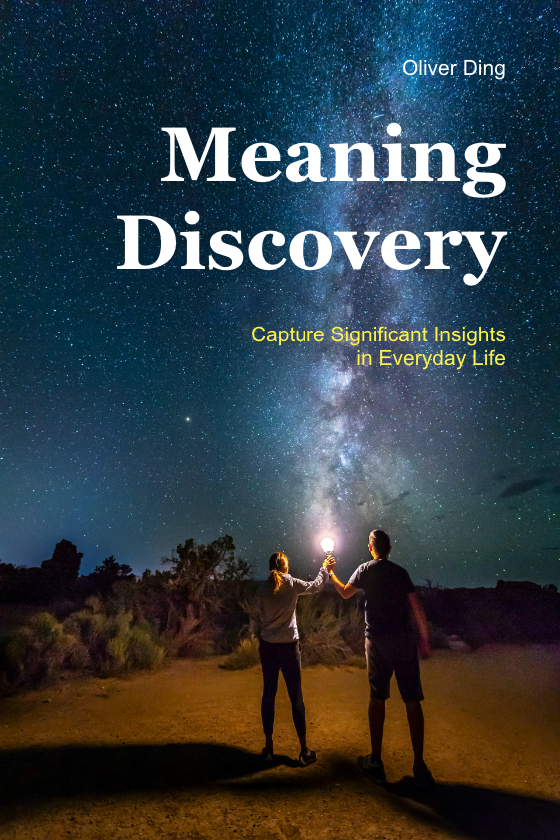
In the early stages of a knowledge enterprise, creators must also stay highly sensitive to shifts in their surroundings, capturing new meanings, discovering key clues and creative themes, and laying the foundation for further exploration.
Midway: Mountain Streams and Waterfalls
As explorers roam freely through mountain streams and play by waterfalls, they are no longer on high alert but become one with their environment, moving in harmony with nature’s rhythm.
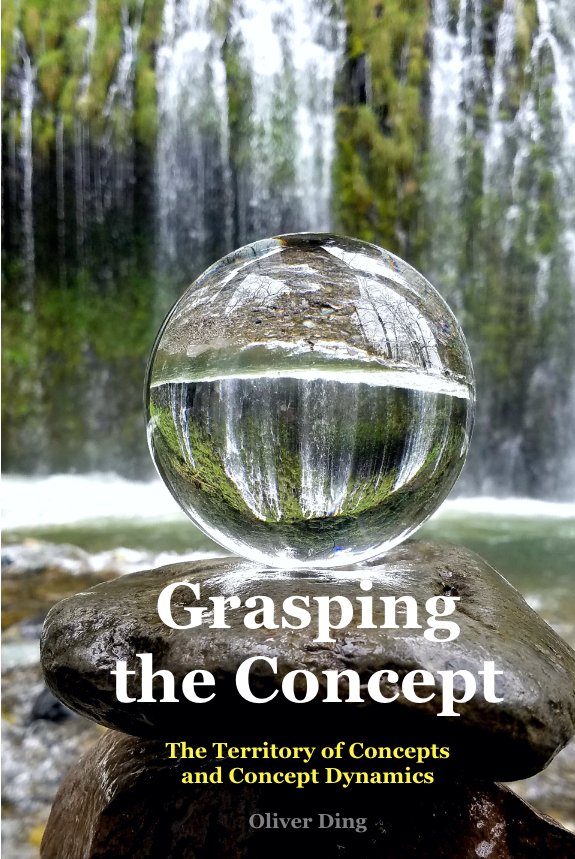
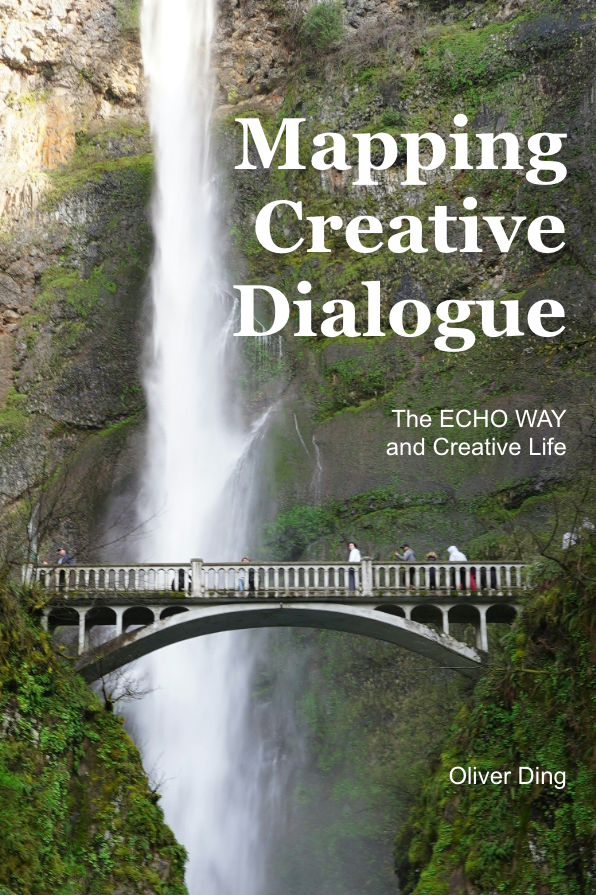
In the mid-stage of a knowledge enterprise, creators enter the territory of concepts, grasping the concepts, navigating between opposing themes, resolving structural conflicts, and continuously bridging cognitive gaps to expand the boundaries of thought.
Expedition: Snowfields and Trekking
At the expedition stage, explorers step into vast snowfields, embarking on a long and arduous trek toward the journey’s end.
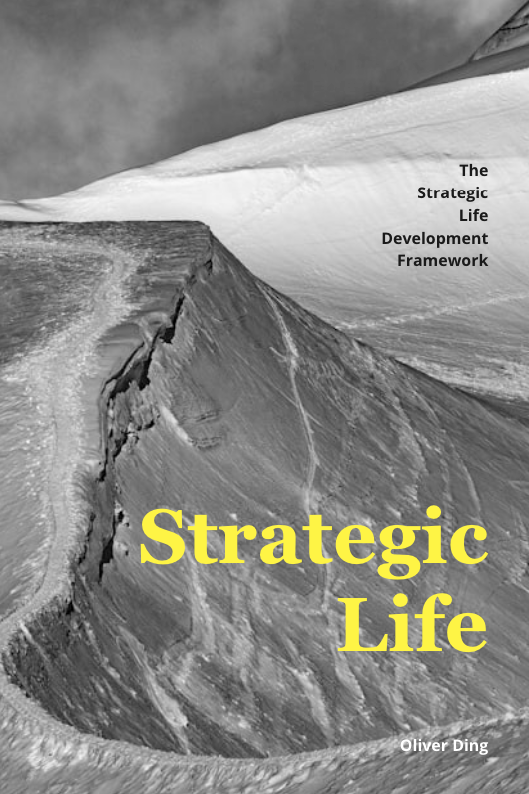
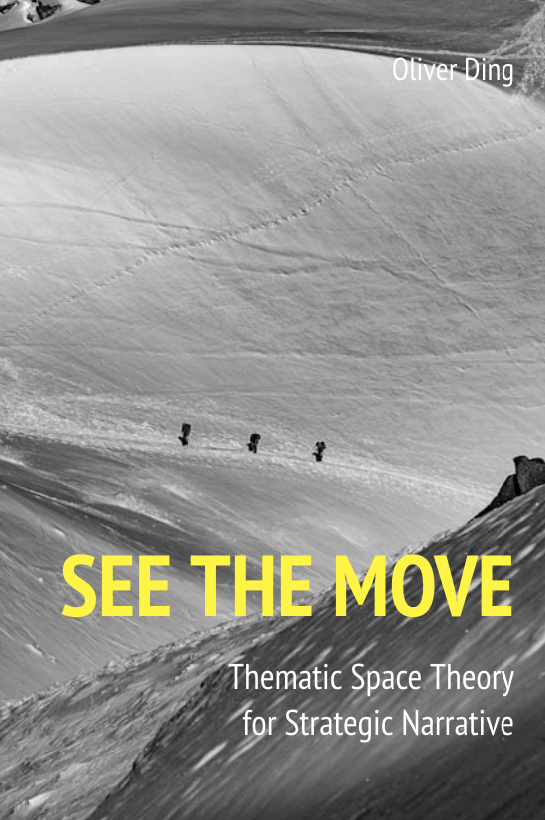
In the most challenging phase of a knowledge enterprise, creators begin to envision an entirely new knowledge structure and the landscape of creative enterprise. They must persist through complex and demanding creative tasks, constantly pushing their own limits and forging new paths into the unknown with resilience and determination.
Summit: Snow Mountain
Finally, in March 2025, when I created the Wonder and Wander project to reflect on this entire journey, I chose a cover showing a snow-covered mountain peak — sharp, clear, fully revealed.

This journey feels like that of an explorer on a long trek, crossing mountains and rivers to uncover the true face of a mysterious snow mountain. Now, the explorer has reached the journey’s end, standing at the foot of the mountain. What was once a blurry imagining now unfolds before him with striking clarity.
I wrote those words about the explorer reaching the journey’s end.
To reveal the truth — this is the mission driving the creative journey.
I hadn’t planned to use this metaphor to describe the journey. However, it naturally emerged in the cover images above.
Later, in June 2025, while writing the introduction to the book Wonder and Wander, as I closed the project, I revisited these cover images. At that moment, I understood something profound: patterns operate at scales below conscious awareness.
Now we have a name, Fractal Confluence, to describe this insight.
3
But there was more to discover.
Mountains are where rivers begin. The snow-covered peaks of Wonder and Wander represents not an ending, but a source.
In July 2025, I returned to Fujian and visited Wuyi Mountain — the actual source of the Min River. Standing at those heights, I realized: the five-year journey to the mountain was also a journey to the source of waters.
From mountain snow to flowing streams, from streams to confluence, from confluence to lake — the complete hydrological cycle was becoming visible.
The Wonder and Wander mountain wasn’t the destination. It was the headwaters. The water had to flow down, gathering tributaries, forming the patterns I would later call Generative Confluence.
By January 2026, when I laid out more than 42 book covers together, the complete narrative emerged:
Mountain (source) → Streams (flow) → Waterfall (cascade) →
Bridge (connection) → Tree (structure) → Lake (confluence)
A complete journey from heights to waters, from source to gathering, from the solitary peak to the convergent lake.
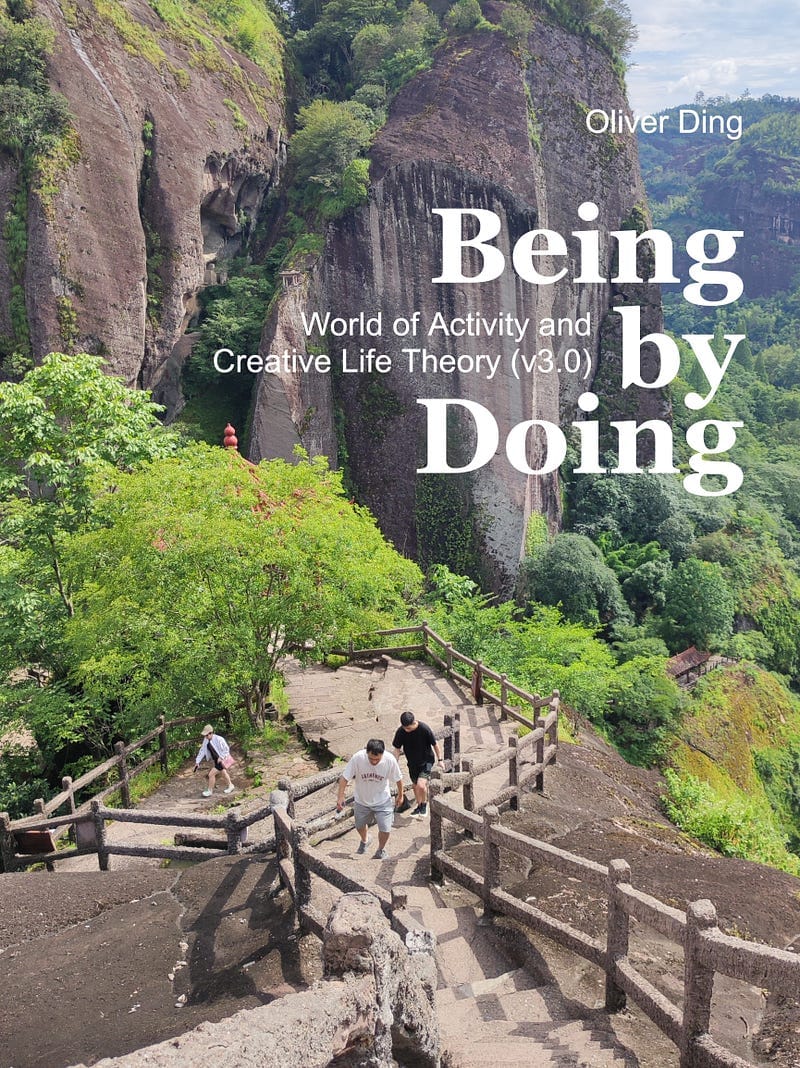
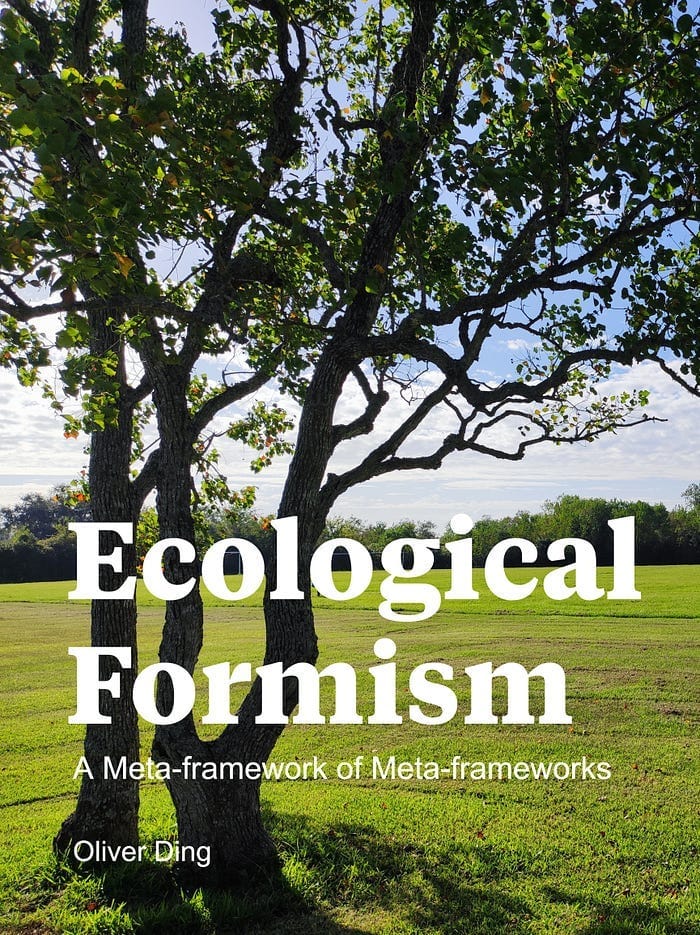
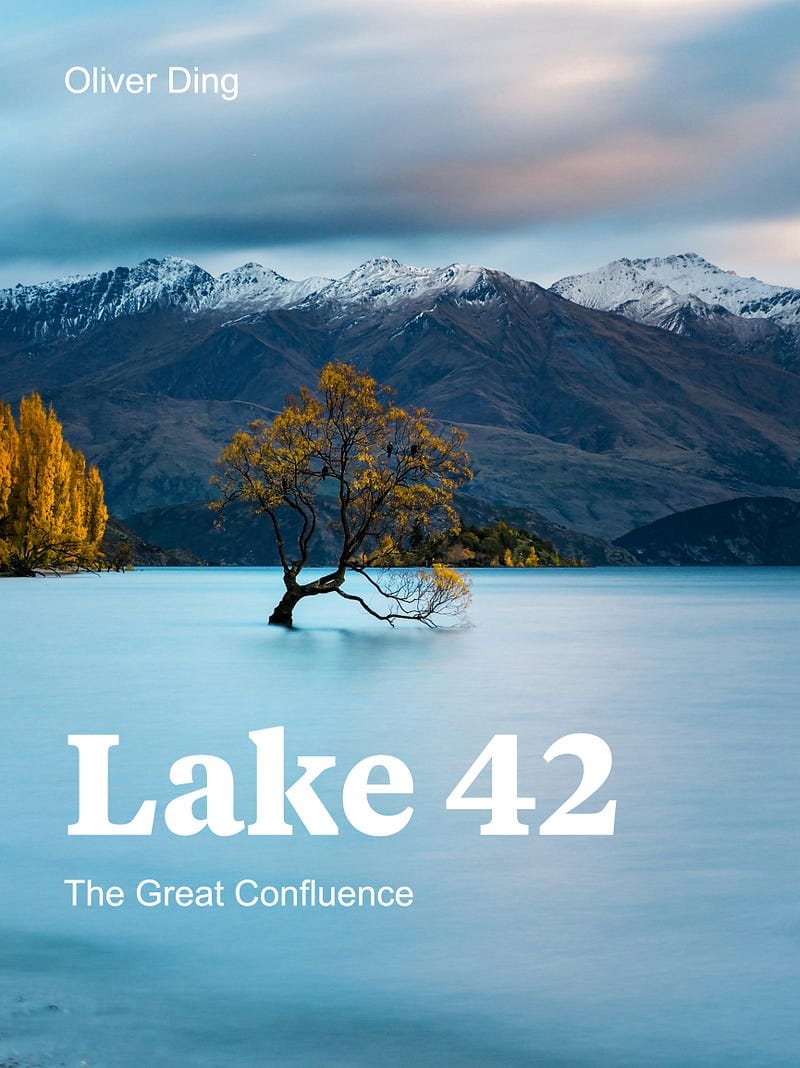
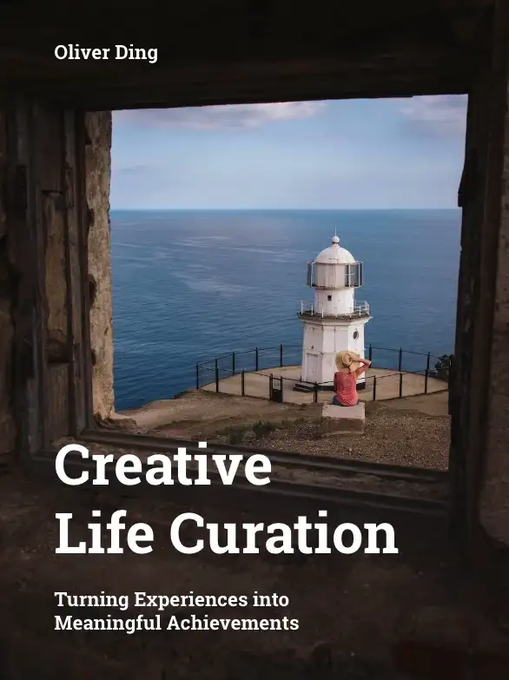
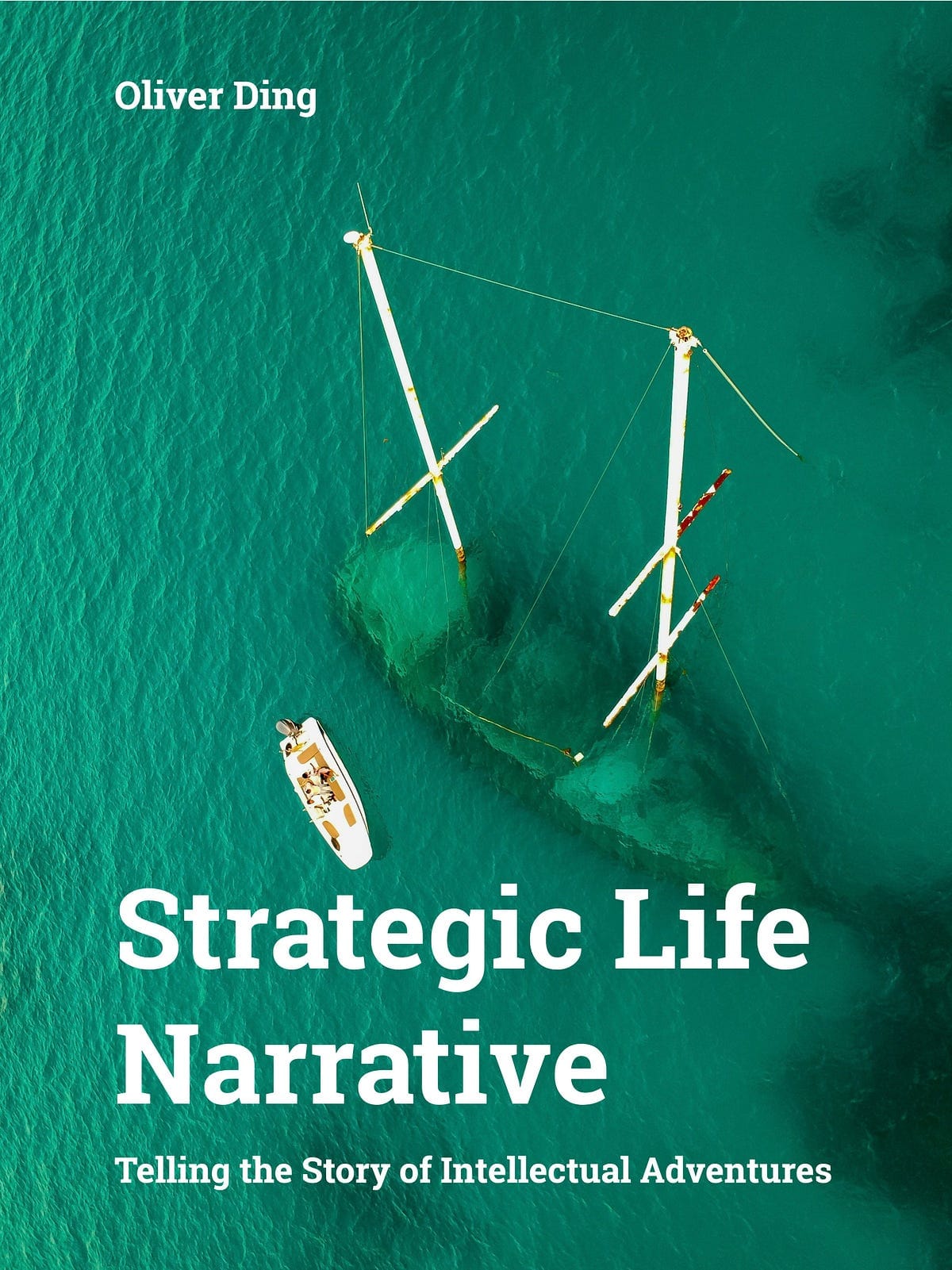
What emerged was breathtaking:
- Mountains (Source): Engaging with theoretical traditions
- Streams (Tributaries): Individual approaches flowing in parallel — Ecological Practice, Project Engagement, Creative Life Theory
- Waterfall (Cascade): Sustained creative journey — the landscape of 42+ book drafts
- Bridge (Connection): Creative Dialogue — linking separate streams
- Tree (Structure): Ecological Formism — hierarchical organization growing from a confluence
- Lake (Confluence): Lake 42 — where all streams converge
- Ocean (Horizon): Creative Life Curation and Strategic Life Narrative — the vast openness beyond the lake, where waters continue their journey toward cultural and collective dimensions
This wasn’t designed. These images were chosen over six years, in different contexts, for different aesthetic or thematic reasons.
Yet they formed a complete hydrological cycle — from mountain source through flowing streams, cascading acceleration, bridging dialogues, structured growth, convergent lake, to the open ocean.
And they told a theoretical story:
From engaging with theoretical traditions (mountain peaks) through parallel theoretical development (streams) and sustained creative journey (waterfall) to cross-theoretical dialogue (bridge) and systematic organization (tree), arriving at generative confluence (lake), and finally opening toward cultural and collective horizons (ocean).
The unconscious was responding to patterns the conscious mind couldn’t yet name. I was living within a Fractal Confluence before I could theorize it.
More profoundly, these covers reveal the complete arc that Lin Zexu’s motto had predicted thirty years earlier: “The sea embraces all rivers; its vastness comes from its openness.”
From mountain to ocean. From source to embrace. From engaging with theoretical traditions to opening toward Cultural Life Development.
The 42 book covers were unconsciously enacting what I had learned from the river, what Lin Zexu had once named, and what I was now formalizing as Cognitive Hydrology.
The cycle was complete. But completion, in a hydrological system, is never final. Ocean waters evaporate, form clouds, fall as rain on mountains, and the cycle begins again.
4
The Min River taught me to see water systems. Lin Zexu gave me words for what water taught. The 42 book covers showed me that knowledge systems follow similar patterns.
This progression — from embodied experience through cultural wisdom to theoretical formalization — is itself a hydrological process. Each stage feeds the next, yet each maintains its own character.
Cognitive Hydrology emerged from this confluence of:
- Lived experience (childhood by the Min River)
- Cultural wisdom (Lin Zexu’s principle)
- Theoretical traditions (Ecological Psychology, Activity Theory,
Phenomenology) - Creative practice (42 books over six years)
- The living way of concepts (six strategic operations)
The six operations I identified in the Generative Confluence journey — Thematic Exploration, Thematic Conversation, Strategic Curation, Embodied Experience, Conceptual Thinking, Continuous Objectification — are six aspects of working with cognitive flows.
- Thematic Exploration (Source-seeking) Like hydrologists tracing streams to their sources, thematic exploration follows concepts back to their origins.
- Embodied Experience (Immersion) You cannot understand water by reading about it. You must wade in.
- Thematic Conversation (Interacting streams) When streams meet, they interact, create turbulence, and generate new currents.
- Conceptual Thinking (Clarification) When water settles in a lake, sediment falls away, and clarity emerges.
- Strategic Curation (Flow-guiding) Water flows naturally, but intelligent intervention — canals, reservoirs — can guide flows productively.
- Continuous Objectification (Mapping) Hydrologists create maps not to freeze rivers but to make patterns visible and shareable.
But Cognitive Hydrology is more than a set of operations. It is a systematic theoretical framework for understanding how entities — whether ideas, people, cultures, or organizations — flow, converge, circulate, and transform.
Although Geographical Hydrology is the primary inspiration of Cognitive Hydrology, there is a crucial difference.
In geographical hydrology, confluence is absorption. When the Chongyang Creek meets the Mayang Creek in Jianyang; these two creeks cease to exist as separate entities. They merge into the large river: Jian Creek. The waters merge; the identities dissolve.
This is natural confluence — and it’s final.
But in cognitive hydrology, something different can happen.
When three theoretical approaches converged in June 2025 — Ecological Practice, Project Engagement, and Creative Life Theory — they generated a new center (Creative Life Theory v3.0). But the three original streams didn’t disappear. They continued developing along their own trajectories.
From June to December 2025:
- Ecological Practice evolved from v4.0 to v4.1
- Project Engagement was developed through new frameworks
- Ideas behind Creative Life Theory (v1.0, v2.0) continued to develop
The story here might seem strange to readers. The main reason is that I named this new creative center “Creative Life Theory v3.0.” In retrospect, this naming choice works against the telling of this story. Since the core of v3.0 and its subsequent v3.1 is the World of Life (World of Activity), readers need to understand it as an independent theoretical enterprise, rather than a natural continuation of the previous Creative Life Theory v2.0.
This is what makes the confluence generative rather than merely absorptive.
Generative Confluence means:
- Multiple streams converge at a coordinate point
- A new center forms at that convergence
- But the original streams continue flowing
- The convergence generates something new without consuming what
came before
This is not how rivers work. This is how ideas work.
The difference is crucial. In nature, confluence is a one-way transformation. In knowledge development, confluence can be generative — creating new knowledge systems without destroying old, opening new territories while preserving existing ones.
The river gave me the metaphor. But I had to go beyond the river to understand what makes knowledge systems special: their capacity for generative rather than absorptive confluence.
This is why I call it Cognitive Hydrology, not just hydrology. The patterns are similar, but the logic is different. And that difference matters.
5
Moreover, Lake 42 is part of a trilogy that applies the Creative Life Curation method to study my own creative life at three distinct time scales:
- Homecoming: from my childhood to my midlife (1974 to 2014)
- Wonder and Wander: from 2019 to 2025
- Lake 42: from June 2025 to December 2025
This trilogy and other case studies I conducted from 2022 to 2025 build a large archive of the Creative Life Curation method. It is a big achievement of Creative Life Theory.
Now, this line of exploration stands as a full system with its own theoretical approach, refined methods, a series of diverse case studies, and several manuscripts. Although this method was originally inspired by Howard E. Gruber’s approach, I am pleased to see that my journey was not simply following Gruber but building on his foundation to connect the past and the future.
In Chapter Nine, I identified Creative Life Curation as operating in three dimensions:
- Life Narrative: Lived experience as source water
- Theoretical Development: Conceptual streams and confluences
- Cultural Reflection: The larger watershed context
Viewed through Cognitive Hydrology, Creative Life Curation is watershed management — tending the entire system through which ideas flow, not just individual projects.
The 42 books aren’t 42 separate lakes. They’re 42 tributaries in one watershed. Some flow in parallel. Some converge. Some branch off from earlier confluences. Together, they form a living water system.
Lake 42 is where — for now — many streams have gathered. But it’s not a dead end. Already, new rivers are flowing out: Anticipatory Cultural Sociology, cultural frameworks research, and new dialogues.
The water continues to move.
v1.0 - February 7, 2026 - 2,625 words