
Activity Analysis Network #20: Supportance Theory, Center as RelationField, and Gejunction
This is the 20th issue of the Activity Analysis Center newsletter
by Oliver Ding
June 30, 2026
Hi, and welcome to Activity Analysis Network, a newsletter hosted by the Activity Analysis Center.
Each issue is organized around the "Flow - Focus - Center - Circle" schema, the primary model of the World of Activity Toolkit (v1, 2025).
In this biweekly newsletter, I share summaries of new articles from the Activity Analysis Center, along with updates on related activities, including some of my own published work elsewhere.
In this issue (#20), 12 new articles have been added to the site:
- #1 - Library - Supportance: Self, Other, and Possible Support (v1, 2026)
- #2 - Case Studies - The Alienation of Supportance: The RelationField of High-Conflict Divorce (HCD)
- #3 - Case Studies - Supportance Analysis: How a Theoretical Platform Supports Creative Work
- #4 - Concepts - Thematic Supportance: Curation, Narrative, and Meaning
- #5 - Concepts - Leeway: The Ecological Total of Supportances
- #6 - Frameworks - Supportances in Intimate Relationships: A Theoretical Framework
- #7 - Library - Epilogue: The Future of Supportance Analysis
- #8 - Method - Supportive Life Discovery (v2.0): The Mid-life Curation Edition
- #9 - World of Activity - Center as RelationField and the Dual-Center Pattern
- #10 - Concepts - [Creation Note] Gejunction: Toward a Unit of Synthesis for Social Life
- #11 - Z Lab - Following the Theme (2026): A 42-Post Journey in Reflection
- #12 - Concepts - [Creative Note] The Notion of Developmental Functionalism
These articles are curated into a new possible book: Supportance: Self, Other, and Possible Support (v1, 2026), expect #12.
Flow
The historical development of the Activity Analysis Center and my experience of daily life
This section is used to share stories of the "Appropriating Activity Theory" column. However, the column has been ended last month. In this issue, I turn it to my experience of creative journey.
In the past two weeks, four moments rose out of the daily flow and held my attention:
- Aria's story
- Maya's call
- 42 Posts
- A Reflection
Ten days ago, I read a woman's blog (whom I will call Aria) and learned her journey of marriage and divorce. One event is that she was detained in a police cell for 42 hours. The cell is sparse—no belongings, no connection to the outside world. Yet inside this cell, she discovers something unexpected: her body is confined, but her consciousness moves freely. "My mind is very free," she later writes, "free to go wherever it wants."
Her story inspired me to explore Intimate Relationships and High-Conflict Divorce (HCD), resulting in a series of new articles on the concept of Supportance and the RelationField framework. Eventually, these articles encouraged me to edit a new possible book about Supportance Theory. See #1.
Two months ago, a video session with Maya offered a concrete opportunity to practice Supportive Life Discovery in action. Yesterday, we had another call and moved the program into the second phase. See #8.
Over the past two months, I shared 42 short posts reflecting on my “Theme–Concept–Framework” creative journey on Linkedin. On June 22, I stepped back and reflected on these posts as a whole, framing them as a Developmental Project, which inspired me to creative the "Following the Theme" thematic card. See #11.
On June 26, I wrote a creative note to reflect on my ongoing work on developmental concepts and theoretical frameworks, particularly developmental episode. I used the term Developmental Functionalism to describe my philosophical preference that guides how I construct and select developmental concepts across different domains. See #12.
Focus
The Thematic Foci of the Activity Analysis Center
Over the past two weeks, I worked on two projects: a private project and a public project, both were inspired by Aria's story.
Based on Aria's blog posts, I conducted a case study, based on the World of Activity Approach and the Supportance-RelationField Framework. The outcome was a private document, only for my personal reflection, not for public sharing.
Inspired by the case study, I did more research on related topics such as Intimate Relationships and High-Conflict Divorce (HCD), expanding Supportance Theory and the RelationField framework to these new fields. The outcome was a new possible book: Supportance: Self, Other, and Possible Support (v1, 2026).
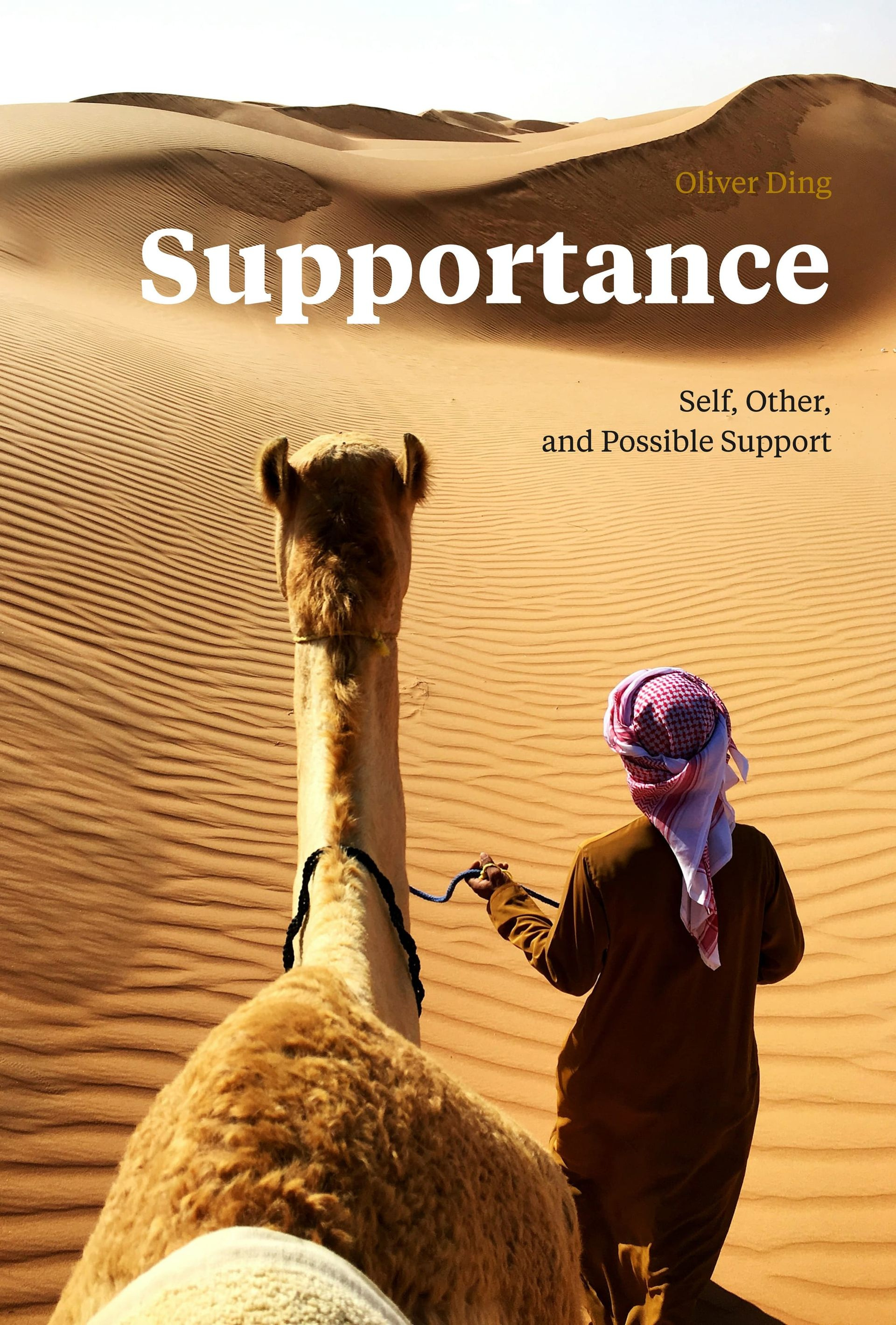
This book is organized into seven parts:
- Preface: After Affordance
- Part 1: The Concept of Supportance
- Part 2: Modeling Social Environments
- Part 3: Women's Search for Supportance
- Part 4: Theoretical Platform
- Part 5: Supportive Life Discovery
- Part 6: Thematic Supportance
- Part 7: The Concept of Leeway
- Epilogue: The Future of Supportance Analysis
The structure of the book follows a cumulative logic. Part 1 establishes the conceptual foundation: what supportance is and how it differs from adjacent concepts. Part 2 turns to the environments in which supportance operates, presenting a series of models developed across different fields and years. Parts 3 and 4 then apply this conceptual and environmental framework to two contrasting domains: intimate relationships (Part 3) and theoretical platforms (Part 4) — the personal life world and the knowledge world.
Part 5 explores a specific practice — Supportive Life Discovery — that sits at the intersection of these domains, showing how supportance can be deliberately designed to facilitate life transitions. Part 6 introduces Thematic Supportance, a distinctive subtype that operates through the symbolization of lived experience, linking individual experience to collective culture. Part 7 closes the book with Leeway — the ecological total of supportances — which reframes the entire framework from the perspective of the whole rather than its parts. The Epilogue then looks forward to the future of Supportance Analysis as an applied field.
This book is for those who are interested in how we find, recognize, and build the supports that make life possible — in our relationships, our work, and the worlds we inhabit.
Center
The Core of the Activity Analysis Center
The Activity Analysis Center hosts two major theoretical enterprises:
- The Life-as-Activity Approach (including the Project Engagement Approach)
- The World of Activity Approach, now operating within a nested structure: World of Life (World of Activity).
In last issue, we saw a sign of shifting from theoretical development to practical analysis. The release of three recent possible books — Weave the Life, Weave the Theory, and Appropriating Activity Theory — marked a milestone of my journey of engaging with Activity Theory.
Since the Life-as-Activity Approach has reached v4.0, the future of the Activity Analysis Center will no longer focus on theoretical development, but more on testing the theoretical approach, empirical research, and intervention. The new direction has been named Activity Analysis & Intervention (AAI) in 2023.
The Supportive Life Discovery program, I recently working on can be seen as a concrete example of the AAI method.
Life Discovery is a theme I first explored in 2022, in the course of developing the concept of Second-order Activity within the Anticipatory Activity System (AAS) framework. At that time, the focus was on the activity itself — on how individuals engage in exploratory, future-oriented activity that is not about executing a known objective but about discovering what the next objective might be.
In 2026, I revisited this theme and rebuilt it as "Supportive Life Discovery" — a shift that brings the relational and environmental conditions of discovery into the foreground. From the Supportance-RelationField perspective, a "Supportive Life Discovery" practice indicates a particular RelationField between a supporter and an explorer. Whether designed or emergent, it is a high-Supportance RelationField: an environment structured to offer action opportunities that enable exploratory activity.
In April 2026, a video session with Maya offered a concrete opportunity to practice Supportive Life Discovery in action. That session prompted me to look back — to recall a similar engagement years earlier, conducted through email correspondence with a friend, helping her explore her own life and career development. The connection between past and present gave shape to a future direction. The experience of the Maya session and the reflections it triggered led to a revised model: Supportive Life Discovery v2.0, framed as the Mid-life Curation Edition. In designing v2.0, I framed it as a watershed experience — an experiment in supportance design, testing how a structured RelationField might facilitate transformative discovery.
During our continue conversation via video meetings and emails, I apply the World of Activity approach to reflect on her life experience and explore the future direction. This is what the AAI in the real life look like.
Circle
The Context of the Activity Analysis Center
Since September 2025, the Activity Analysis Center has been operating as a meta-center — not only developing its own theoretical work, but also supporting and hosting content from its sister theoretical enterprises. This issue features updates from several of them.
Over the past several years, I worked on several theoretical projects, such as the Ecological Practice Approach, Curativity Theory, Creative Life Theory, and Thematic Space Theory.
Inspired by creativity researcher Howard Gruber's idea of "Network of Enterprises," I used the "Knowledge Center" approach to manage this large knowledge system. Each knowledge center hosts one or two related theoretical approaches.
- CALL (Creative Action Learning Lab): the Ecological Practice Approach and Creative Life Theory
- Curativity Center: Curativity Theory
- TALE (Thematic Analysis Learning Engagement): Thematic Space Theory
- Frame for Work: A theory about Knowledge Frameworks
In the #14 issue (March 31, 2026), I started to use GO Theory to name a new theoretical platform to support these enterprises.
On this platform, five theoretical enterprises operate, each occupying a distinct position within the World of Life: Life as Activity (including the Project Engagement Approach), Anticipatory Cultural Sociology (ACS), Strategic Developmental Psychology (SDP), Cognitive Hydrology, and Platform Ecology.
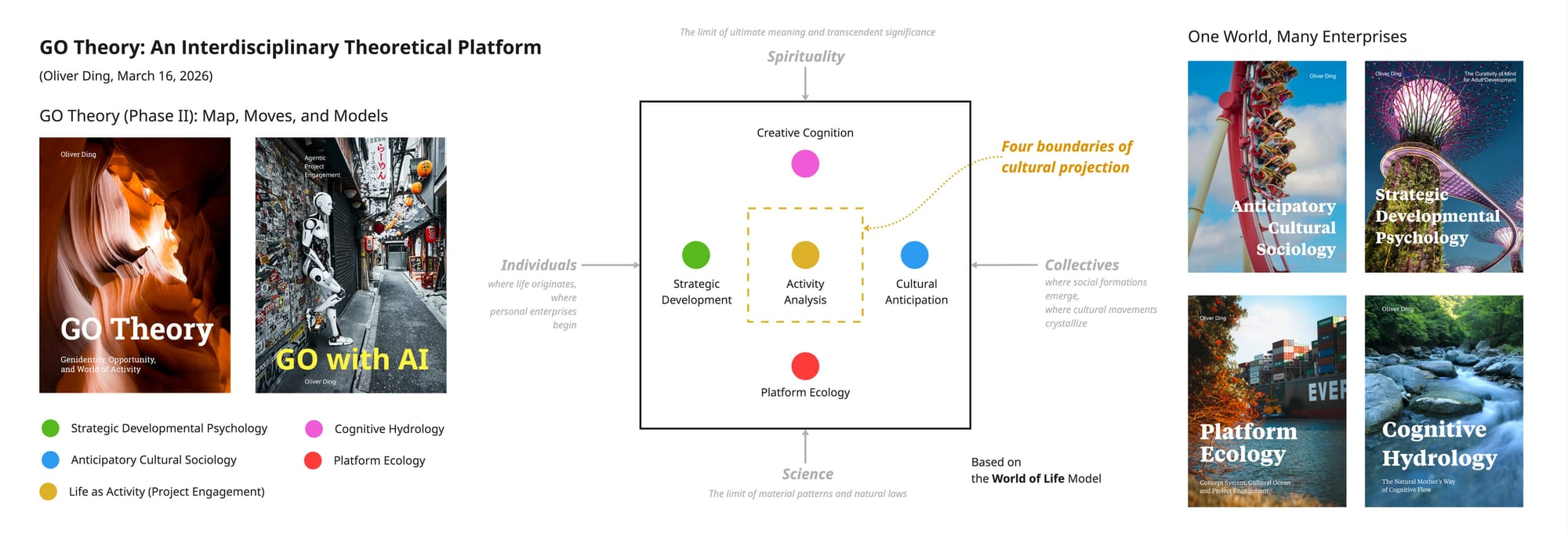
These five enterprises are equal. None is the foundation of the others. Each occupies a different position within the World of Life, which means each brings a genuinely different theoretical perspective. And because they share the same spatial foundation — the same map, the same boundaries, the same operating concepts — they naturally support one another, forming a network of enterprises rather than a hierarchy.
In the last issue, I introduced the Leeway model, which was used to curate the following three concepts:
- Weave-points
- Living Coordinates
- Thematic Spaces
However, the past two weeks, the concept RelationField was developed into a matured idea. On June 22, I decided to use the term "Gejunction" to curate the three concepts above, along with RelationField, into a unified unit of synthesis.
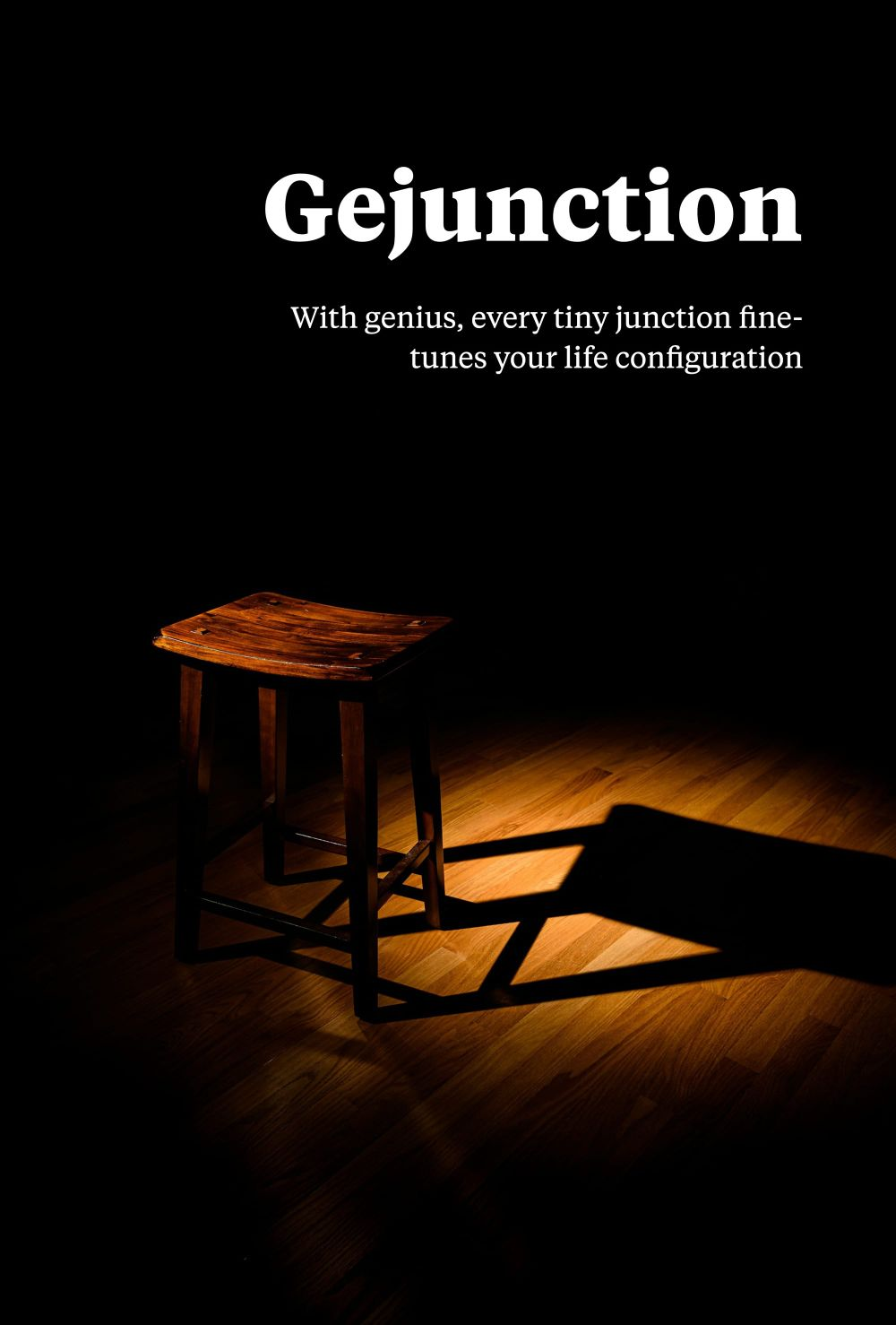
I discovered that RelationField is related to the three ideas mentioned above. These four ideas just describe the same thing, but, each one focuses on one particular aspect.
On June 16, 2026, I put these four concepts on the landscape of the HLS framework (see below). The landscape made it clearer that they represent four units of analysis for the social life world.
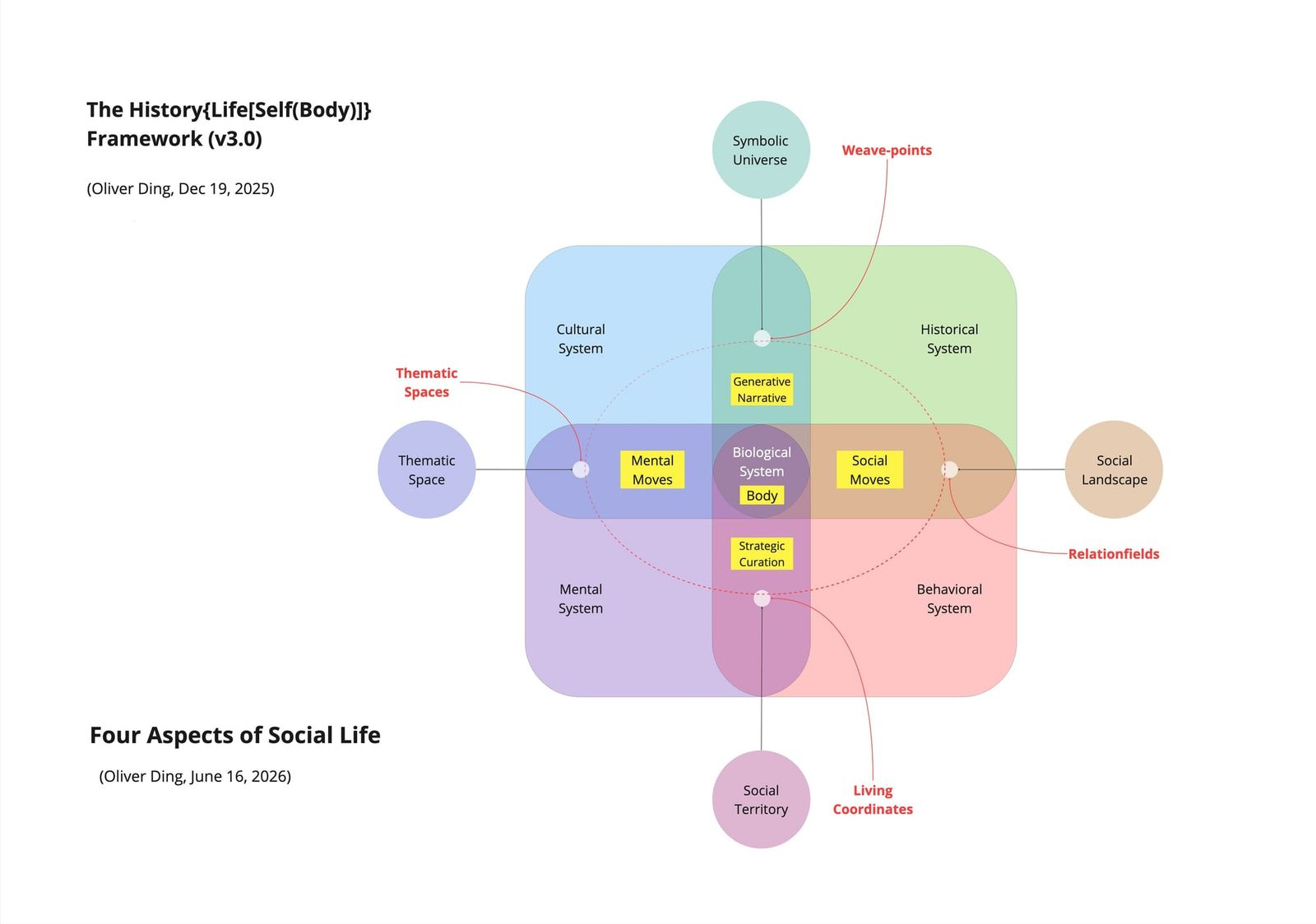
Within GO Theory, I define a Gejunction as a Unit of Synthesis. It is not a unit obtained through decomposition and analysis. Rather, it is a unit constituted through the synthesis of multiple dimensions of social life.
A Gejunction can be understood through four aspects.
- Thematic Spaces represent the thematic aspect. They reveal what a particular social life configuration is about and how attention, interest, and commitment become organized around a theme.
- Weave-points represent the symbolic aspect. They identify points where concepts, narratives, values, and meanings become woven together within a broader symbolic universe.
- RelationFields represent the relational aspect. They capture the intersubjective configurations through which people, resources, opportunities, and social environments are constituted.
- Living Coordinates represent the territorial aspect. They describe how a person becomes situated within a concrete life world.
These four aspects are not separate entities. They are four analytical perspectives on the same social unit.
This development also connects directly to the ACS project and the SDP project because it offers a systematic framework for addressing the issue of "weaving active agency and evolving structure."
For the ACS project, if concept systems and thematic enterprises are important units for understanding cultural development, then Gejunctions may be understood as the social units through which such development becomes possible. They are the sites where themes become lived, meanings become organized, relationships become constituted, and individuals become situated within the life world.
For the SDP project, the concept of Gejunction offers an ecological approach to the social environment of adult development. It connects to four types of action opportunities: Affordance, Curativity, Attachance, and Supportance, as shown in World of Life: Four Positive Frontiers of Project Engagement.
From this perspective, Gejunction is not simply another concept within GO Theory.
It is an attempt to identify the basic unit through which social life, cultural development, agency, and structure become woven together into a coherent whole.
It is a Unit of Synthesis.
World
Me, You, and We
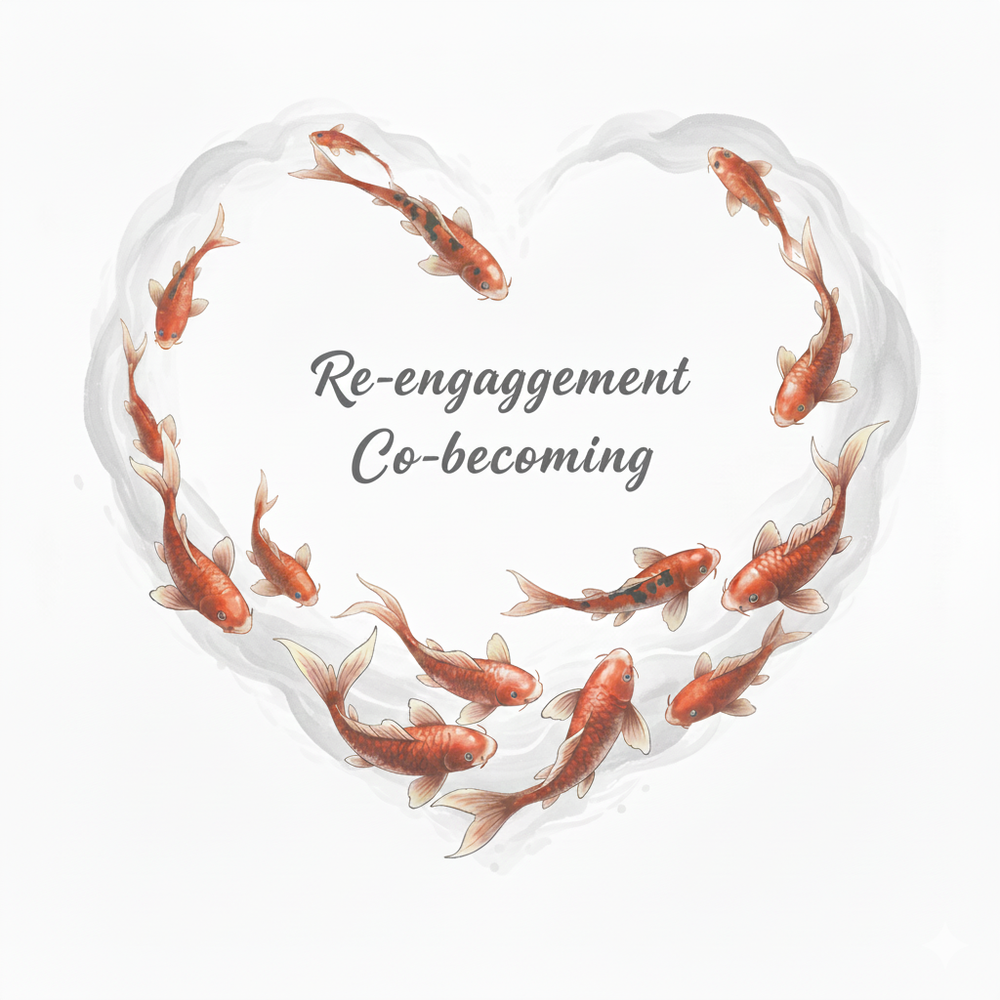
The image above is my New Year's greeting card — and also my annual theme for 2026: Re-engagement and Co-becoming.
The new possible book Supportance echoes with the "Co-becoming" theme.
Re-engagement and Co-becoming. I placed them there in January. The year answered.
Oliver Ding
Founder of the Activity Analysis Center
June 30, 2026
p.s. I am based in Houston, Texas, US. Where are you?
v1.0 - June 30, 2026 - 2,182 words