
Activity Analysis Network #28: Spatial Heuristics, Cognitive Hydrology, and Educational Project Engagement
The Spatial Heuristic Sprint: A Case Study of a Two-Week Revisiting-and-Rebuilding Project
by Oliver Ding
November 15, 2026
Hi, and welcome to Activity Analysis Network, a newsletter hosted by the Activity Analysis Center.
Each issue is organized around the "Flow - Focus - Center - Circle" schema, the primary model of the World of Activity Toolkit (v1, 2025).
In this biweekly newsletter, I share summaries of new articles from the Activity Analysis Center, along with updates on related activities, including some of my own published work elsewhere.
This issue covers the first half of November. It records the completion of The Spatial Heuristic Sprint, a case study of a two-week revisiting-and-rebuilding project about theme.
Flow
The historical development of the Activity Analysis Center and my experience of daily life
From October 15 to 31, 2026, I carried out a two-week Revisiting-and-Rebuilding project on theme. It produced the manuscript Developmental Theme, which was published on October 31. While the project was still under way, I had not waited for it to end before writing about it. I drew on the materials at hand and wrote several case studies of spatial heuristics as the work unfolded, so the record of the sprint was already in progress when the manuscript was finished.
From November 1 to 10, I looked back over the two weeks and over the months of spatial heuristics that preceded them. The result is a new collection. It has three outcomes.
The first is a body of operational detail. Spatial heuristics had been a theme for case studies written one at a time, each in its own setting. The two-week project, concentrated in one place, allowed ten case studies to be read together, and from them ten insights were drawn that give a close, practical account of how the operation works.
The second outcome is a sense of its development. Looking back over the months, I used the coordinate–center transformation as the frame, and I read this round as a new developmental episode in that process.
The third outcome is that the collection is itself a member of the Cognitive Hydrology series. Its ten case studies and the collection as a whole were produced by the method of Creative Life Curation, so the series gains a new member in the same way as its earlier books.
Here are some LinkedIn posts from the past two weeks — fragments of daily thinking, traces of ongoing conversations:
- 11/4/2026 - [Meta-discussion] Do You Experience the Ideas–Possible Projects–Actual Projects Path?
- 11/2/2026 - [Meta-discussion] How to Present an Evolving Knowledge Ecology?
I also published some new articles on the Activity Analysis Center's site. They are organied into three groups:
- The Spatial Heuristic Sprint (Book, 2026)
- The Cognitive Hydrology Series
- The Educational Project Engagement Series
Focus
The Thematic Foci of the Activity Analysis Center
For the past two weeks, my attention has been on one collection: The Spatial Heuristic Sprint (Book, 2026), which I finished editing on November 10, 2026.
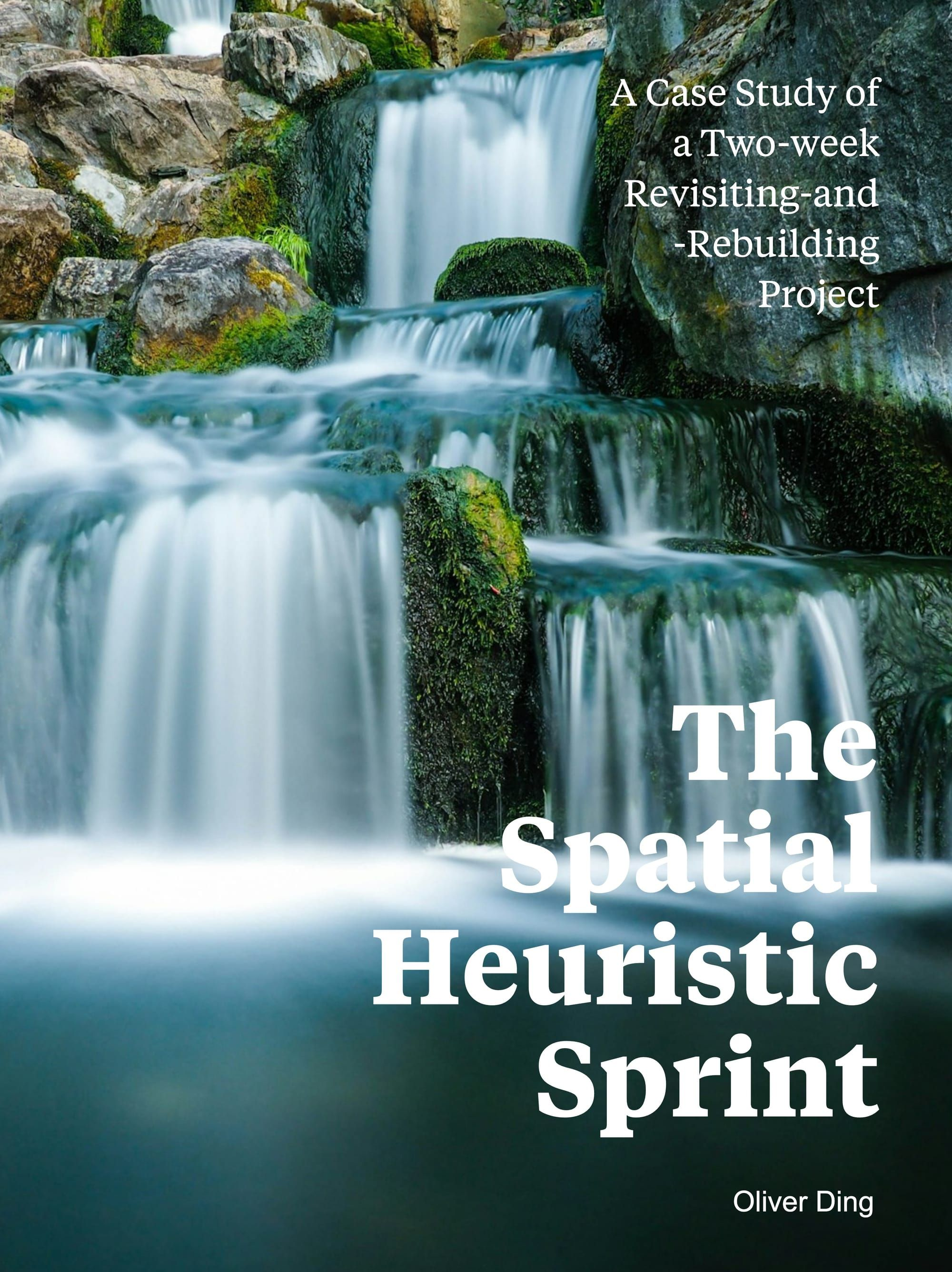
The book Developmental Theme closes its account of the two-week project with eight steps, from the Flow–Story–Model schema of 2022 to the Genesis of the Concept System, and it describes the whole as a movement from local to global. The Introduction mentions a sentence that this collection takes as its starting point:
This expansion from the local mechanics to the global architecture unfolded naturally. Today, I view this entire local-to-global process as a journey guided by spatial heuristics—a way of navigating the thematic space until the structure reveals itself.
The sentence names the spatial heuristic, but it does not say what the heuristic is. This collection is my attempt to show it at work.
Spatial Heuristics names an operation in which the spatial structure of an existing knowledge framework guides creative work. Its structure is visible, so one moves through it directly rather than building a model in the mind first. Moves can be within a framework, between frameworks, or across scales. The operation depends on familiarity with the terrain, and it is trained by use.
I wrote ten case studies and distilled ten operational insights from them. I then edited them into a thematic collection and named it The Spatial Heuristic Sprint.
#1 - Moving between Thematic Spaces.
#2 - Weave-points as Portals to Thematic Spaces.
#3 - The Generative Power of Empty Space.
#4 - Situational Engagement with Same Structure.
#5 - Spatializing Time through Thematic Spaces.
#6 - Expanding the "Space" to Embodied Experience.
#7 - Assembling Custom Toolkits.
#8 - Contextual Project Engagement.
#9 - Strategic Curation in Action.
#10 - Fast Sprint Grounded in Slow Cognition.
Together, these ten operational themes map out the landscape of this specific round—a cross-section of the Spatial Heuristics ecosystem as it was enacted, tested, and expanded through the two-week sprint.
Featured Articles:
- Introduction and Table of Contents: Fast Moving within Familiar Terrains
- Chapter 8 | The Landscape of Spatial Heuristics: Weave the Ten Case Studies Together
- Conclusion: Spatial Heuristics, Strategic Curation, and Ecological Opportunities
Center
The Core of the Activity Analysis Center
The Activity Analysis Center hosts two major theoretical enterprises:
- The Life-as-Activity Approach (including the Project Engagement Approach)
- The World of Activity Approach, now operating within a nested structure: World of Life (World of Activity).
In early 2026, I had a conversation with a university education researcher. At that time, her focus was on developing an Ed.D. program—a professional pathway for working educators. Our conversation inspired the theme "Education as Anticipatory Activity," opening a new thematic space in education.
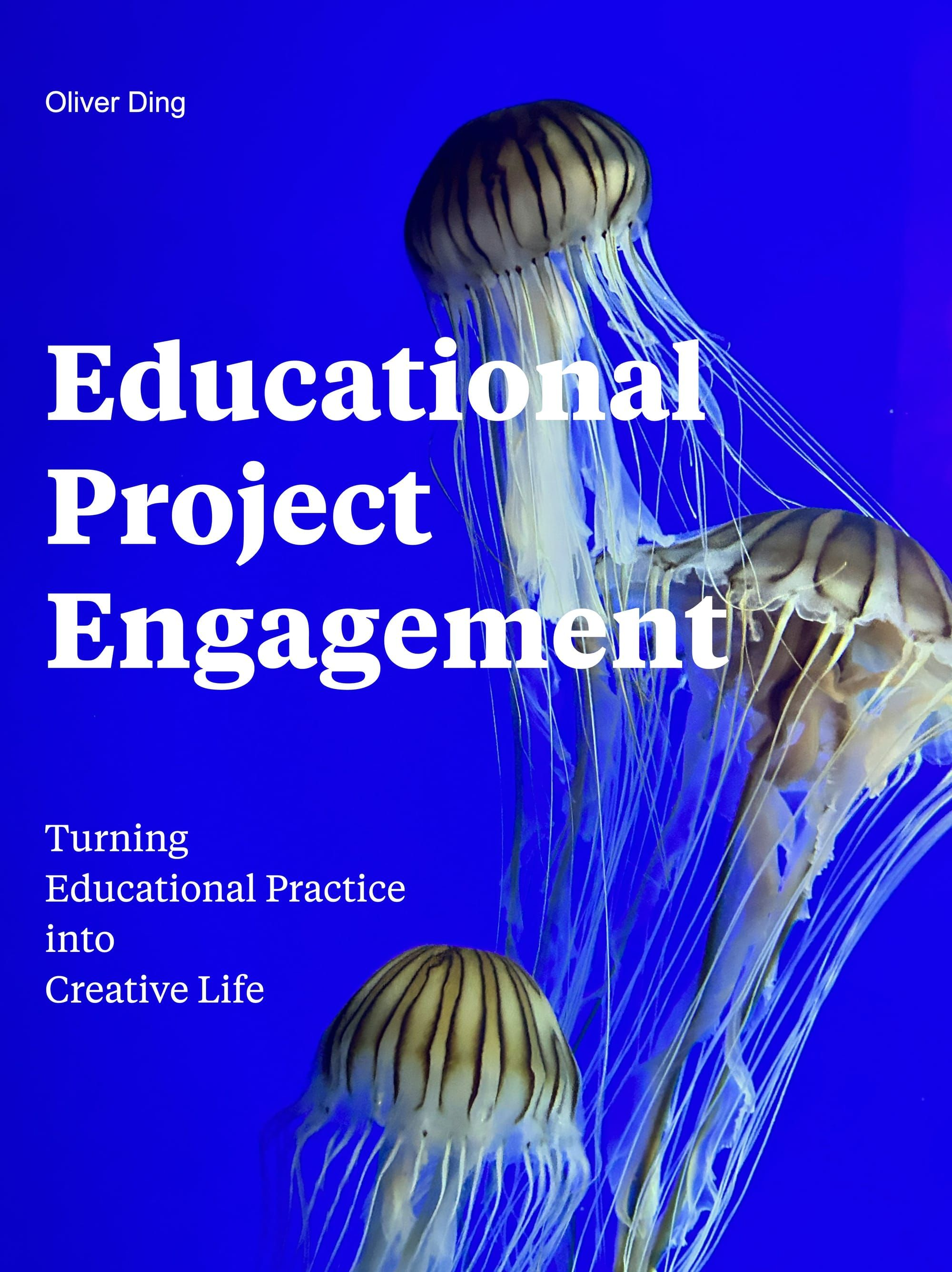
On the morning of November 13, 2026, while revisiting that article, I created a new theme for further exploration: Educational Project Engagement (EPE). The motivation was simple: introducing the Project Engagement Approach to a broader spectrum of educational professionals. While the January article used "Anticipatory Activity" to describe a large social ecology, the concept of Project Engagement is adopted here to understand their individual life course.
This brings us to a serendipitous coincidence. The day before yesterday, I saw a friend on social media sharing her experience with "Philosophical Counseling." Curious, I sent her a private message. Yesterday, she replied—she is a primary school teacher working with children.
This exchange was a serendipitous coincidence. As a primary school teacher, she is simultaneously a learner and an educator. Therefore, her "educational project engagement" inherently involves two types of projects: teaching and learning. This realization prompted me to conceptualize Teach and Learn as two distinct dimensions, initially forming a 2x2 weave diagram. Later, I expanded this into a 4x4 structure—the Weave-the-Education Diagram.
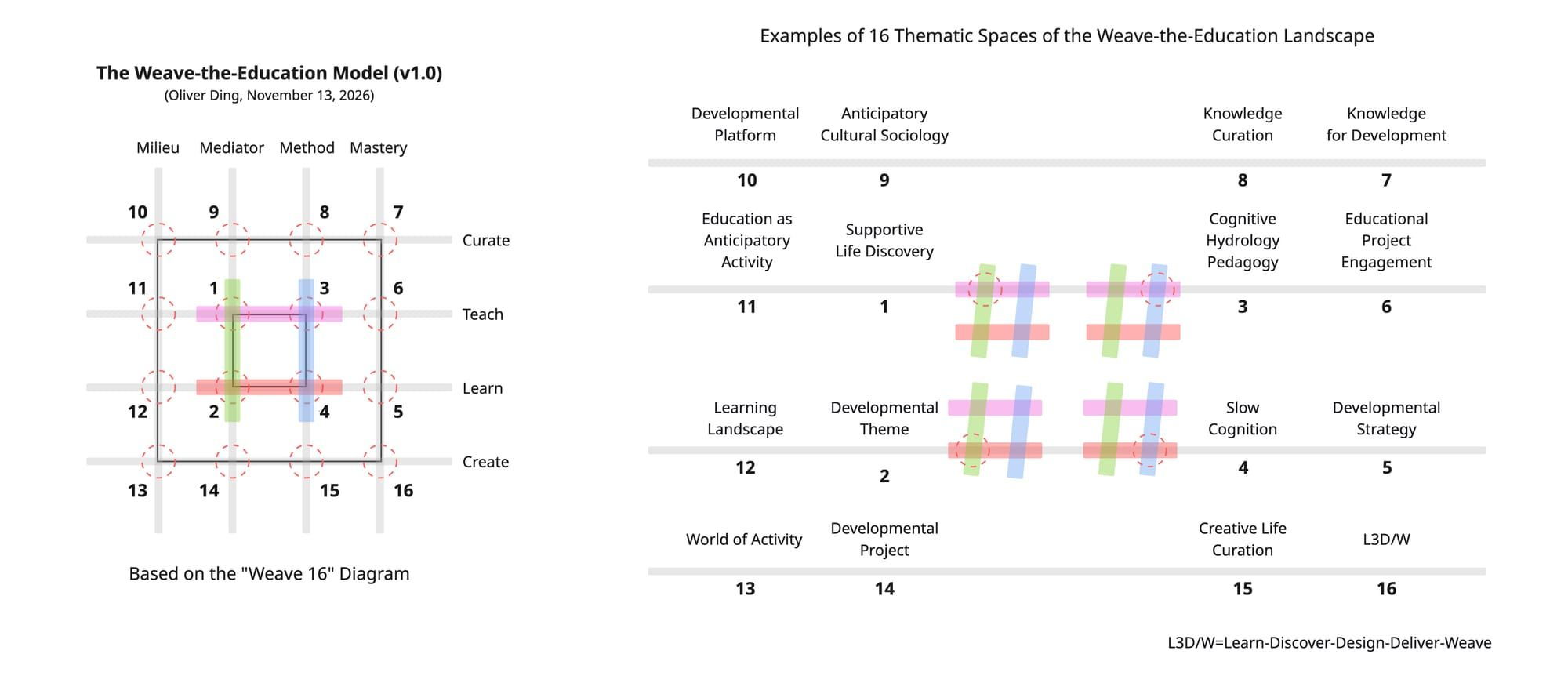
I originally designed this model to build a tool for others. However, as I populated the diagram with examples from my own creative works, a profound realization emerged. When I looked at four specific projects along the "Method" axis, I saw a complete learning-creating-curating-teaching journey. Wasn't this exactly my own "Educational Project Engagement"?
The very fact that my creative works fit so naturally into these educational spaces means that "Educational Professional" is actually one of my own identities. I set out to build a tool for others, but in the process, I found a new coordinate for myself. This was a completely unexpected self-discovery.
Featured Articles:
- Educational Project Engagement: Turning Educational Practice into Creative Life
- [Creative Note] The Weave-the-Education (v1.0) Diagram
Circle
The Context of the Activity Analysis Center
Since September 2025, the Activity Analysis Center has been operating as a meta-center, using GO Theory as my theoretical platform to host several theoretical enterprises. These enterprises constitute the Center's Circle—the broader context within which the Center operates.
On this platform, five theoretical enterprises operate, each occupying a distinct position within the World of Life:
- Life as Activity (including the Project Engagement Approach) — at the center, attending to activity itself
- Anticipatory Cultural Sociology (ACS) — at the Collectives boundary, attending to cultural development
- Strategic Developmental Psychology (SDP) — at the Individuals boundary, attending to individual life development
- Cognitive Hydrology — at the Spirituality boundary, attending to the flow of ideas and meaning
- Platform Ecology — at the Science boundary, attending to ecological and structural conditions of platform development
These five enterprises are equal. Each occupies a different position within the World of Life, which means each brings a genuinely different theoretical perspective. And because they share the same spatial foundation—the same map, the same boundaries, the same operating concepts—they naturally support one another, forming a network of enterprises rather than a hierarchy.
Chapter 6 of The Spatial Heuristic Sprint (Book, 2026) analyzes the GO Theory platform in two roles at once. Cognitive Hydrology is the object of the analysis, since its position on the GO Theory platform and its four aspects on the HLS map are examined. It is also the tool, since Thematic Space Theory and Creative Life Curation entered the analysis through it. Both theories can be considered independently, but in this round they were brought into the work through Cognitive Hydrology. The chapter places the round within October's larger context: the Developmental Strategy project that came just before it, and the Thematic Space and Creative Life Curation work that ran through the month.
Several articles about Cognitive Hydrology are published, presenting a historical journey of the enterprise.
Featured articles:
- CH6.1 - GO Theory and Four Aspects of Cognitive Hydrology
- CH6.2 - The Unfolding of Structural Symmetry
- Lake 42 | Epilogue: Cognitive Hydrology - February 7, 2026
- Appropriating Activity Theory | Preface: A New Member of the Cognitive Hydrology Series - June 9, 2026
- Developmental Theme | Epilogue: Weave the Theme and Toward Cognitive Hydrology v2.0 - November 3, 2026
- The Spatial Heuristic Sprint | Epilogue: A New Member of the Cognitive Hydrology Series - November 9, 2026
World
Me, You, and We
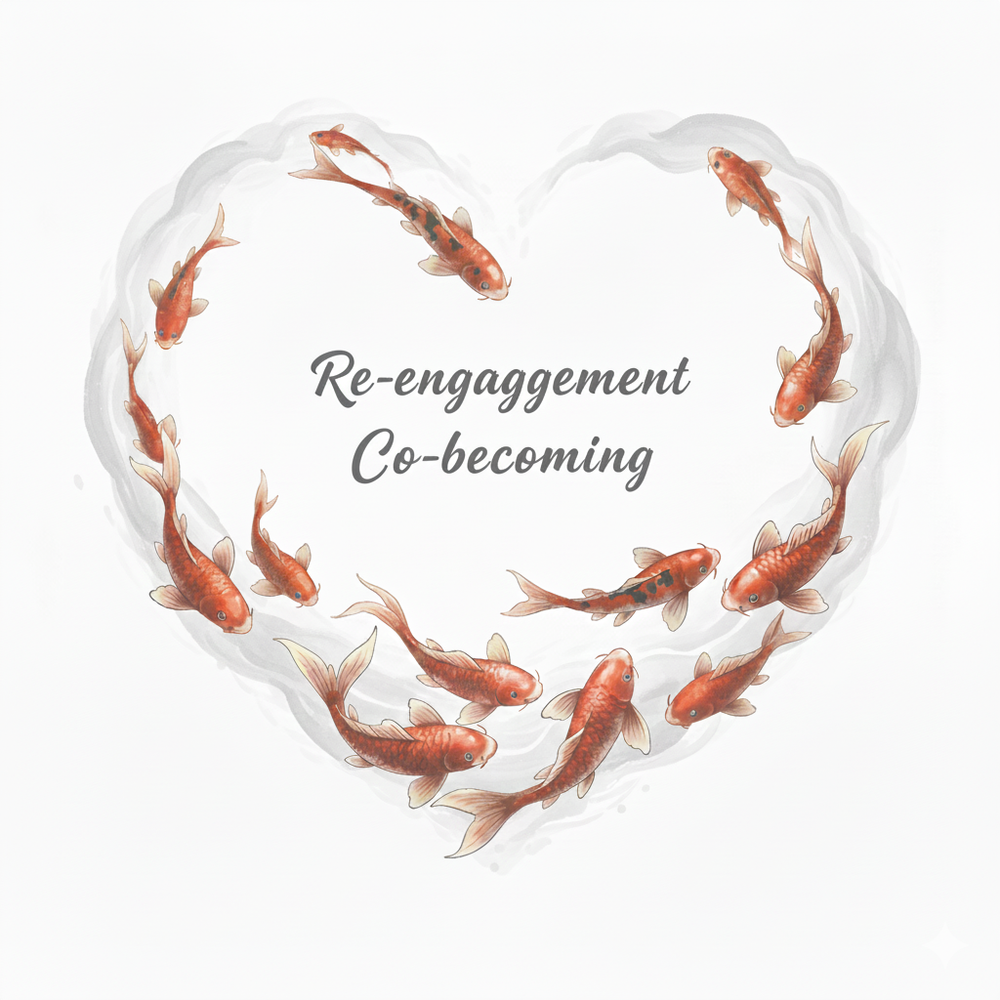
You might notice the image above. It is a New Year's card I made at the beginning of 2026, bearing the words "Re-engagement and Co-becoming." Looking back at the year, I realize these two themes have perfectly encapsulated my entire journey.
Re-engagement is the driving force behind the Cognitive Hydrology series. All the works in this series are produced using the Creative Life Curation method—revisiting and curating past experiences to generate new meanings.
After the two-week project and its book (Developmental Theme) were complete, I began this collection: The Spatial Heuristic Sprint. I applied the Creative Life Curation method to the two-week project itself, and I wrote ten case studies from it. When the collection was finished, I found that I had unintentionally written a new member of the Cognitive Hydrology series.
Interestingly, my birthday falls in early November. I decided to treat The Spatial Heuristic Sprint as a birthday gift to myself. Why? Because it fills a crucial gap in the time scales covered by the series. Homecoming covers forty years of a life; Wonder and Wander covers six years of knowledge creation from 2019 to 2025; Lake 42 covers six months of generative confluence; and Appropriating Activity Theory covers a decade. This collection covers just two weeks. It is the shortest scale in the series, and it shows the rhythm of a project that is compressed into a few days of intense work and can still be read in its own right. With it, the series covers a range of time scales from two weeks to forty years.
Co-becoming, on the other hand, reflects how my work has extended outward. In the first half of 2026, I spent considerable time on the theme of Supportive Life Discovery—exploring how a creator and a supporter grow together through aligned action. The Educational Project Engagement theme I developed in the second half of the year is a direct echo of this. It extends the spirit of co-becoming to educational professionals, inviting them to co-create their own Creative Lives.
Re-engagement looks inward to curate our past; Co-becoming looks outward to weave our future with others. The year answered.
Oliver Ding
Founder of the Activity Analysis Center
November 15, 2026
p.s. I am based in Houston, Texas, US. Where are you?
v1.0 - 2,030 words