
Activity Analysis Network #26: Developmental Strategy, Weave, and Possibility
Revisiting the “Strategy” Theme from the GO Theory Perspective
by Oliver Ding
October 15, 2026
Hi, and welcome to Activity Analysis Network, a newsletter hosted by the Activity Analysis Center.
Each issue is organized around the "Flow - Focus - Center - Circle" schema, the primary model of the World of Activity Toolkit (v1, 2025).
In this biweekly newsletter, I share summaries of new articles from the Activity Analysis Center, along with updates on related activities, including some of my own published work elsewhere.
This issue covers the first half of October. It records the completion of the Developmental Strategy book, the second round of the Chinese lecture series Activity Analysis and Intervention, and a new framework that came out of a conversation with an old friend.
Flow
The historical development of the Activity Analysis Center and my experience of daily life
September had its sprint. October is turning into one of its own. Several of my long-running projects were founded in October, so the month has a way of bringing things together, finishing loose ends, and opening another cycle. This issue follows that rhythm.
Here are some LinkedIn posts from the past two weeks — fragments of daily thinking, traces of ongoing conversations:
- 10/2/2026 - [Meta-discussion] How do you make sense of too many ideas?
- 10/6/2026 - [Meta-discussion] How to engage with an ancient intellectual tradition?
- 10/7/2026 - [Meta-discussion] How can we achieve the Theory–Method Fit?
- 10/10/2026 - [Meta-Discussion] How Do You Understand a Concept?
- 10/13/2026 - [Meta-discussion] Metaphor as a Double-Edged Sword
Some new articles published on the Activity Analysis Center's site:
- 10/2/2026 - [Meta-Framework] Mapping Knowledge Elements and Meaning Control System
- 10/5/2026 - [Activity Analysis and Intervention] Lecture 7: Refining Through Practice (事上磨炼)
- 10/7/2026 - [Activity Analysis and Intervention] Lecture 8: Becoming Oneself, Becoming Things (成己成物)
- 10/8/2026 - [Activity Analysis and Intervention] Lecture 9: Inner Sageliness, Outer Kingliness (内圣外王)
- 10/9/2026 - Appendix: The House of Confucian Allusions
- 10/10/2026 - [Creative Note] The Concept Dynamics of Confucian Allusions, and its Chinese version
- 10/11/2026 - Lifechain: the Potential–Focus–Actual Schema (v1, 2025)
- 10/12/2026 - Developmental Strategy: Revisiting the "Strategy" Theme from the GO Theory Perspective
- 10/14/2026 - Developmental Strategy: Strategic Actor and the Weave-the-Strategy Toolkit (Book, 2026);
- 10/14/2206 - Introduction: Revisiting the “Strategy” Theme from the GO Theory Perspective
- 10/14/2026 - Epilogue of the book
- 10/14/2206 - GO Theory: The Weave-the-Strategy Toolkit (v2.0)
- 10/15/2026 - The Weave-the-Possibility Framework (v1.0, 2026)
But underneath these public posts and articles, there is another flow, traced in my private notes:
On October 6, I read a two-year retrospective by a friend I have known for more than ten years. After exchanging messages with him, we arranged a video conversation for next week. Over the following days, his creative journey and his knowledge framework became an important experience in my own flow. Reading his path through the Weave-the-Strategy Toolkit, I saw two weave-points at work: Slow Cognition and Strategic Moves. His ideas did not come from a fully specified plan. They emerged from a sequence of experiences, pauses, and practical moves, each one changing how he approached the next question.
On the morning of October 15, after finishing the Developmental Strategy book, I stepped out of that project and returned to the Weave Basic Form. Using it to think about possibility, I developed a new framework, Weave-the-Possibility, and designed a diagram to show it.
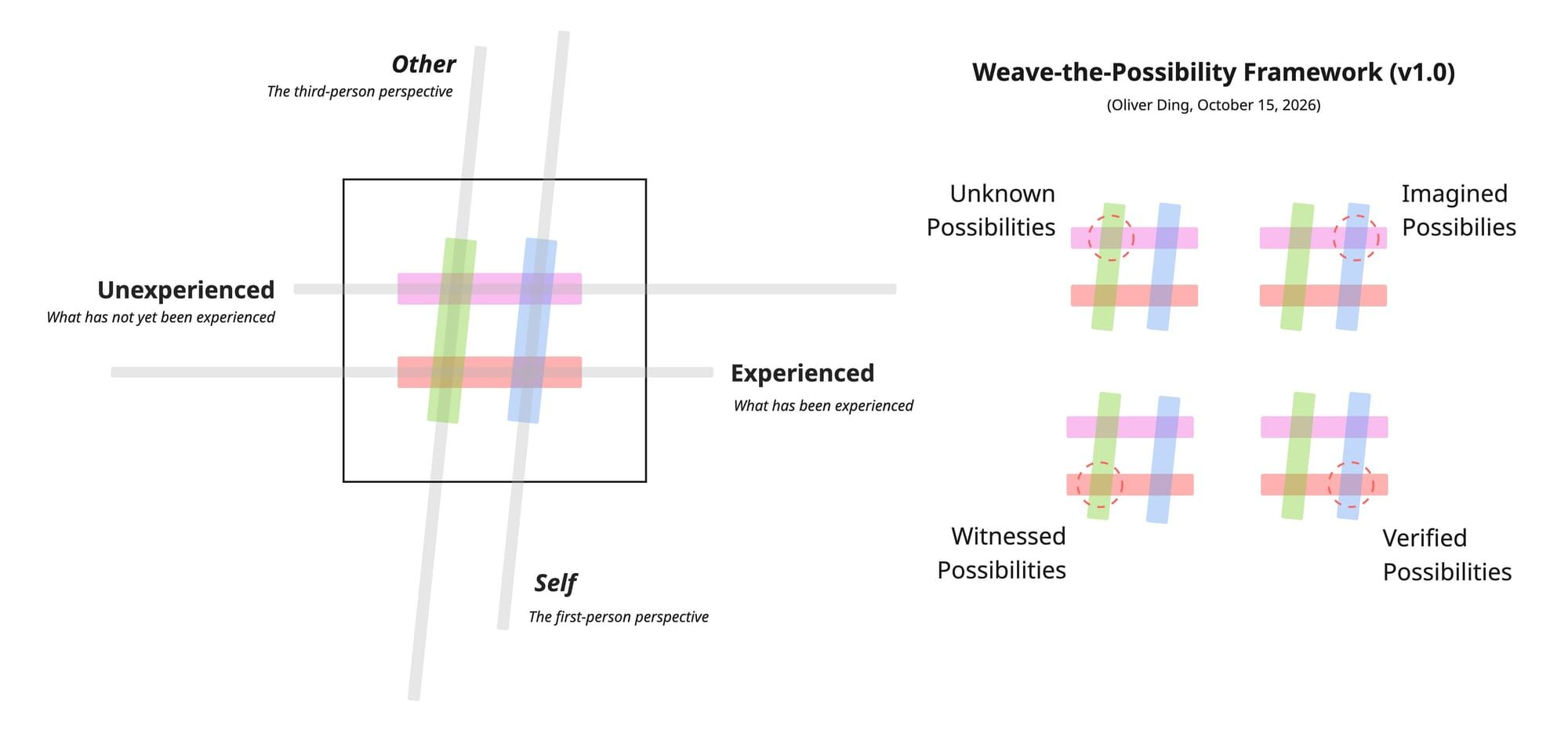
More details can be found in The Weave-the-Possibility Framework (v1.0, 2026).
Focus
The Thematic Foci of the Activity Analysis Center
For the past two weeks, my attention has been on one possible book: Developmental Strategy: Strategic Actor and the Weave-the-Strategy Toolkit (2026), which I finished editing on October 14, 2026.
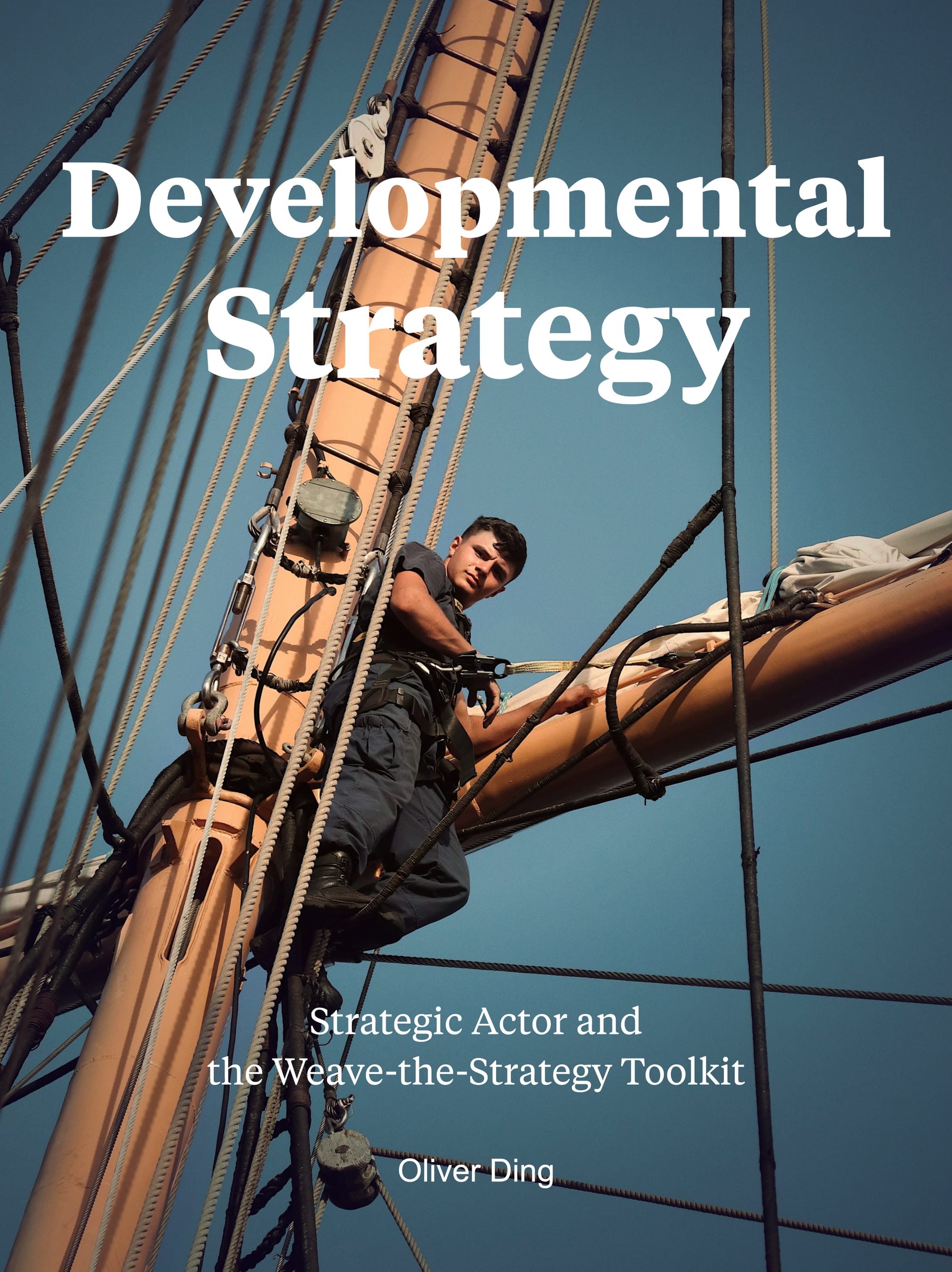
It is a curated collection of articles, frameworks, and case studies written between October 2025 and October 2026. The chapters keep their separate origins, but the structure gives them a shared orientation. Three focal points run through it.
The Concept of Developmental Strategy. The book understands strategy through its role in development rather than as a property of one discipline. It approaches the theme from four perspectives: strategy as the unfolding of subjectivity, strategy as anticipatory activity, strategy as engagement with social ecology, and strategy as a concept system. Three lenses, Developmental Functionalism, Thematic Space Theory, and Ecological Formism, organize the concept. Developmental Strategy is the functional way of supporting three things: the unfolding of subjectivity, the development of thematic enterprise, and the development of thematic creation. The concept grows out of SDP's question of how a person turns a Dream into lasting achievement, but it applies across disciplines rather than belonging to any one of them.
The Weave-the-Strategy Toolkit (v2.0). The earlier version was organized around one weave-point, Slow Cognition. Version 2.0 extends this to four: Slow Cognition, Strategic Moves, Project Engagement, and Ecological Opportunity. Each weave-point is developed across three levels, a foundational framework, a mediating method, and a concrete application, forming a 4 × 3 toolkit of twelve modules. The book also records how the term "Strategic Agency" was replaced by "Strategic Mind" as the theory consolidated.
The Unfolding of Subjectivity.
The third focus connects strategy to the strategic actor. Within the Self–Life–Mind schema, the unfolding of subjectivity is the transformation by which an ontological subject passes into realism and then into hermeneutics. Subjectivity (Self) is its ontological level, Strategic Agency (Life) its realist level, and Strategic Mind (Mind) its hermeneutic level. The actor is a weaver who brings creation and curation together across a life. Subjectivity, Strategic Agency, and Strategic Mind are therefore one process seen at three levels, not three processes.
The Epilogue argues that Subjectivity and Strategy are mutually constitutive: without subjectivity there is no one to make a strategy, and without strategic activity, subjectivity cannot be fully understood through its development in the world.
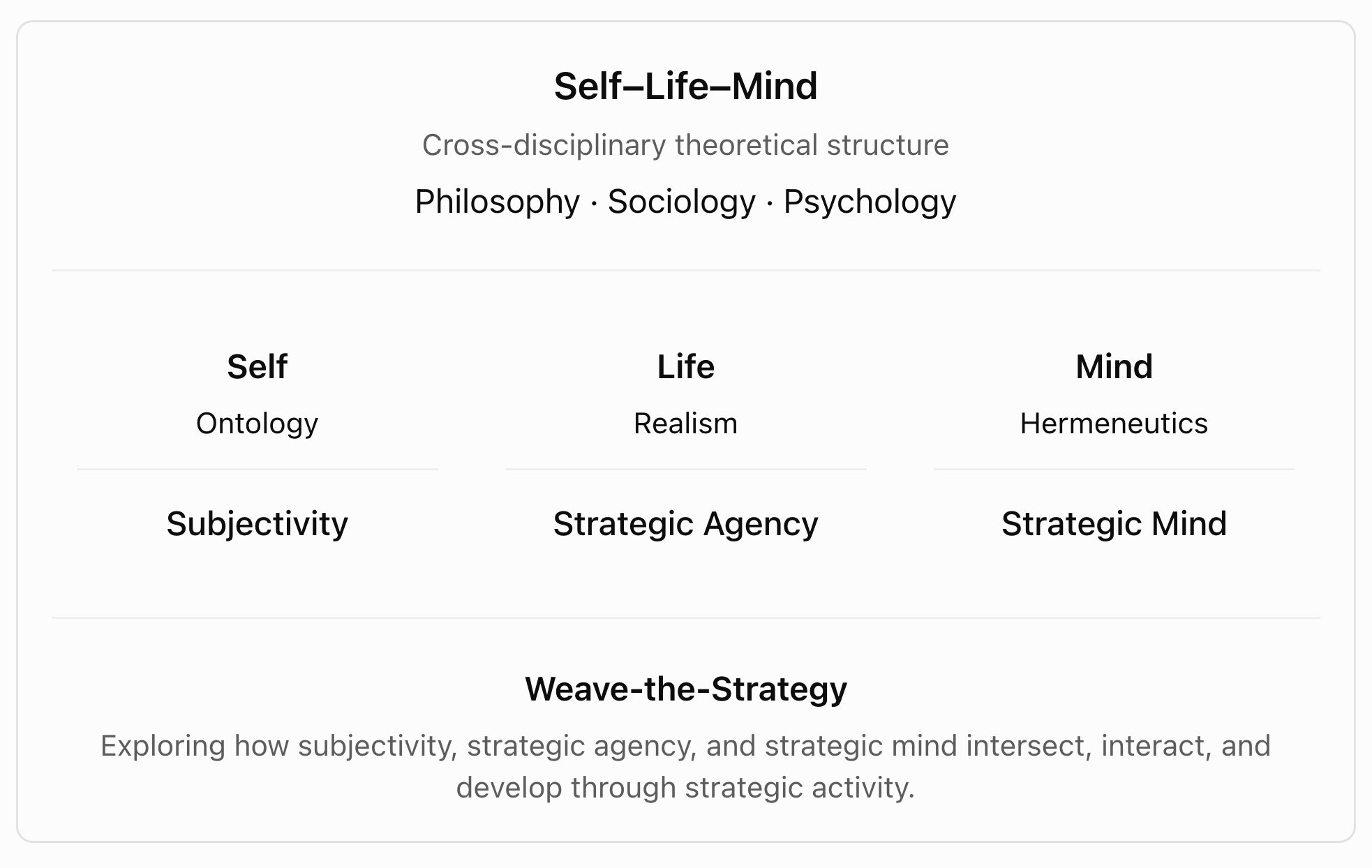
The book has four parts: Developmental Strategy (the concept), Strategic Actor, Weave the Strategy (the toolkit), and Strategic Knowledge Engagement (the knowledge ecology around the theory). The last part asks how the community around the theory should develop, and it approaches the question of purpose through the Telos–End criterion.
Center
The Core of the Activity Analysis Center
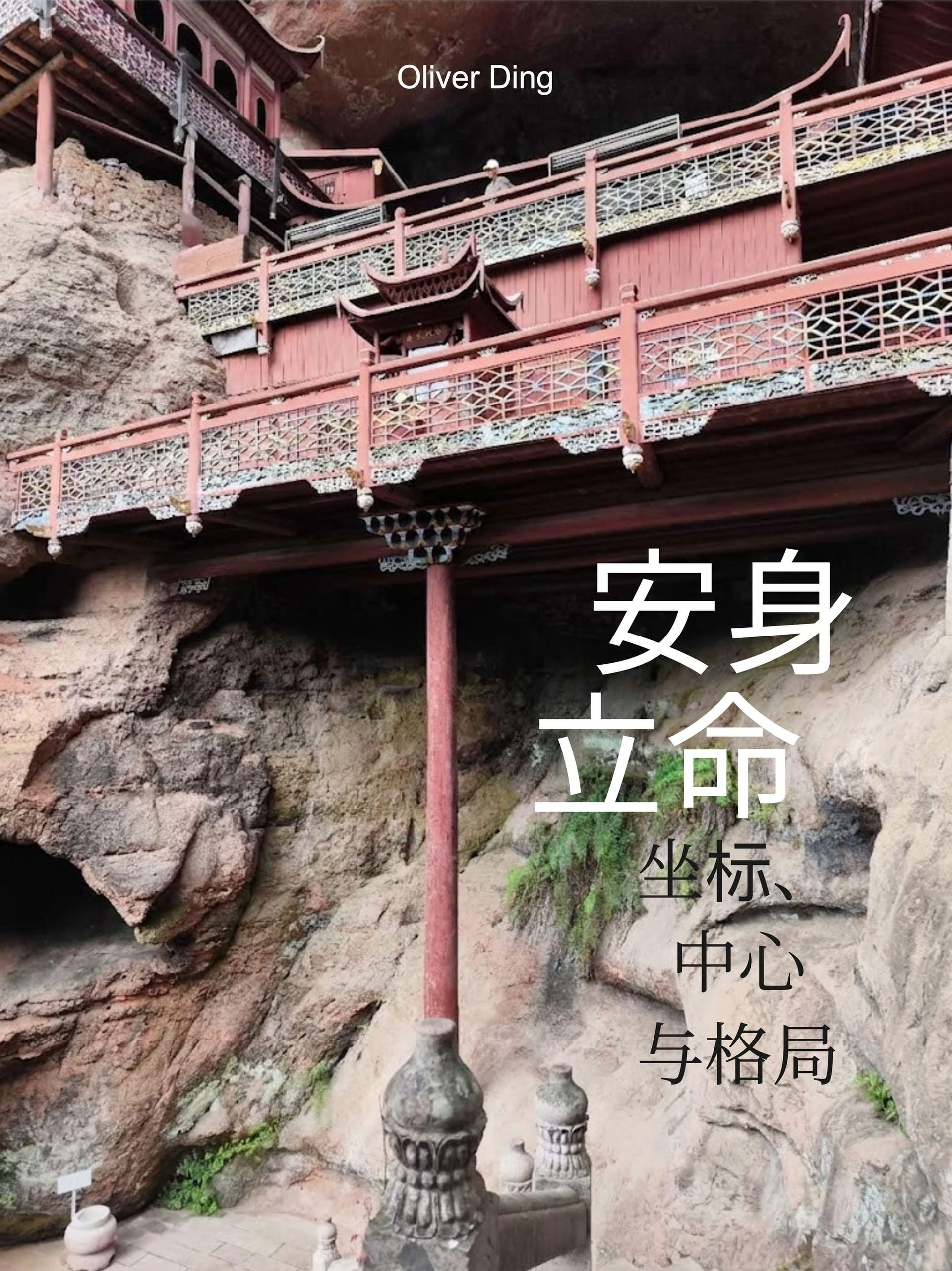
The Center of this issue is the second round of the Chinese essay series written under the title Activity Analysis and Intervention: Twenty Lectures (活动分析与干预二十讲). Lectures 7 to 9 (事上磨炼, 成己成物, 内圣外王) were published between October 5 and 8 and gathered in the collection Anshen Liming (《安身立命》), which now holds nine essays. The first round, Lectures 1 to 6, set out the foundational models of the World of Activity approach and Creative Life Theory. The second round turns to a dialogue between that system and Confucian thought.
The essays use Confucian allusions as entry points, not as reconstructions of Confucian doctrine. Lecture 9 closes the series by proposing a convergence of three theories through the Cultural Projection Model. Two supporting pieces accompany it. The appendix "The House of Confucian Allusions" (October 9) is a canvas that readers can redraw with allusions of their own choosing. The epilogue 《后记:儒家典故的概念动力学》("The Concept Dynamics of Confucian Allusions") (October 10), with its English Creative Note, applies the Concept Dynamics framework to Confucian allusions. I proposed that framework in 2020 while tracing the concept of affordance across disciplines. Until now, it had been used only for academic and scientific concepts. This epilogue is its first application to a cultural allusion.
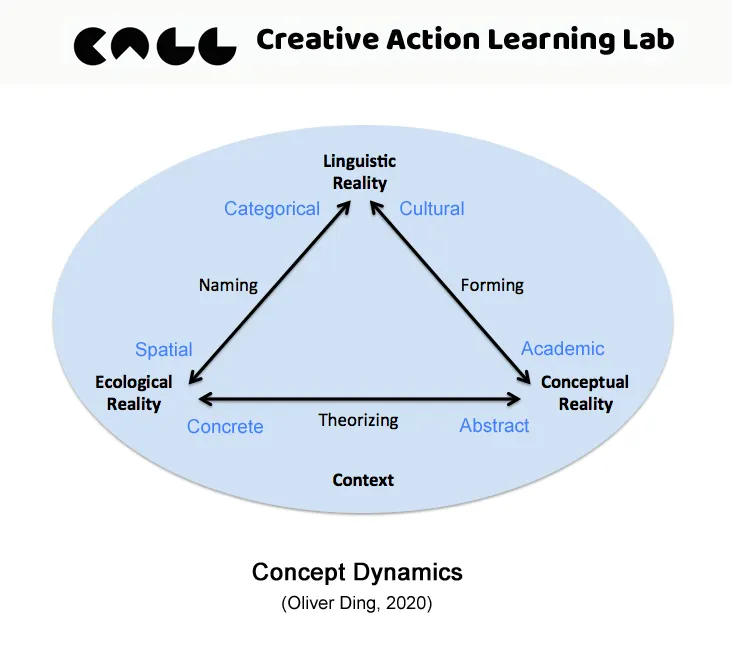
The Creative Note describes three ways of interacting with the tradition: reading, writing, and design. For many years I read Confucian texts without creating anything within my own knowledge projects. Writing the nine essays required me to examine how each allusion connects to, resembles, and differs from my theory, and that was already a way of learning. The House of Confucian Allusions went a step further by treating the allusions as spatial objects. An essay is writing; a canvas is design. The Note calls this a watershed in my relationship with Confucian thought.
The dialogue also returns to a formula from 2025. The Chinese book The Free Soul’s World of Activity (《自由灵魂的活动世界》) is the predecessor of my 2025 English book, Homecoming: A Thematic Trip and the World of Activity Approach. In that book, in the section on the blossoming of xin-xing (心性绽放), I wrote:
Agency = Nine Aspects of Agency = the Blossoming of Mind-Nature in the World of Activity = the Flower of Xin-Xing = Xin-Xing (Heart-Mind)
The nine aspects were later renamed Strategic Mind, and Strategic Agency now gathers the broader insights. Writing the nine essays of Anshen Liming gave me a deeper and more systematic understanding of the connection between the World of Activity and Confucian thought, and that understanding gives the formula, which has always been a dialogue between the two, a clearer footing. The unfolding of subjectivity, developed in Developmental Strategy, offers a vantage point from which the blossoming can be understood as the unfolding of a whole life within the social world, not only its agentive side.
Circle
The Context of the Activity Analysis Center
Since September 2025, the Activity Analysis Center has been operating as a meta-center, using GO Theory as my theoretical platform to host several theoretical enterprises. These enterprises constitute the Center's Circle—the broader context within which the Center operates.
On this platform, five theoretical enterprises operate, each occupying a distinct position within the World of Life:
- Life as Activity (including the Project Engagement Approach) — at the center, attending to activity itself
- Anticipatory Cultural Sociology (ACS) — at the Collectives boundary, attending to cultural development
- Strategic Developmental Psychology (SDP) — at the Individuals boundary, attending to individual life development
- Cognitive Hydrology — at the Spirituality boundary, attending to the flow of ideas and meaning
- Platform Ecology — at the Science boundary, attending to ecological and structural conditions of platform development
These five enterprises are equal. Each occupies a different position within the World of Life, which means each brings a genuinely different theoretical perspective. And because they share the same spatial foundation—the same map, the same boundaries, the same operating concepts—they naturally support one another, forming a network of enterprises rather than a hierarchy.
In the past two weeks, a major achievement of the GO Theory platform was applying the whole platform to revisit the "Strategy" theme. This generated the concept of Developmental Strategy, which led to a new book. In my own judgment, this application is a sign of GO Theory as a matured developmental platform.
This application also marks a significant mental move from local to global.
The Knowledge Strategy work revisited through the Gejunction lens was local: it began from one aspect of the GO Theory platform and reflected on knowledge strategy within it. Developmental Strategy works from the platform as a whole. It draws on the platform's meta-frameworks, including HLS, Thematic Space Theory, Ecological Formism, the LARGE Method, and the Coordinate–Center–Gejunction framework, to reconsider strategy across different domains. Its outcome is a general theory of life strategy. The move is global in both method and result.
This also tests the platform. Since January 2026, GO Theory has been developing its meta-frameworks into a working whole, and this book asks whether that whole can hold a theme that first appeared in one project and then spread across several enterprises. Strategy is one of six functions of Center Development, alongside narrative, curation, support, design, and discovery. Each of the other five could be examined the same way, yielding concepts such as Developmental Narrative or Developmental Curation. Whether they will become full frameworks is still open, but the possibility itself is a sign of the platform's maturity.
This also tests the platform. Since January 2026, GO Theory has been developing its meta-frameworks into a working whole, and this book asks whether that whole can hold a theme that first appeared in one project and then spread across several enterprises. In this test, the concept of Developmental Strategy emerged. It brought out a 3 × 3 framework, and framed my past exploration of the strategy theme as a cross-disciplinary, multi-perspective, multi-role theoretical enterprise. This outcome is, without doubt, a proof that GO Theory has matured as a developmental platform.
This issue also celebrates the first anniversary of the Weave knowledge system! The first Weave diagram appeared in September 2025. In October 2025, I created a series of Weave diagrams and published the Weave Basic Form. Later, the Weave knowledge system was integrated into the Ecological Formism framework, where it now serves as a main workhorse at the epistemological level of the GO Theory platform. In 2026, the Weave knowledge system gave rise to Weave-points, one of the aspects of Gejunction. The Weave-the-Strategy Toolkit and the Weave-the-Possibility framework in this issue continue to show the vitality of this emerging knowledge system!
The possibility of the GO Theory platform is unfolding.
World
Me, You, and We
September had its sprint. October is turning into one of its own.
If you are working with the World of Activity approach, or with the Weave-the-Strategy Toolkit, in your own practice, as an analyst, a theorist, or someone trying to understand your own developmental strategy, I would like to hear from you.
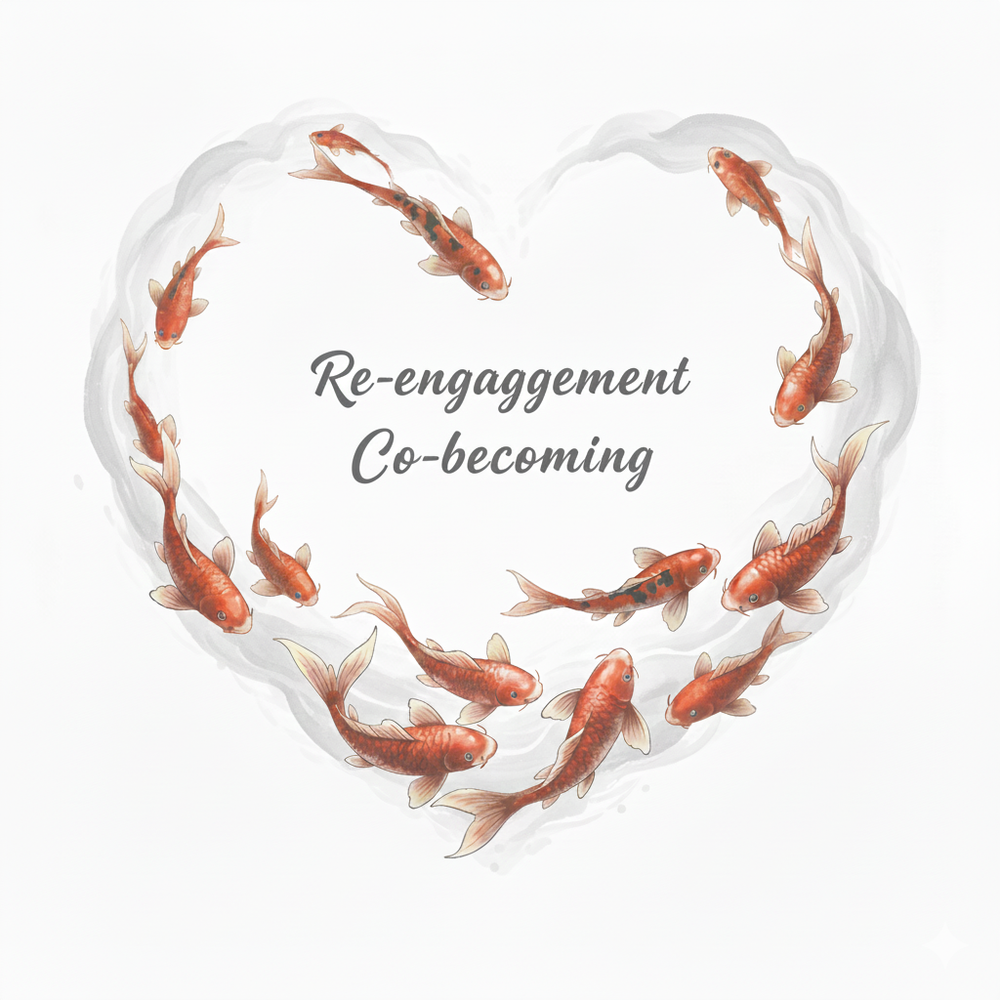
Re-engagement and Co-becoming. I placed them there in January. The year answered.
Oliver Ding
Founder of the Activity Analysis Center
October 15, 2026
v1.0 - October 15, 2026 - 2,337 words