
Activity Analysis Network #19: Appropriating Activity Theory, Rebuilding the Living Coordinate, and RelationField

This is the 19th issue of the Activity Analysis Center newsletter
by Oliver Ding
June 15, 2026
Hi, and welcome to Activity Analysis Network, a newsletter hosted by the Activity Analysis Center.
Each issue is organized around the "Flow - Focus - Center - Circle" schema, the primary model of the World of Activity Toolkit (v1, 2025).
In this biweekly newsletter, I share summaries of new articles from the Activity Analysis Center, along with updates on related activities, including some of my own published work elsewhere.
In this issue (#19), 14 new articles have been added to the site:
- #1 - Appropriating Activity Theory (Possible Book, 2026) - Introduction and Table of Contents
- #2 - Appropriating Activity Theory (Possible Book, 2026) - Preface: A New Member of the Cognitive Hydrology Series
- #3 - Appropriating Activity Theory (Possible Book, 2026) - Epilogue: A Chair from a Hundred Years Ago
- #4 - Appropriating Activity Theory (Possible Book, 2026) - Revisiting and Rebuilding: A Journey of Developing a New Practice
- #5 - Appropriating Activity Theory (Possible Book, 2026) - Project Engagement as a Theme of Practice
- #6 - Project Engagement - Mapping Strategic Moves #2: Engaging with Activity Theory
- #7 - Project Engagement - Mapping Strategic Moves #5: Ideas, Possible Project, and Actual Project
- #8 - World of Activity - Rebuilding the Living Coordinate: A Case Study Summary
- #9 - World of Activity - A Thematic Conversation on Finding the Coordinate
- #10 - World of Activity - A Journey of Finding the Coordinate
- #11 - Strategic Developmental Psychology (SDP) - Two Diagrams about the Self-Life-Mind Schema
- #12 - Strategic Developmental Psychology (SDP) - Revisiting the “Self” Issue from the Self-Life-Mind Perspective
- #13 - Strategic Developmental Psychology (SDP) - Revisiting the "Belief" Issue from the Self-Life-Mind Perspective
- #14 - GO Theory - RelationField (v3.0): A Model of Social Appropriation
These articles grew out of two main projects, with related articles emerging alongside each.
The first project is the completion of the Appropriating Activity Theory column and its transformation into a possible book (#1–#5). Two articles on the Mapping Strategic Moves method (#6–#7) developed alongside this project, applying the House of Project Engagement to the same journey.
The second project is a case study on belief system transformation — Rebuilding the Living Coordinate (#8). Two related articles from the Lake 42 manuscript (#9–#10) are included alongside it: they explore the theme of finding one's coordinate through different lenses, including a conversation in which Alice describes her "personal operating system" — a metaphor that connects directly to Quinn's "reinstalling her internal operating system," and to the theoretical concept of Living Coordinate.
After completing the case study, reflecting on the role of the Self-Life-Mind model led to three new articles (#11–#13).
Articles #3 and #14 are connected through a single object: a chair from Yan Fu's former residence in Fuzhou. #3, the epilogue of Appropriating Activity Theory, tells the story of how this chair photograph became a column cover, a case study in photography types, and a trigger for theoretical work on subject–object relations. #14 picks up where that story left off: through Activity Analysis applied to the whole journey — from the residence to the photograph to the cover to the article — RelationField (v3.0) finally receives the concept that gives it its name: Relation–Support–Narrative.
Flow
The historical development of the Activity Analysis Center and my experience of daily life
This section is used to share stories of the "Appropriating Activity Theory" column. However, the column has been ended last issue. In this issue, I turn the column into a new possible book.
The "Appropriating Activity Theory" column aims to reflect my creative journey of engaging with Activity Theory from 2015 to 2025. It was started on September 4, 2025.
On May 30, 2026, I wrote the #18 issue and ended with the words:
Eighteen issues later, I find myself at a natural stopping point. Not because the engagement is over — it is not — but because the story this column was built to tell has reached its conclusion. The decade has been accounted for. The pattern has been named.
Now, as planned at the beginning, it is time to turn the column into a possible book. On June 9, 2026, I reviewed the stories I told within each issue and looked at other relevant articles I published outside the column. The final decision is simple: the new possible book is structured into three parts:
- Part 1: the meta-narrative of the journey and the column, presented by three articles - named Curating.
- Part 2: the column, including #1 to #18 - named Storytelling
- Part 3: seven case studies about the journey have been selected - named Modeling
They present three different modes of engaging with a theoretical tradition: curating its making, telling its stories, and modeling its structures.
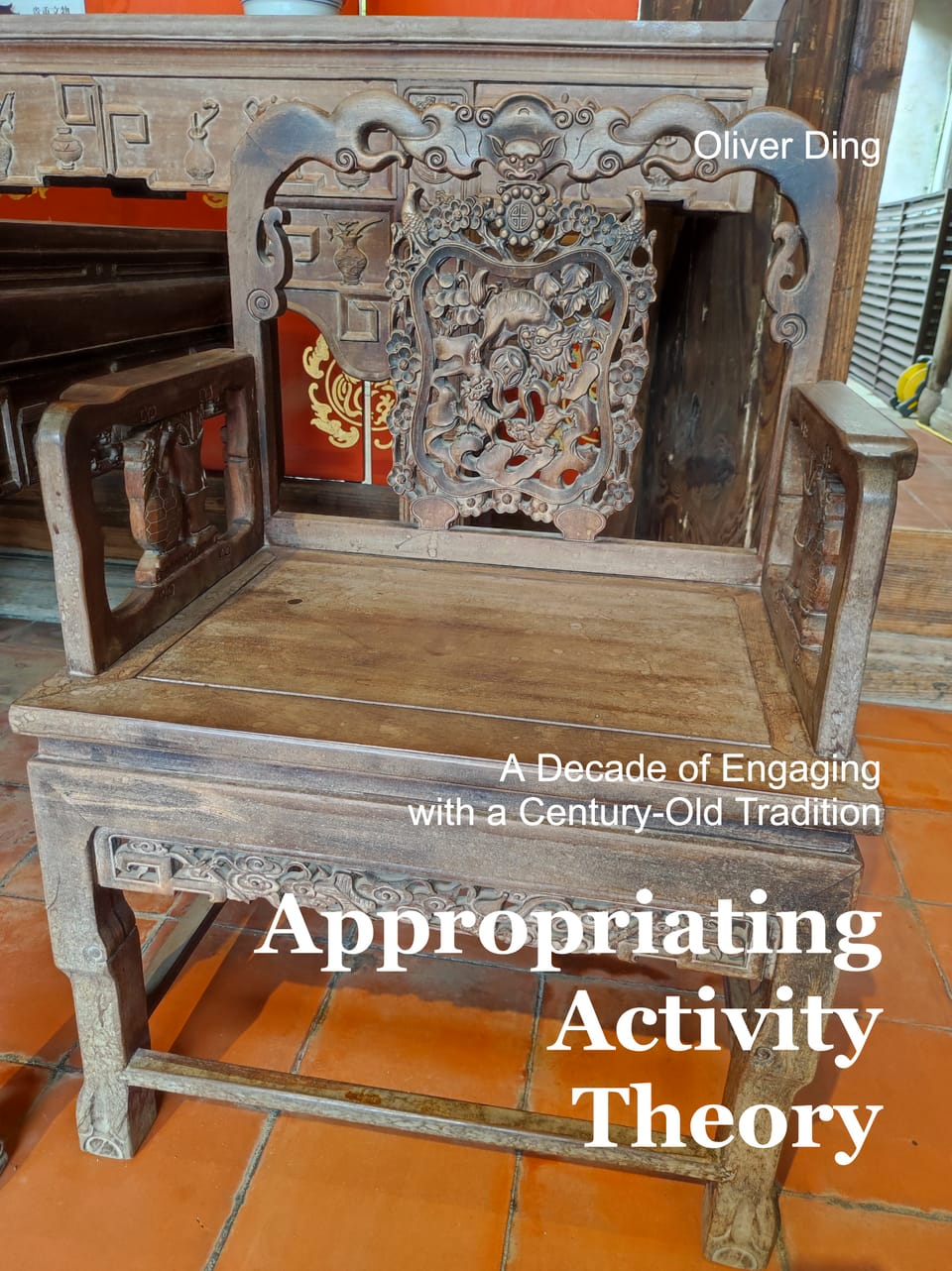
Table of Contents
- Preface: A New Member of the Cognitive Hydrology Series
- Part 1: Curating
- Part 2: Storytelling
- Part 3: Modeling
- Epilogue: A Chair from a Hundred Years Ago
Total: 126,631 words
Focus
The Thematic Foci of the Activity Analysis Center
Over the past two weeks, I worked on the "Appropriating Activity Theory" project and a case study about the rebuilding living coordinates.
About two weeks before writing this issue, I noticed that a friend had been sharing a series of articles and materials about a profound transformation in her belief system — what she called "reinstalling her internal operating system." With her consent, I began analyzing her experience using the World of Activity toolkit and the Self-Life-Mind (SLM) model.
The original research report was written in Chinese and runs to over 40,000 characters. It is a full-length case study covering the complete analytical journey, including detailed theoretical comparisons, extended framework discussions, and multiple rounds of analysis. An English summary has been published, presenting the essential story, the key analytical frameworks, and the core theoretical findings.
This case study marks the first time I have used the World of Activity framework and the Self-Life-Mind (SLM) model together in a single case analysis. Previously, I had treated SLM primarily as a meta-framework for developing other knowledge frameworks.
This case changed that. Analyzing Quinn's experience required working at multiple levels simultaneously: the structural dynamics of her Creative Center (which called for the World of Activity's FFCC model), the deeper question of what drives a Living Coordinate (which called for SLM), and the distinctive character of her continuity through transformation (which called for Genidentity analysis). Each of these introduced a different framework or concept, not because I planned a comprehensive toolkit in advance, but because the case itself demanded it.
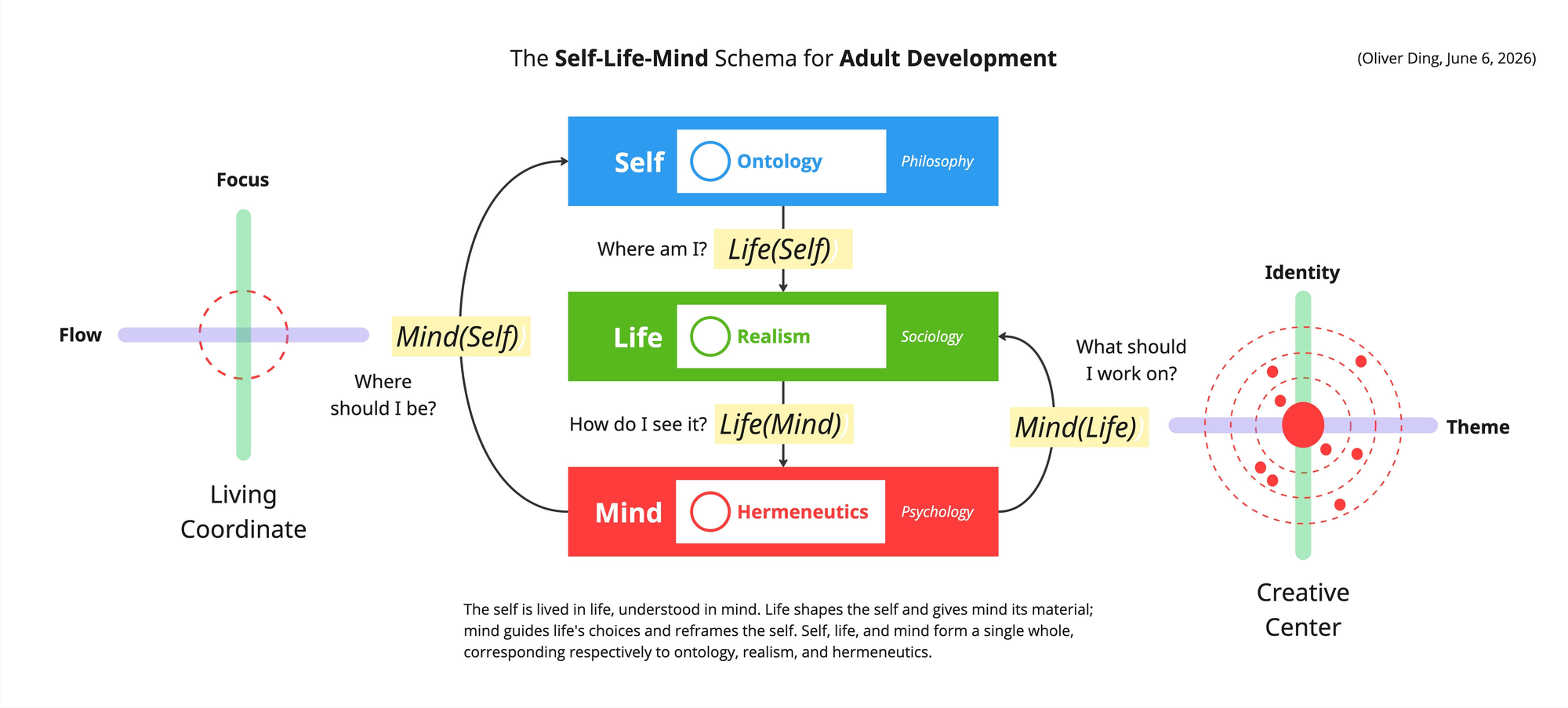
After completing the first draft, reflecting on the role SLM played led to a series of new articles:
- #11 - Strategic Developmental Psychology (SDP) - Two Diagrams about the Self-Life-Mind Schema
- #12 - Strategic Developmental Psychology (SDP) - Revisiting the “Self” Issue from the Self-Life-Mind Perspective
- #13 - Strategic Developmental Psychology (SDP) - Revisiting the "Belief" Issue from the Self-Life-Mind Perspective
Center
The Core of the Activity Analysis Center
The Activity Analysis Center hosts two major theoretical enterprises:
- The Life-as-Activity Approach (including the Project Engagement Approach)
- The World of Activity Approach, now operating within a nested structure: World of Life (World of Activity).
In this issue, we see a sign of shifting from theoretical development to practical analysis. The release of three recent possible books — Weave the Life, Weave the Theory, and Appropriating Activity Theory — marked a milestone of my journey of engaging with Activity Theory.
Since the Life-as-Activity Approach has reached v4.0, the future of the Activity Analysis Center will no longer focus on theoretical development, but more on testing the theoretical approach, empirical research, and intervention. The new direction has been named Activity Analysis & Intervention (AAI) in 2023.
After wrapping up the Activity U project, I established the Activity Analysis Center to continue my journey of engaging with activity theory. The term "activity analysis" has taken on different meanings at different times, but I generally understand it as: using activity‑theory concepts or knowledge frameworks to make sense of and reflect on concrete practices.
Activity Analysis: Tiny or Big
The Storytelling and Modeling sections of Appropriating Activity Theory present a wide range of activity analyses in various forms. The eighteen column essays offer narrative reflections on a decade‑long journey; the seven case studies extract conceptual models from the same stretch of experience. All of them are translations from practice to understanding.
In fact, one piece in the book already applies the Project Engagement framework to analyze my own exploration journey — “Mapping Strategic Moves #2: Engaging with Activity Theory” (written in September 2024, see Part 3). In that article, I used The House of Project Engagement with its 12 thematic rooms to diagram my trajectory of engaging with activity theory over the years.
In Project Engagement as a Theme of Practice, continue to use the same tool and method — the Ideas → Possible Project → Actual Project triad from The House of Project Engagement — as a simple demonstration of how it can be used to understand the making of this book manuscript.
The Chair and RelationField
The cover of the book is a photograph of a chair. I also wrote an epilogue explaining the story behind that photograph.
The photograph was taken last summer, during a trip to Fuzhou. A friend of mine — someone who had helped localize Wikipedia into Chinese, and whose very first article was on Yan Fu — came to visit, and together we explored Yan Fu's former residence. There, I photographed this chair.
That same trip later gave rise to another book draft: Homecoming: A Thematic Trip and the World of Activity Approach. A reflection my friend shared at West Lake Park — that the East–West dialogue which began a century ago is far from over, and that our generation remains its protagonists — became one of its central threads.
And the chair itself is part of the furnishings of Yan Fu's former residence. The relation between Yan Fu and that chair ended long ago — his life has already settled into history. It is the preservation and display of the residence that gave this chair a second life: a symbol waiting to be reactivated.
Looking back over this whole chain — Yan Fu's residence, the trip, the photograph, the cover, the postscript, and now this article — I was reminded of a framework I had worked on last November, concerned with the Subject–Object relation. At that time, I introduced an expanded 3×5 matrix, and a name surfaced in my notes — relationfield. I wasn't sure whether to use it. In the end, I didn't.
In RelationField (v3.0): A Model of Social Appropriation, I revisited the framework and rebuilding by using the Activity Analysis method.
Belief Systems and Cultural Ecologies
The Quinn case study has opened a new research direction for the World of Activity program. Previously, the program's primary focus was on knowledge frameworks and knowledge ecology — how theoretical frameworks are developed, curated, and organized into coherent knowledge systems. This case shifts the lens toward a parallel territory: the relationship between belief systems and cultural ecologies. This is now an open direction for future work.
Circle
The Context of the Activity Analysis Center
Since September 2025, the Activity Analysis Center has been operating as a meta-center — not only developing its own theoretical work, but also supporting and hosting content from its sister theoretical enterprises. This issue features updates from several of them.
Over the past several years, I worked on several theoretical projects, such as the Ecological Practice Approach, Curativity Theory, Creative Life Theory, and Thematic Space Theory.
Inspired by creativity researcher Howard Gruber's idea of "Network of Enterprises," I used the "Knowledge Center" approach to manage this large knowledge system. Each knowledge center hosts one or two related theoretical approaches.
- CALL (Creative Action Learning Lab): the Ecological Practice Approach and Creative Life Theory
- Curativity Center: Curativity Theory
- TALE (Thematic Analysis Learning Engagement): Thematic Space Theory
- Frame for Work: A theory about Knowledge Frameworks
In the #14 issue (March 31, 2026), I started to use GO Theory to name a new theoretical platform to support these enterprises.
On this platform, five theoretical enterprises operate, each occupying a distinct position within the World of Life: Life as Activity (including the Project Engagement Approach), Anticipatory Cultural Sociology (ACS), Strategic Developmental Psychology (SDP), Cognitive Hydrology, and Platform Ecology.
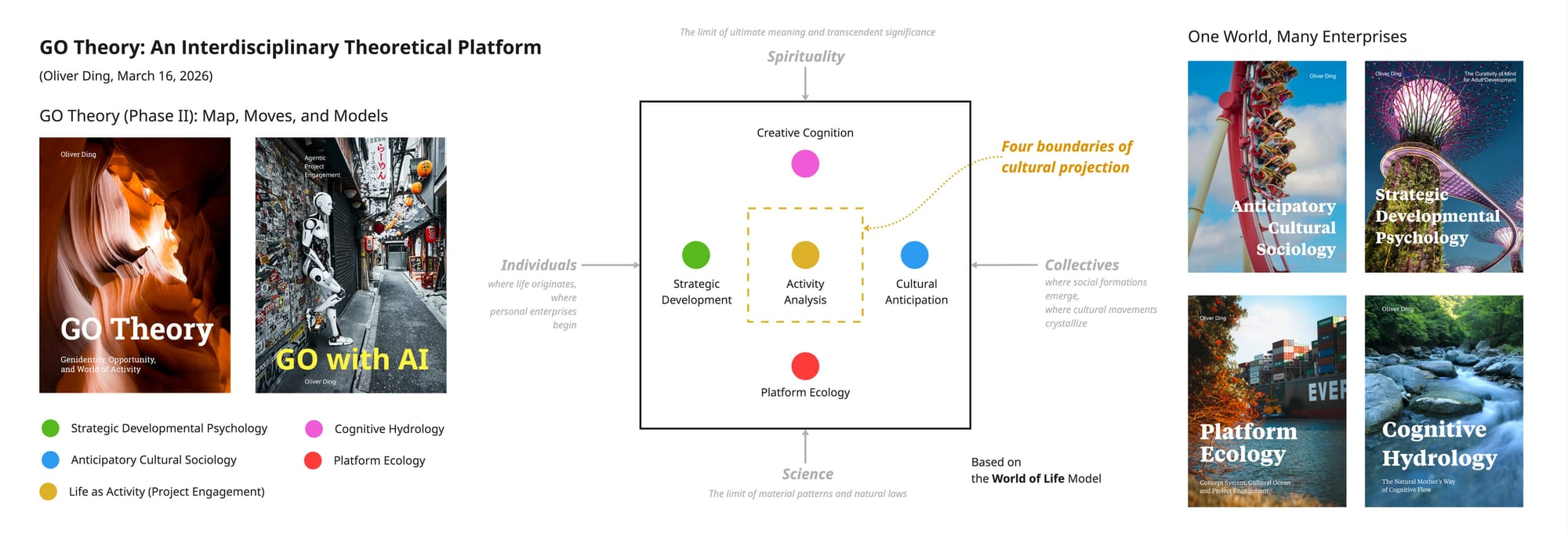
These five enterprises are equal. None is the foundation of the others. Each occupies a different position within the World of Life, which means each brings a genuinely different theoretical perspective. And because they share the same spatial foundation — the same map, the same boundaries, the same operating concepts — they naturally support one another, forming a network of enterprises rather than a hierarchy.
In the Preface of Appropriating Activity Theory, I tell the story of expanding the Cognitive Hydrology trilogy to a series.
The revisiting-rebuilding of the RelationField (v3.0) framework introduces a new unit of analysis of the Self-Other relation:
Subject–Subject (Subject–Object) = RelationField
The subject–object relation — the content, the containee — is the kernel. The subject–subject dynamic — the container — is what unfolds around it: a relation that begins at the subject–object kernel does not remain there; it is taken up, carried, and told between subjects, and it is this carrying-and-telling that constitutes a field rather than a single point.
In the LARGE Method (v2, 2026), I use a a 4D coordinate system to capture four dimensions of social life. The RelationField (v3.0) framework offers a new method for the Self-Other dimension.
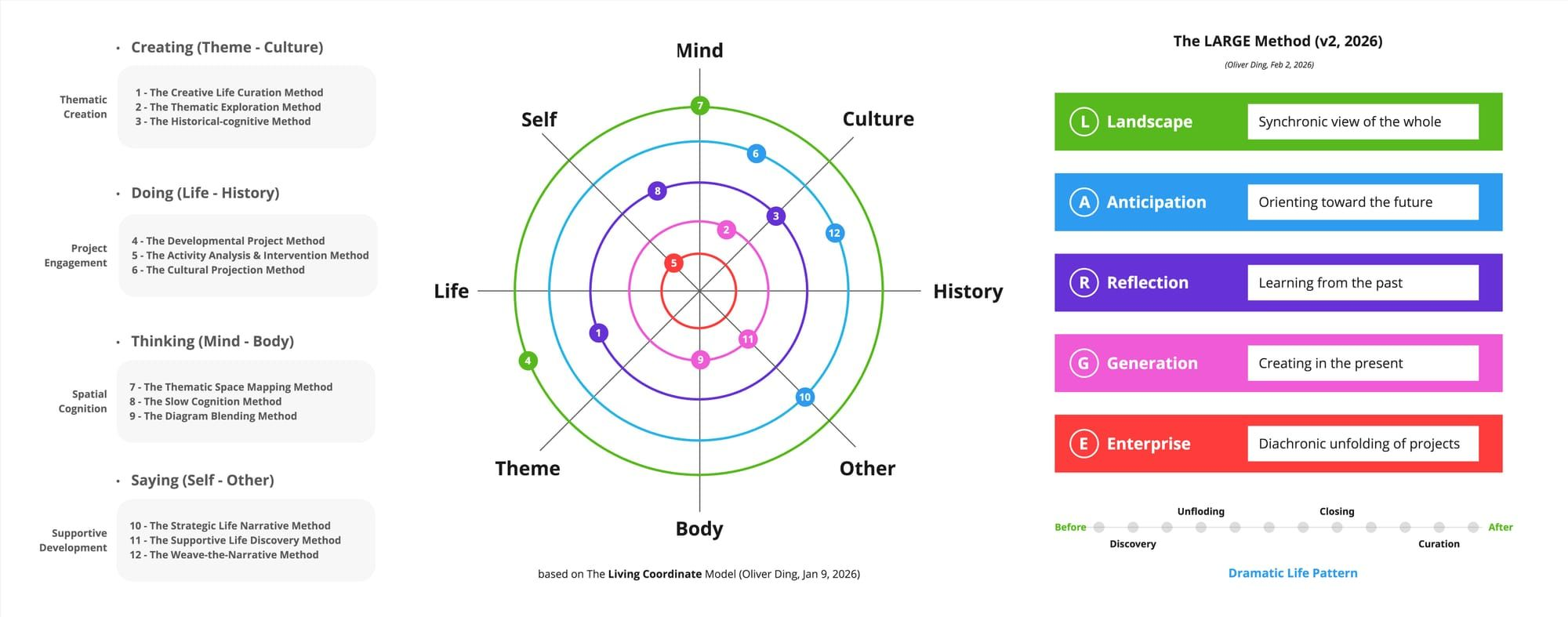
It also has potential to connect to the following three members of the Leeway model:
- Weave-points
- Living Coordinates
- Thematic Spaces
World
Me, You, and We
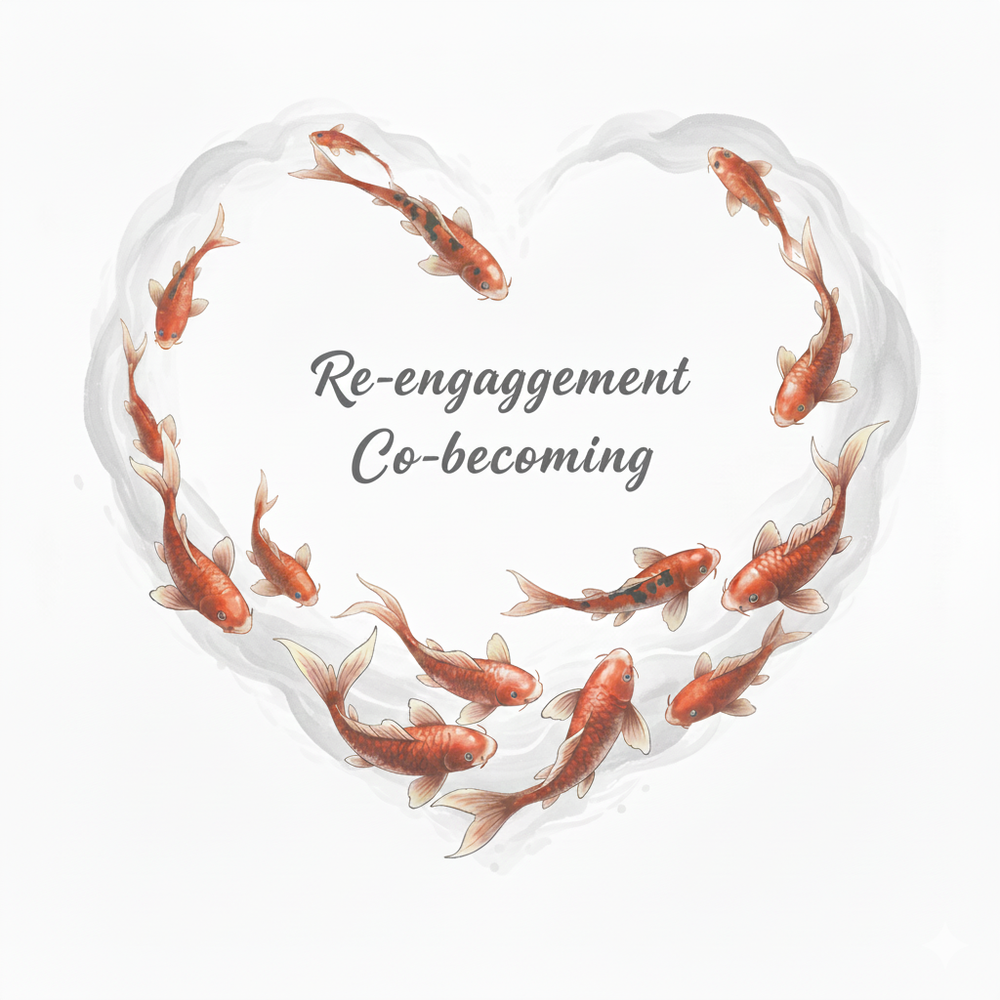
The image above is my New Year's greeting card — and also my annual theme for 2026: Re-engagement and Co-becoming.
In January 2026, I designed a set of thematic cards to further develop these annual themes. Below is one of them.
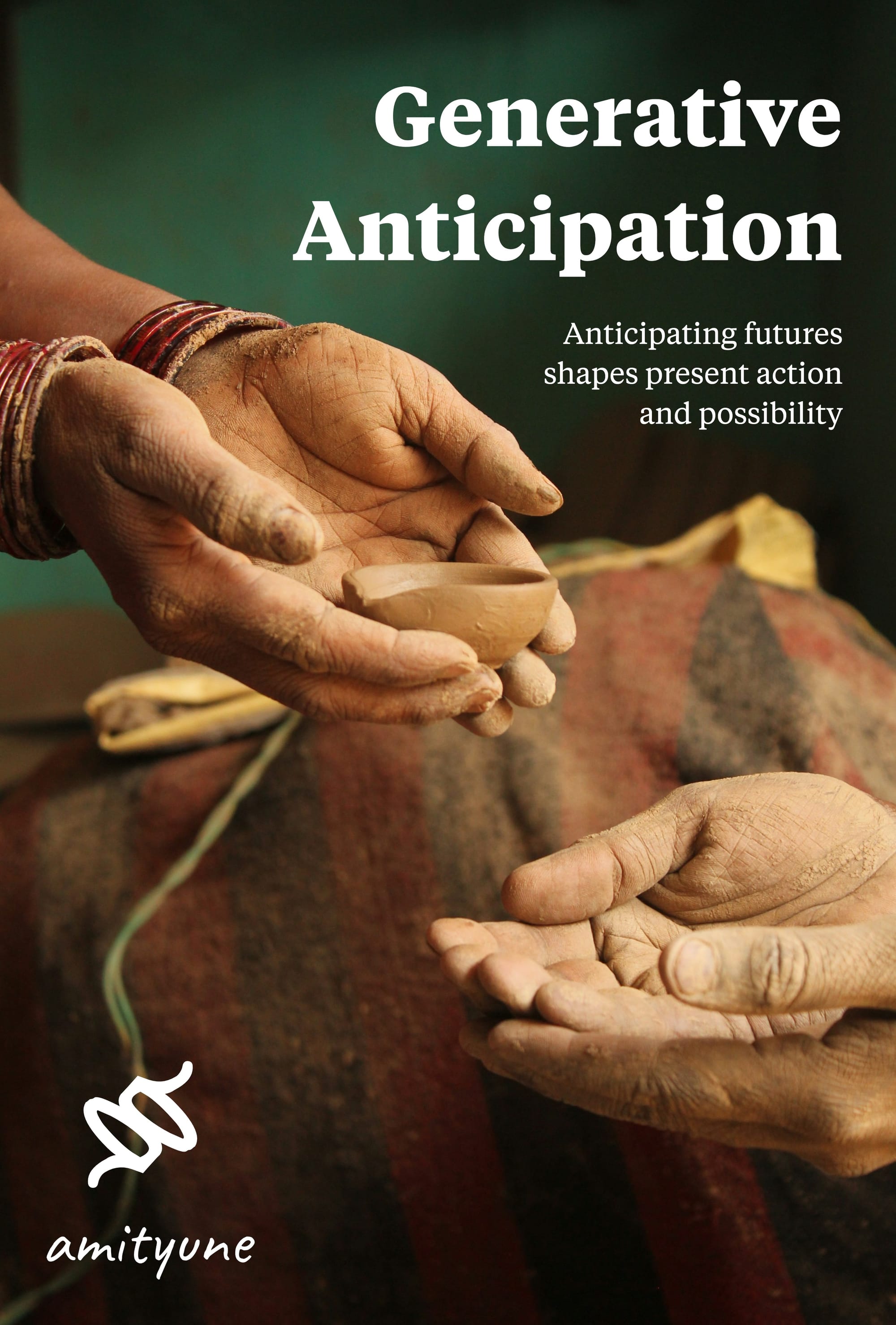
This issue marks the end of a decade-long journey of engaging with Activity Theory. Ten years of reading, building, questioning, and returning — and now, with three possible books released and the column complete, a natural threshold has been crossed.
But endings in a creative life are rarely final. The column is closed; the engagement continues. Generative Anticipation is what this threshold feels like from the inside: not looking back at what was completed, but sensing what the next decade might be shaped by — and letting that sensing change what happens now.
Re-engagement and Co-becoming. I placed them there in January. The year answered.
Oliver Ding
Founder of the Activity Analysis Center
June 15, 2026
p.s. I am based in Houston, Texas, US. Where are you?
v1 - June 15, 2026 - 2,502 words