
Activity Analysis Network #24: World of Activity — Year in Review, Possible Book, Thematic Maps
Hi, and welcome to Activity Analysis Network, a newsletter hosted by the Activity Analysis Center.
Each issue is organized around the "Flow - Focus - Center - Circle" schema, the primary model of the World of Activity Toolkit (v1, 2025).
In this biweekly newsletter, I share summaries of new articles from the Activity Analysis Center, along with updates on related activities, including some of my own published work elsewhere.
This issue marks a special moment. September is the month when, one year ago, I published Homecoming and edited Being by Doing — the first two books to carry "World of Activity" in their subtitles. A year later, I have completed their sequels: a new possible book that finally places "World of Activity" in the main title, and a Chinese manuscript that introduces the same approach to a different readership. This issue is a year in review, a report on a possible book, and an introduction to a new map series — three ways of looking at the same unfolding.
The three things are not separate. The year in review explains why the book was possible. The book explains what the maps are for. The maps explain how the approach can be used. Together they tell a single story: how a theoretical framework becomes a practice, and how a practice becomes a platform for others.
Flow
The historical development of the Activity Analysis Center and my experience of daily life
Here are some LinkedIn posts from the past two weeks — fragments of daily thinking, traces of ongoing conversations:
- 9/2/2026 - [Thematic Conversation] The Network-Container-Platform Model
- 9/7/2026 - [Possible Book] Lake 42: The Great Confluence
- 9/7/2026 - [Meta-Discussion] How do you use meta-frameworks?
- 9/7/2026 - [Meta-discussion] What are your primary theoretical resources?
- 9/7/2026 - One year ago today, I published Homecoming as a Kindle book
- 9/8/2026 - [World of Activity] From Creative Focus to Creative CenterCenter
- 9/9/2026 - [Meta-discussion] The “Why Aren’t You Like Me?” Critique
- 9/13/2026 - [GO Theory] A Living Being and A Social Person
But underneath these daily notes, there is another flow.
September is a special month. One year ago this month, I published Homecoming: A Thematic Trip and the World of Activity Approach as a Kindle book, and edited Being by Doing: World of Activity and Creative Life Theory (v3.0) as a possible book. They were two different experiments: one autobiographical, one theoretical. Both were attempts to see whether the World of Activity approach could hold together a large body of work.
One year later, I have almost completed their sequels — on schedule, if not exactly as planned.
Last issue, I shared An Shen Li Ming: Coordinate, Center, and Gejunction, a Chinese book manuscript introducing the World of Activity approach to Chinese readers. This issue, I am releasing World of Activity: An Ecological Approach to Activity Analysis and Intervention (AAI) — the English counterpart, written for AAI analysts and for any reader who wants to explore the approach for their own purposes.
Focus
The Thematic Foci of the Activity Analysis Center
Two things have been occupying my attention.
[Revisiting-and-Rebuilding] The Knowledge Strategy series. Last year's Castle and Forest left a question largely untouched: what happens when two knowledge creators meet? The answer I gave then was thin. This month I revisited that part with new tools and wrote a new article — The Relationfield of Knowledge Engagement. It introduces a formula — RelationField = Subject-Subject(Subject-Object) — and uses it to finish what Castle and Forest left undone.
After finishing that article, I realized the Gejunction framework could be used to reflect on the entire Knowledge Strategy trilogy from last year.
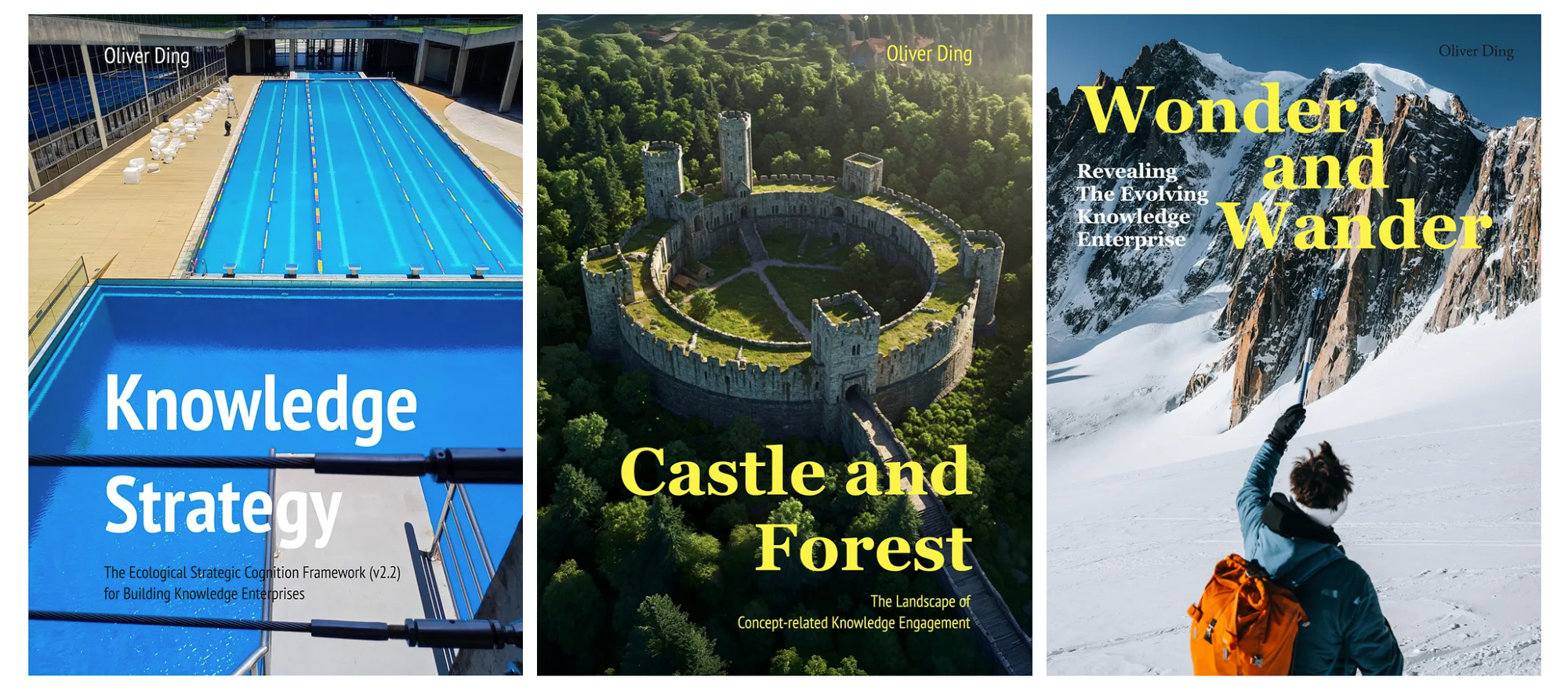
So I continued with a second article — Marinate the Mind: The Living Coordinate of Knowledge Engagement. Together they open a new Revisiting-and-Rebuilding (RR) series, upgrading last year's work.
- The Relationfield of Knowledge Engagement
- Marinate the Mind: The Living Coordinate of Knowledge Engagement
A new thematic map series. The other focus has been designing a set of thematic maps that present the FFCC model and its related concepts. On the basis of these maps, I have been writing a series of articles that together form the operational toolkit of the World of Activity approach.
The maps are not taxonomies. They are toolkits. Each map curates a set of knowledge frameworks into a navigable structure. An analyst can enter the map, find the room that matches their case, and discover frameworks that fit.
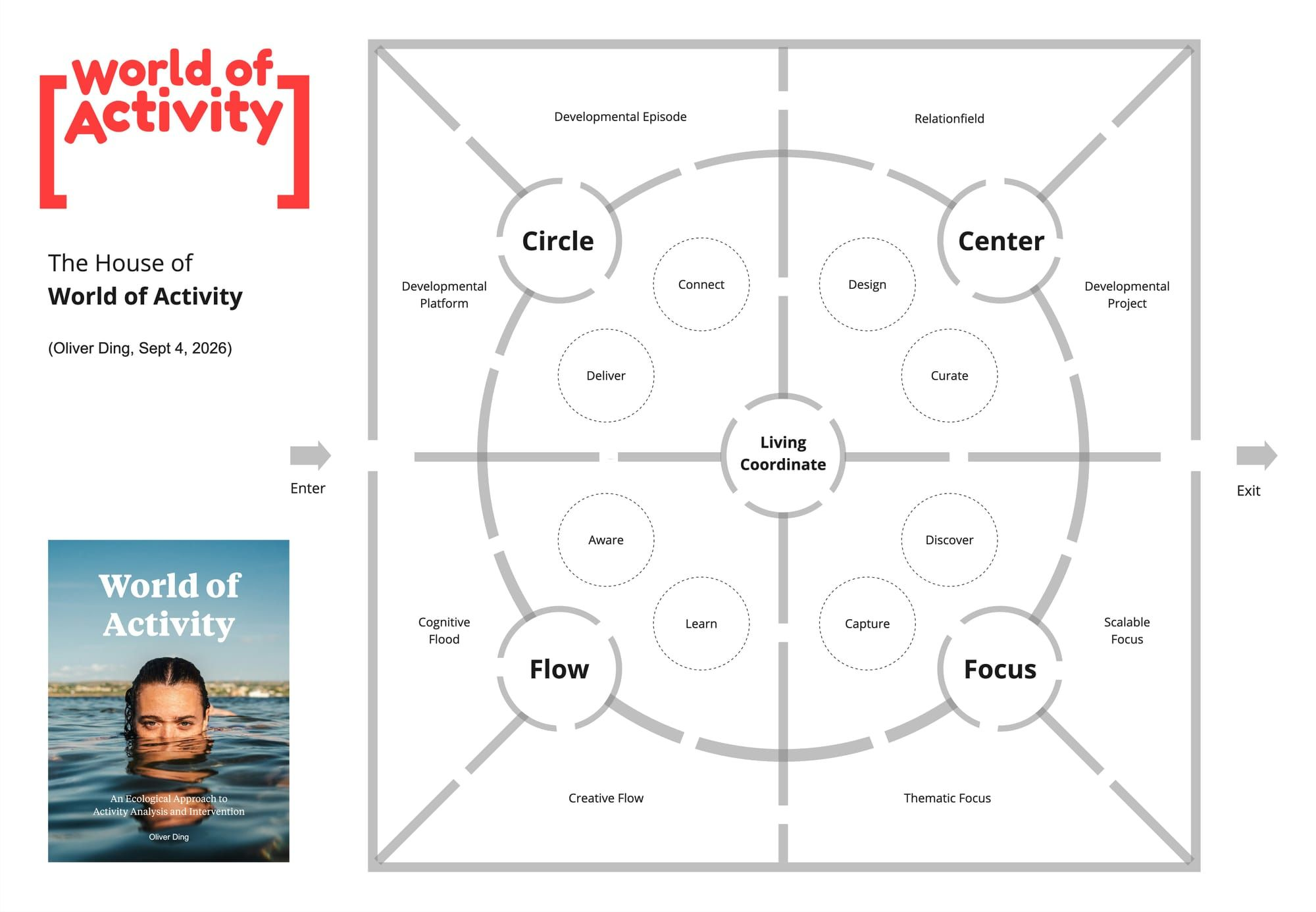
The series includes:
- The House of World of Activity
- The House of Flow Dynamics
- The House of Focus Dynamics
- The House of Center Dynamics
- The House of Circle Dynamics
- The House of Gejunction Dynamics
They can be used for learning, coaching, dialogue — any situation where someone needs to grasp the structure of a World of Activity.
Center
The Core of the Activity Analysis Center
For the past several issues, I have been documenting a shift within the Activity Analysis Center — from theoretical development to practical application. AAI 2026 is the first product of that shift. The past two weeks have been focused on two things: updating the website, and editing a new possible book.
The website update was structural. I reorganized the top navigation around the three-way relation of the AAI program: Theorist–Analyst–Client. Five new pages now anchor the site:
This is not just a navigation change. It reflects a conceptual decision about how the knowledge ecology should be presented and entered.
The book manuscript is titled World of Activity: An Ecological Approach to Activity Analysis and Intervention (AAI). It is a possible book — edited, not yet published — and it is the first systematic presentation of the World of Activity approach for AAI analysts.
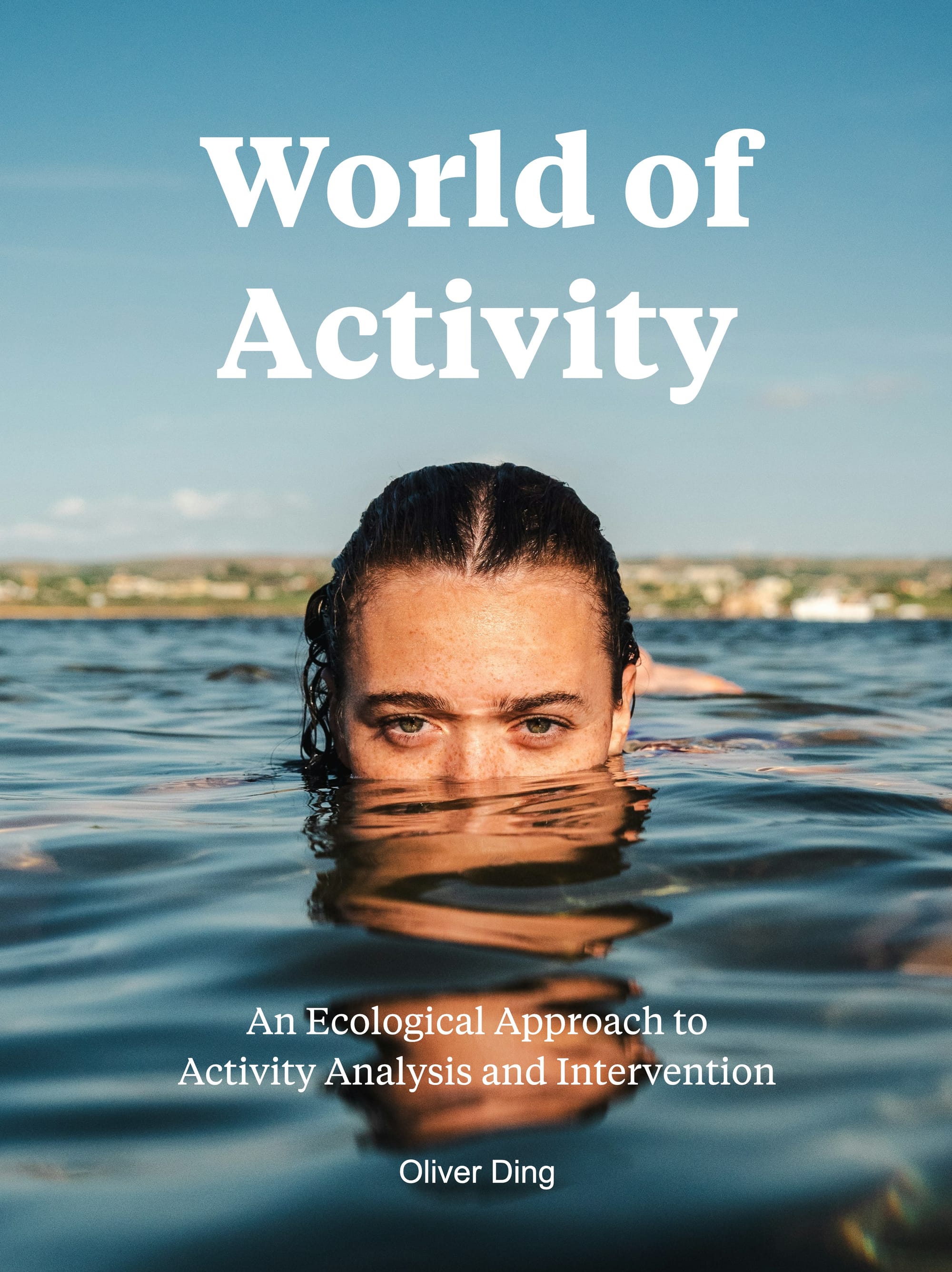
The book is organized into seven parts:
- Part 1: Theoretical Foundations establishes the ontological, realist, and hermeneutic foundations. It introduces the Self–Life–Mind schema and the Coordinate–Center–Gejunction framework as the core of the book.
- Part 2: The FFCC Model presents Flow, Focus, Center, and Circle — the central model of the approach — and shows how it has been used in practice, through direct applications, a developmental case, and an organizing structure.
- Part 3: Thematic Maps as Toolkits presents the House series — six thematic maps that together form an operational toolkit for analysts. Each map is not a taxonomy but a navigable structure. The maps are also a demonstration of ecological formism: FFCC as invariant, the four thematic areas as quasi-invariant, the sixteen themes as variant.
- Part 4: Living Coordinate presents the concept and its model, along with four case studies: the difficulty of finding a coordinate, the author's own journey, a belief coordinate collapsing and rebuilding, and a thematic coordinate in formation.
- Part 5: Gejunction presents Gejunction as a Unit of Synthesis within GO Theory, with four aspects — Thematic Spaces, Living Coordinates, RelationFields, Weave-points — and four cases, one for each aspect.
- Part 6: Case Studies and Emergent Insights presents the empirical work that produced the toolkit v2.0, organized through Ecological Formism into invariant, quasi-invariant, and variant layers.
- Part 7: Activity Analysis and Intervention (AAI) turns from theory to practice. It presents AAI as a meta-framework within GO Theory, introduces the three-way relation of Theorist–Analyst–Client, and shows how analysts can develop their own signature programs.
The book ends with an Epilogue: Creative Self and Social World: From Being by Doing to Coordinate–Center–Gejunction. It traces the motif that has run through my work for years, and returns to the unfinished question of otherness.
Circle
The Context of the Activity Analysis Center
Since September 2025, the Activity Analysis Center has been operating as a meta-center, using GO Theory as my theoretical platform to host several theoretical enterprises. These enterprises constitute the Center's Circle—the broader context within which the Center operates.
On this platform, five theoretical enterprises operate, each occupying a distinct position within the World of Life:
- Life as Activity (including the Project Engagement Approach) — at the center, attending to activity itself
- Anticipatory Cultural Sociology (ACS) — at the Collectives boundary, attending to cultural development
- Strategic Developmental Psychology (SDP) — at the Individuals boundary, attending to individual life development
- Cognitive Hydrology — at the Spirituality boundary, attending to the flow of ideas and meaning
- Platform Ecology — at the Science boundary, attending to ecological and structural conditions of platform development
These five enterprises are equal. Each occupies a different position within the World of Life, which means each brings a genuinely different theoretical perspective. And because they share the same spatial foundation—the same map, the same boundaries, the same operating concepts—they naturally support one another, forming a network of enterprises rather than a hierarchy.
In September, one development worth noting.
The relationship between AAI, the World of Activity approach, and other theoretical enterprise has become clearer.
Both AAI and the World of Activity are part of GO Theory — the theoretical platform that supports other theoretical enterprises.
Within the current landscape, the World of Activity approach is now positioned as the foundational module of AAI: the ecological map that any analyst needs. It is required. The other theoretical enterprises — Creative Life Theory, the thematic maps, the various knowledge frameworks — are optional modules. They are resources an analyst can draw on when the case calls for them.
The House of Circle Dynamics offers a concrete example of how this modular relationship works.
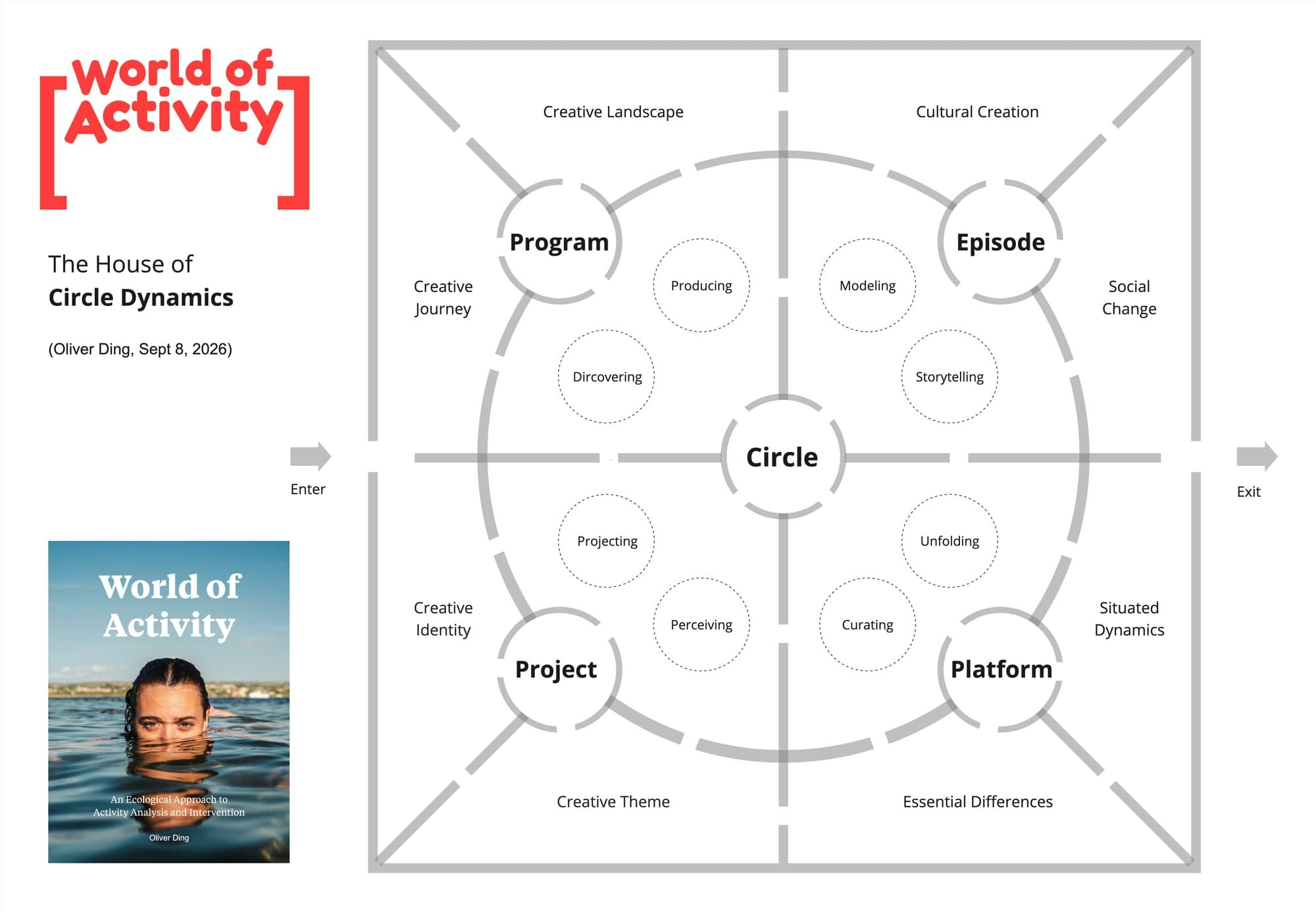
FFCC is the foundation. The four ecological forms — Flow, Focus, Center, Circle — are invariant. Circle is always the position where individual creative life opens onto the collective. That position does not change.
Platform Ecology is a plugin. It provides the content for that position. The four thematic areas of the Circle map — Project, Program, Episode, Platform — are not inherent to Circle itself. They are concepts contributed by the Platform Ecology theoretical enterprise. A different theoretical framework could fill the same position with different content. The position remains; the content varies.
This is how the toolkit works. The World of Activity approach provides the map — the empty positions. The theoretical enterprises provide the models — the content that fills those positions. An analyst can use the foundational map alone, or bring in optional frameworks as the case calls for them.
This distinction matters. It keeps the ecological approach open. It does not prescribe which frameworks an analyst must use. It only provides the shared reference point — the map — that makes communication between analysts and theorists possible.
World
Me, You, and We
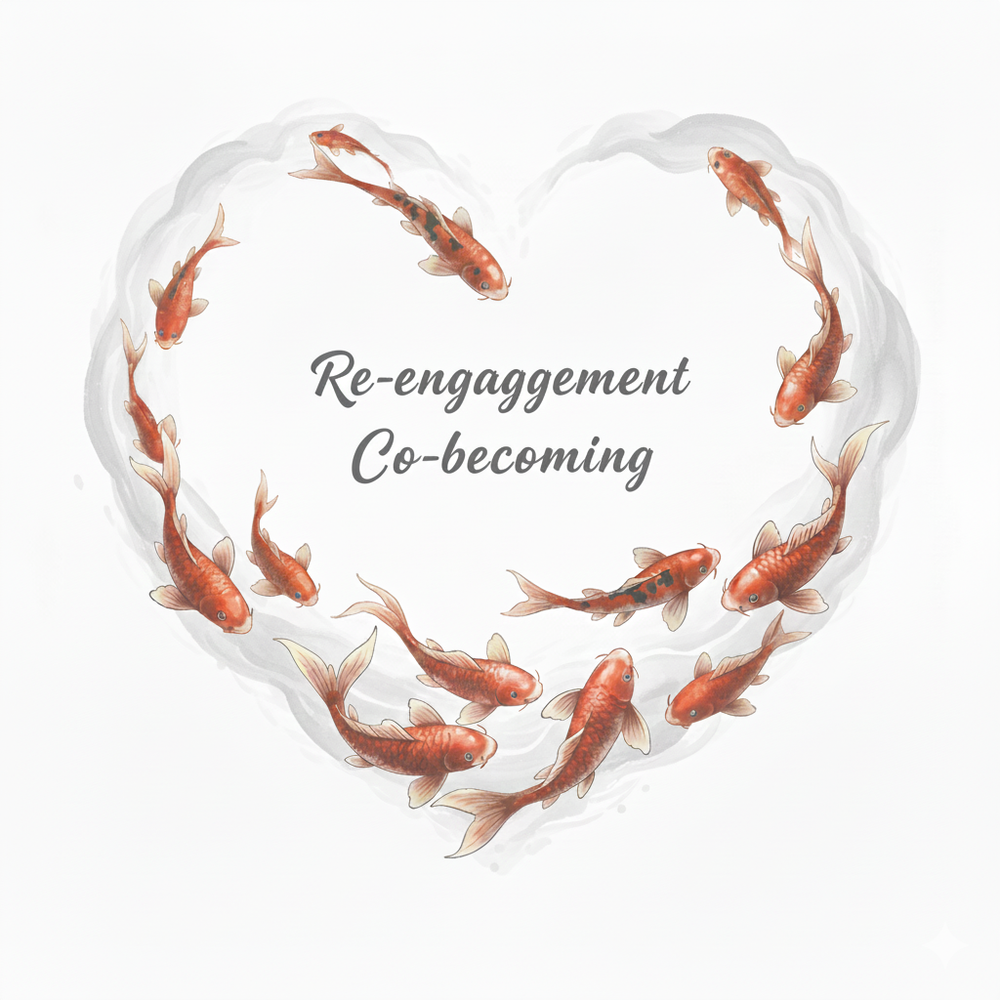
September is a month of anniversaries and sequels.
One year ago, “World of Activity” was a subtitle. This year, it is the main title. The question is still the same: how does a creative self find its place in the social world? The answer is still unfolding.
If you are working with the World of Activity approach in your own practice — as an analyst, a theorist, or simply someone trying to understand your own unfolding — I would like to hear from you.
Re-engagement and Co-becoming. I placed them there in January. The year answered.
Oliver Ding
Founder of the Activity Analysis Center
September 15, 2026
p.s. I am based in Houston, Texas, US. Where are you?
v1.0 - September 15, 2026 - 1,881 words